

Mobile App for Lawyers: Stay Top of Mind Between Cases
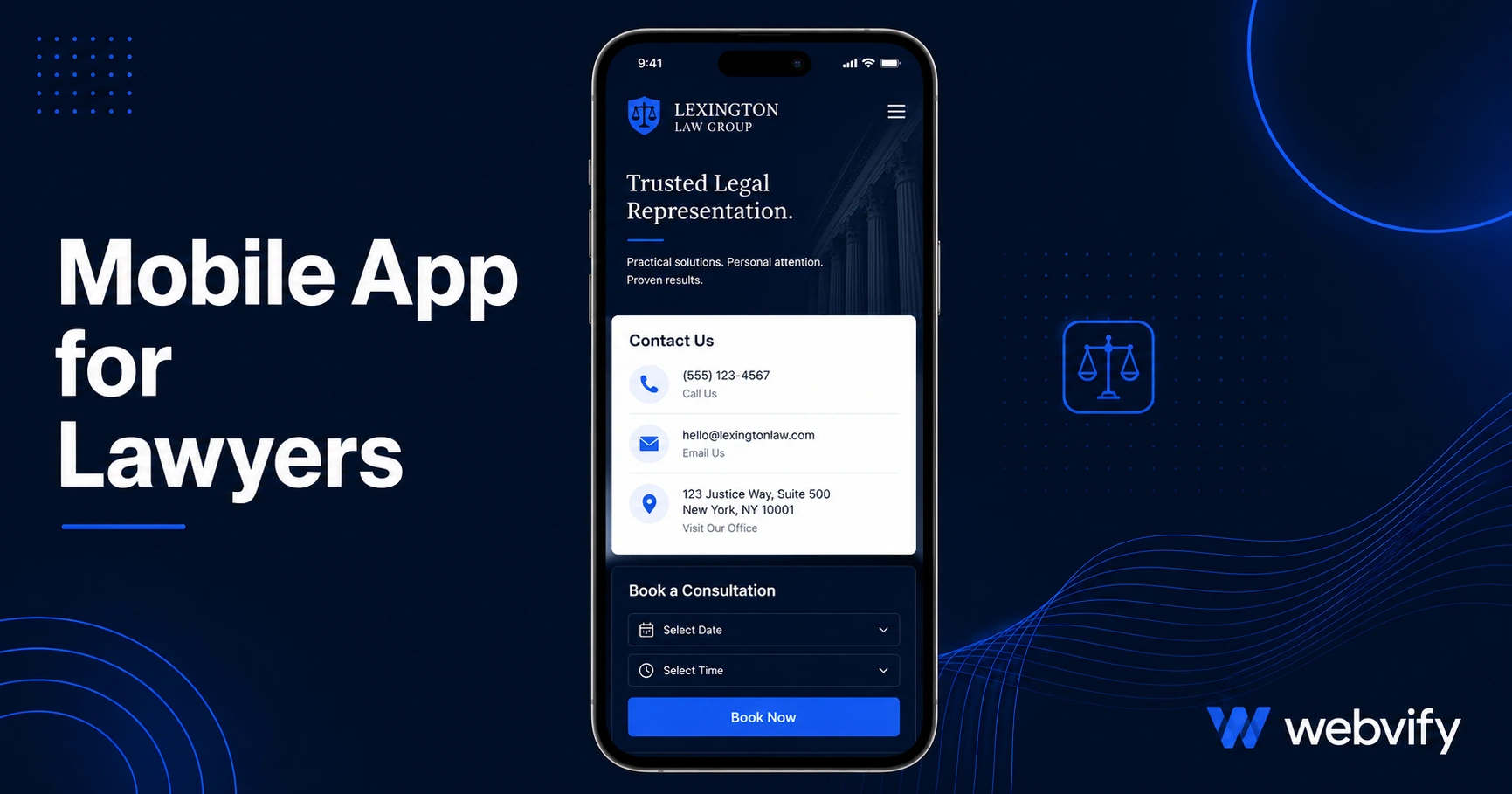
Most legal clients go silent for years between matters. Here's how a mobile app keeps your law firm visible, builds trust, and drives referrals.
Inside this article
Most legal clients hire an attorney once, get their matter resolved, and then disappear — not because they were unhappy, but because nothing keeps you on their radar. A mobile app for lawyers changes that dynamic before the silence sets in.
Why a Mobile App for Lawyers Is a Referral Machine
Legal clients don't re-hire at a predictable frequency. A family law client might need you again in three years. An estate planning client might refer their sibling six months after their matter closes. The problem is, by the time that referral conversation happens, they can't remember your name — they've moved on, and so have their contacts' attention spans.
A branded mobile app solves this at the root. When your app sits on a client's home screen, your name stays visible every time they pick up their phone. You're not waiting for them to remember you — you're already there.
This is the same retention mechanic that drives push notification open rates of 60–90%, compared to 20–25% for email newsletters most law firms send. The difference isn't the message — it's the delivery channel.
What a Law Firm Mobile App Actually Does
A law firm mobile app built on your existing website is simpler than it sounds. It wraps your current site — your content, your contact forms, your intake process — in a native app shell that lives on iOS and Android. You don't rebuild anything.
From there, you can:
- Send push notifications with legal tips, deadline reminders, or seasonal alerts (tax season, estate planning awareness month, property transaction peaks)
- Promote your services to past clients at the exact moment they or someone they know needs legal help
- Collect reviews by sending a push notification a few weeks after a matter closes, while the experience is still fresh
- Drive intake with one-tap access to your contact form or booking page from the home screen
The app doesn't replace your website — it extends it to a channel your clients check dozens of times a day.
The App Store Credibility Factor
For lawyers, trust is the primary purchase driver. Clients aren't comparing features — they're assessing whether you look like a firm that handles serious matters professionally.
An App Store listing signals exactly that. Most local competitors don't have one. When a potential client searches the App Store for your firm name and finds an app — with ratings, a professional icon, and screenshots — it positions you above any firm that's just a website and a phone number.
This matters especially in referral moments. When someone says "call my attorney," that recommendation gets Googled. An App Store presence makes your name look established and credible in the same search results that show your competitors' basic websites.
For related context on how push notifications specifically help professional service businesses stay top of mind, see this guide on push notifications for small business.
What Types of Law Firms Benefit Most
The retention gap argument applies across practice areas, but some benefit more than others:
Estate planning and wills — clients review their plans every 5–10 years. A push notification during a life event (new baby announcement, property purchase) reopens the conversation exactly when it's relevant.
Family law — matters close, but life continues. Post-divorce modifications, custody changes, and new family formations create repeat and referral opportunities for years.
Real estate law — property purchases are milestone events. A reminder push 12 months after closing ("Thinking about refinancing? Here's what to know") is a natural re-engagement.
Immigration law — renewals, status updates, and new family member petitions create a predictable calendar of follow-up opportunities that push notifications serve directly.
Personal injury — referral-driven by nature. Your app on a client's home screen is a daily prompt to mention your name when someone in their network needs help.
If you're already using push notifications to stay visible in any other service business context, the same approach applies. The guide on mobile apps for online coaches covers the retention mechanic in detail if you want to see how other service professionals implement it.
How to Get a Mobile App for Your Law Firm (Without a Developer)
You don't need to write a single line of code or hire a mobile developer. The fastest route is a WebView app — a service that converts your existing law firm website into a native iOS and Android app, then submits it to the App Store and Google Play under your firm's accounts.
The submission process is what slows most firms down. Apple's App Store review requires a developer account ($99/year), compliance with content guidelines, and correct app metadata. Services like Webvify handle all of this end-to-end — build, submission, and an admin panel so you can send push notifications without touching any code afterward.
From intake to App Store live, the timeline is typically days, not months.
Frequently Asked Questions
Do lawyers need a mobile app if they already have a website?
A website is a destination people visit when they're already looking. A mobile app with push notifications is a channel that reaches clients proactively — on their lock screen, at the moment you choose. They serve different purposes, and firms that have both have a retention and referral advantage over those that don't.
How much does a mobile app for a law firm cost?
A custom-built native law firm app costs $50,000–$200,000 and takes six to twelve months. A WebView app — which wraps your existing site and gets it onto the App Store and Google Play — is a fraction of that cost and launches in days. Most solo and small-firm attorneys find the WebView route delivers 90% of the value at 10% of the cost.
What content should a law firm mobile app include?
Start with what's already on your website: practice areas, attorney bios, contact form, and intake process. Then add a push notification strategy: legal tips tied to seasonal events, deadline alerts relevant to your practice area, and review requests timed to matter closes. The app doesn't require new content — it adds a new delivery layer to what you already have.
Getting a mobile app for your law firm doesn't require a development team, a large budget, or months of planning. If you have a website, you have everything you need. Webvify converts it into a fully branded app on the App Store and Google Play — and handles the entire submission process so you don't have to.