

Mobile App for Ski Resorts: Keep Skiers Coming Back Every Season
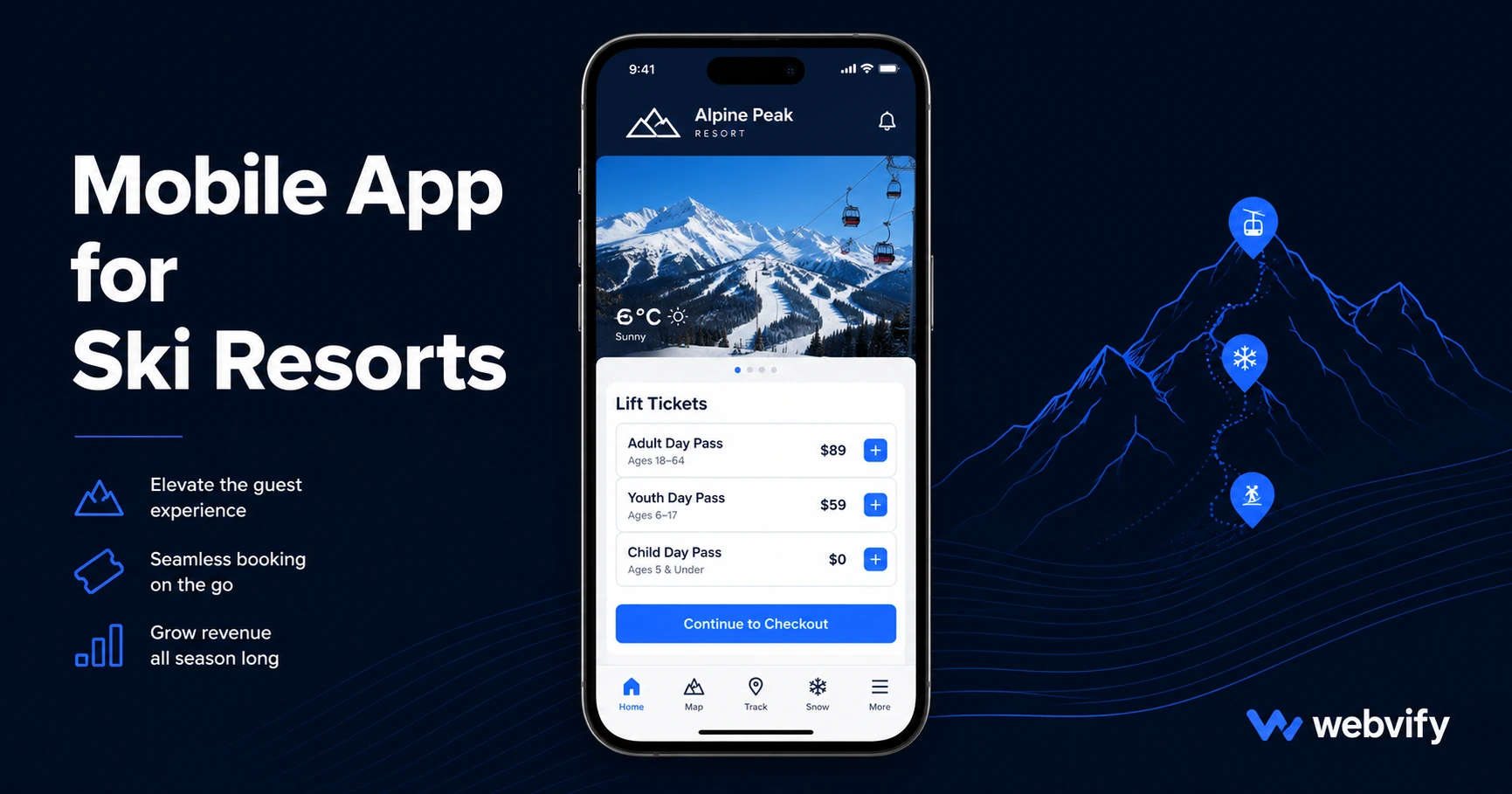
Most ski resorts lose first-time visitors to competitors. Here's how a branded mobile app keeps skiers booking lifts and renewing passes season after season.
Inside this article
Ski resorts fill every December — then go silent for nine months while competitor resorts are already running October promotions targeting your guests. A branded mobile app changes where that decision gets made.
Why Ski Resorts Lose Repeat Visitors
The ski resort retention problem is predictable: visits are seasonal, loyalty is shallow, and the off-season creates a 9-month communication gap. Most resorts rely on email newsletters and Instagram posts to stay visible — both with low reach outside peak excitement windows.
Meanwhile, competitor resorts are running promotions in October and November, right when your previous guests are deciding where to book their winter trip. Without a presence on their phone, your resort is invisible at the exact moment the decision is made.
A mobile app solves the visibility problem by putting your resort icon on the skier's home screen — visible every time they unlock their phone, year-round, not just in January.
Three High-ROI Push Notification Campaigns for Ski Resorts
Push notifications are the most valuable feature of a ski resort app, but only if timed correctly. Here are the three campaigns that drive the most bookings:
Seasonal Opener (October–November): Send a "Season Announcement" push notification in October, before competitors start their promotions. Include early-bird pricing or a first-right-to-renew offer for returning season pass holders. This campaign intercepts skiers before they start browsing alternatives — at a 60–90% open rate compared to 15–25% for email.
Snow Report and Opening Day Alert: When the mountain opens or receives significant snowfall, send a same-day push. Skiers track snow conditions obsessively, and being the source of that update builds a daily check-in habit during the season. This is the campaign that turns a casual visitor into a regular.
Season Pass Renewal Reminder (April–May): The highest-revenue push campaign is the renewal window. Send a reminder 45 days before the prior season pass expiry date, a 14-day countdown, then a "last chance" message at Day 3. This sequence captures renewing guests before they default to searching for deals elsewhere.
Resorts that run all three campaigns systematically retain significantly more guests year-over-year than those relying only on email.
What a Ski Resort App Should Include
A ski resort mobile app doesn't need to be complicated. The most effective apps focus on a small set of high-value features:
Lift ticket and season pass purchasing (or a direct link to your existing booking system). A push notification channel for snow reports, daily conditions, and event announcements. A trail map and resort information section optimized for mobile. Links to dining, rental, and lesson booking so skiers can plan their day without switching apps.
Services like Webvify convert your existing ski resort website into a fully branded iOS and Android app — your booking system, trail maps, and daily conditions pages are all accessible through the app without rebuilding anything from scratch. Updates to your website appear in the app automatically.
For App Store submission, Apple and Google Play review WebView apps regularly. The key requirements are a custom domain, a mobile-responsive website, and compliance with payment flow guidelines. Physical lift ticket and pass sales are generally exempt from Apple's in-app purchase rules — but any digital goods (video content, online lessons) require routing through Apple's payment system.
App Store Presence Builds Resort Credibility
Skiers evaluate resorts before they visit. An App Store listing signals that the resort is professionally run and invested in the guest experience — especially important for visitors from outside the local area choosing between multiple destinations.
For families planning a ski vacation, an app in the App Store is a trust signal visible during the planning phase, available during the trip, and still on the home screen when the renewal window opens 10 months later.
If you're optimizing the app for organic discovery, your resort can appear in App Store searches from users who haven't visited yet. The same optimization principles apply to ski resort apps as to any small business — the App Store Optimization guide for small businesses covers the specific steps for title, keywords, and screenshots.
Getting a Ski Resort App Live Without a Developer
The traditional path — hiring an agency, building native iOS and Android versions — costs $50,000 to $200,000 and takes 6 to 12 months. Most ski resorts don't need that.
A WebView app converts your existing website into a mobile app for a fraction of the cost and timeline. The app uses your existing booking system, trail maps, and content without any rebuild. Updates to the website appear in the app automatically, so your IT team doesn't manage two separate systems.
For seasonal recreation venues with similar dynamics, we've covered the same push notification framework in the mobile app for golf courses guide — the seasonal opener and renewal nudge campaigns work identically.
The App Store and Google Play review process takes 24–48 hours once the app is packaged correctly. Services like Webvify handle packaging and submission end-to-end so your team never needs an Apple Developer account or Xcode.
Frequently Asked Questions
How much does a ski resort mobile app cost?
A custom-built native ski resort app costs $50,000–$200,000+ to develop and maintain. A WebView app that converts your existing website into a branded iOS and Android app starts significantly lower — typically $1,000–$5,000 for build and submission. The ROI from a single season pass renewal campaign often covers the cost within the first month of operation.
Can a ski resort app send real-time snow condition updates?
Yes. Push notifications can be sent manually from an admin panel whenever conditions change, or automated to fire when snow depth updates exceed a threshold. Most ski resort websites already publish daily snow reports — a mobile app delivers those reports as push notifications to opted-in guests rather than requiring them to visit the site.
How long does it take to get a ski resort app approved on the App Store?
Apple's review typically takes 24–48 hours for WebView apps that meet minimum functionality guidelines. The total time from starting the build to a live App Store listing is usually 7–14 days, including submission preparation and the review period.
Ready to put your resort on every skier's home screen before next season opens? Get started with Webvify →