

Mobile App for Insurance Agencies: Keep Clients at Renewal and Stop Losing Them to Silence
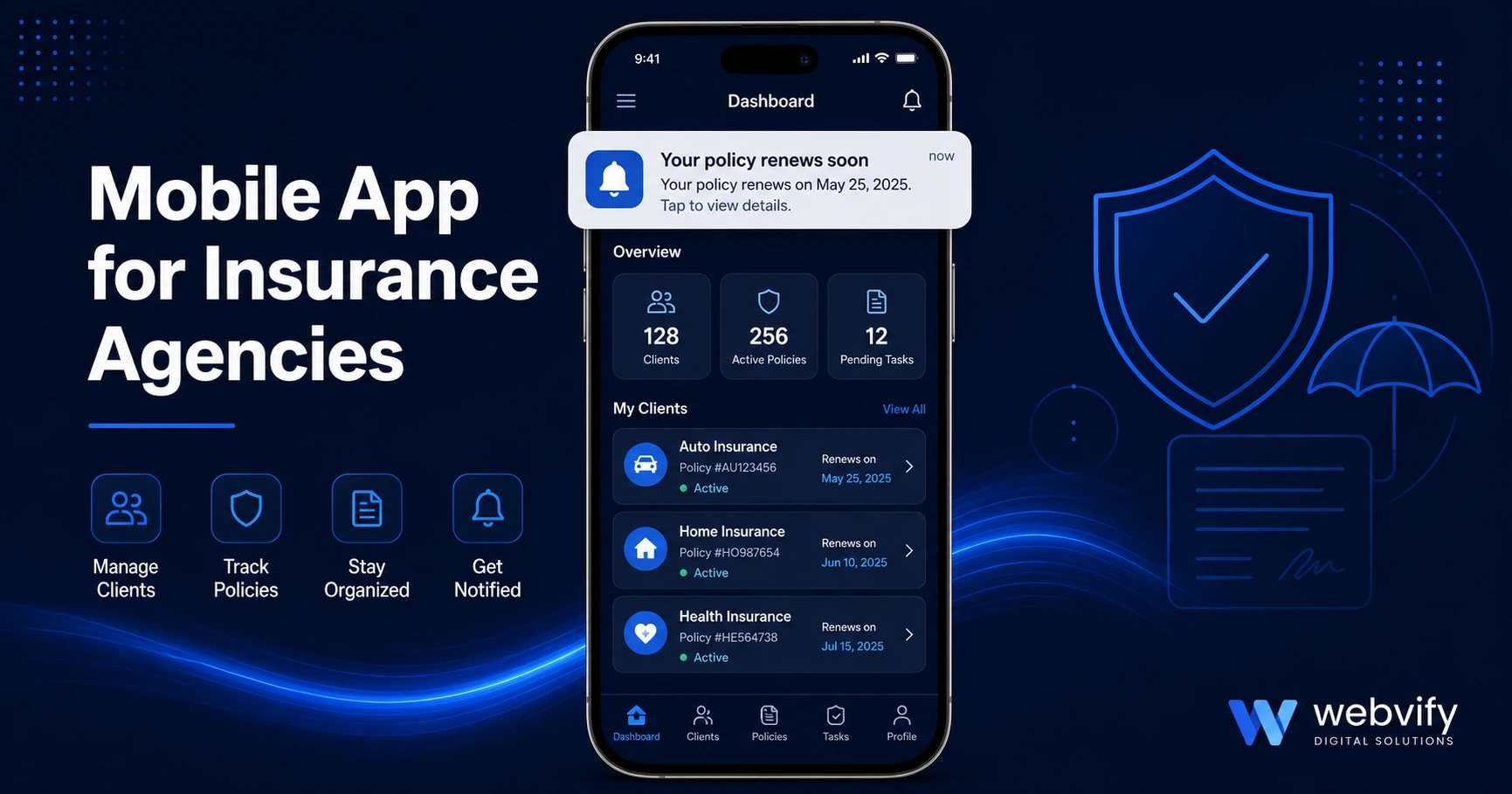
Insurance agents lose clients during the 11-month silence between renewals. A branded app with push notifications keeps you visible year-round. Here's how to get one live fast.
Inside this article
- The 11-Month Silence Problem Every Insurance Agent Knows
- How a Mobile App for Insurance Agents Changes Client Retention
- Three Push Notification Campaigns Every Insurance Agency Should Run
- What Clients Experience When They Have Your App
- Getting Your Insurance Agency App Live Without a Developer
- Frequently Asked Questions
Insurance clients don't leave because of bad service — they leave because another agent called at renewal time and you didn't. A branded mobile app changes that equation before the silence starts.
The 11-Month Silence Problem Every Insurance Agent Knows
Most insurance clients interact with their agent exactly once a year: at renewal. For the other 11 months, they have no reason to open your email, click your newsletter, or remember your name.
That silence is where clients drift. A competitor mails a rate comparison. A coworker mentions their agent. The renewal arrives and the client shops around instead of calling you. Not because you did anything wrong, but because nothing kept your name in front of them.
Email doesn't solve this. The average open rate for insurance email is 20–25%. That means three out of four clients won't see your renewal reminder, your coverage review, or your new policy offer. By the time the email breaks through, the decision may already be made.
A mobile app puts your agency on their home screen. Push notifications — which average 60–90% open rates — let you reach clients directly on their lock screen, no algorithm in the way.
How a Mobile App for Insurance Agents Changes Client Retention
A mobile app for your insurance agency isn't a client portal with complex features. For most agencies, it's your existing website wrapped into a native app, submitted to the App Store and Google Play under your agency name.
That means clients can access your quote request form, your contact page, your resources — all inside an app that shows your logo when they search. And when you send a push notification, it lands on their home screen as a native alert, not an email in a crowded inbox.
The impact is visibility. Your agency name appears in their app library next to their bank, their weather app, and their insurance carrier's app. At renewal time, they see your name first.
Services like Webvify handle this end-to-end — they convert your existing agency website into an iOS and Android app, submit it to both stores under your own developer accounts, and give you an admin panel to manage push notifications without touching any code. You don't hire a developer or learn Xcode.
Three Push Notification Campaigns Every Insurance Agency Should Run
The power of a mobile app for insurance agents is what you do with push notifications between renewals. Three campaigns deliver most of the retention value:
60-Day Renewal Alert. Send a push notification 60 days before each client's policy renewal date. "Your policy renews on [date] — here's what's changing." Clients who get an early heads-up are far less likely to shop competitors. This single campaign alone reduces the window when competitors can intercept.
Annual Coverage Review Nudge. Send a "your life may have changed" push in the autumn — a natural moment when clients think about finances. "Got married, bought a home, or added a driver this year? Let's make sure your coverage reflects that." This positions you as a proactive adviser, not just a renewal processor.
New Product or Discount Alert. When you add a new carrier line or a seasonal discount, push it to all clients in 30 seconds. No email blast setup, no mail merge. Open rates 3–4x higher than email mean your news actually reaches people.
Compare this to the typical insurance agency's touchpoint model: a renewal packet by mail, an annual statement email, and hope. A mobile app replaces that passive model with active outreach at a fraction of the effort.
For a deeper look at why push notifications outperform email for retention-focused businesses, see Push Notifications vs Email: The Real Comparison for Small Businesses.
What Clients Experience When They Have Your App
When a client downloads your agency's app, three things happen that wouldn't happen with a website alone:
They see your brand every day. Every time they scroll through their phone looking for their carrier's app or their policy documents, your logo is there. Brand recall at renewal time is not a small thing — it's the difference between "let me call my agent" and "let me shop around."
They can contact you without searching. One tap opens your quote form, your phone number, your chat, or your website — whatever you've built into the app. No hunting for a business card, no re-finding your website. The friction of reaching you drops to near zero.
They trust you more. Research consistently shows that professional services businesses with a dedicated app are rated as more credible than those without one. For an insurance agent competing against national carriers with massive apps, your own branded app on the App Store signals professionalism that a website alone cannot.
Similar dynamics play out across high-trust professional service sectors. If you serve clients in adjacent fields, see how accountants use mobile apps to stay visible through annual gaps — the retention mechanics are nearly identical.
Getting Your Insurance Agency App Live Without a Developer
The biggest misconception about insurance agency apps is that they require custom development — months of work, a technical team, and $50,000–$150,000 in budget.
That was true before WebView apps became mainstream. Today, a WebView app wraps your existing agency website in a native shell and publishes it as a real iOS and Android app under your name in the stores.
The submission process has specific requirements: Apple and Google both require a developer account ($99/year for Apple, $25 once for Google), a custom domain, and a privacy policy. Apple also reviews WebView apps for minimum functionality — your site needs to be a real working resource, not a thin brochure.
A managed service like Webvify handles all of this. You provide your website URL. They build the app, handle App Store compliance, and submit it under your developer accounts so you own the listing. Most agencies are live within 7–10 days.
Frequently Asked Questions
How much does a mobile app for an insurance agency cost?
A custom-built native insurance app runs $50,000–$150,000 in development costs plus ongoing maintenance. A WebView app — which wraps your existing website in a native shell — typically costs a flat monthly fee well under $500, with no developer needed. The WebView approach is how most SMB and mid-sized agencies get on the App Store affordably.
Do insurance clients actually download business apps?
Adoption depends on how you promote it. Agencies that text clients a download link at onboarding and mention the app at renewal see 30–60% download rates among active clients. The key is not passive promotion — add the download link to your email signature, your renewal packets, and your welcome email.
Does an insurance agency app need to follow special compliance rules?
Your app itself doesn't trigger insurance regulatory compliance beyond what your website already follows — you're wrapping content you already publish. However, if your app handles payments or collects sensitive data, that data must be processed securely on your backend, not stored in the app. A reputable managed service will confirm your setup before submission.
Stop relying on annual renewal mail to stay in front of clients. Get your insurance agency app live in days — no developer, no Xcode, fully published under your name on the App Store and Google Play.