

Mobile App for Garage Door Repair: Win More Repeat Calls and Stop Losing Customers to Silence
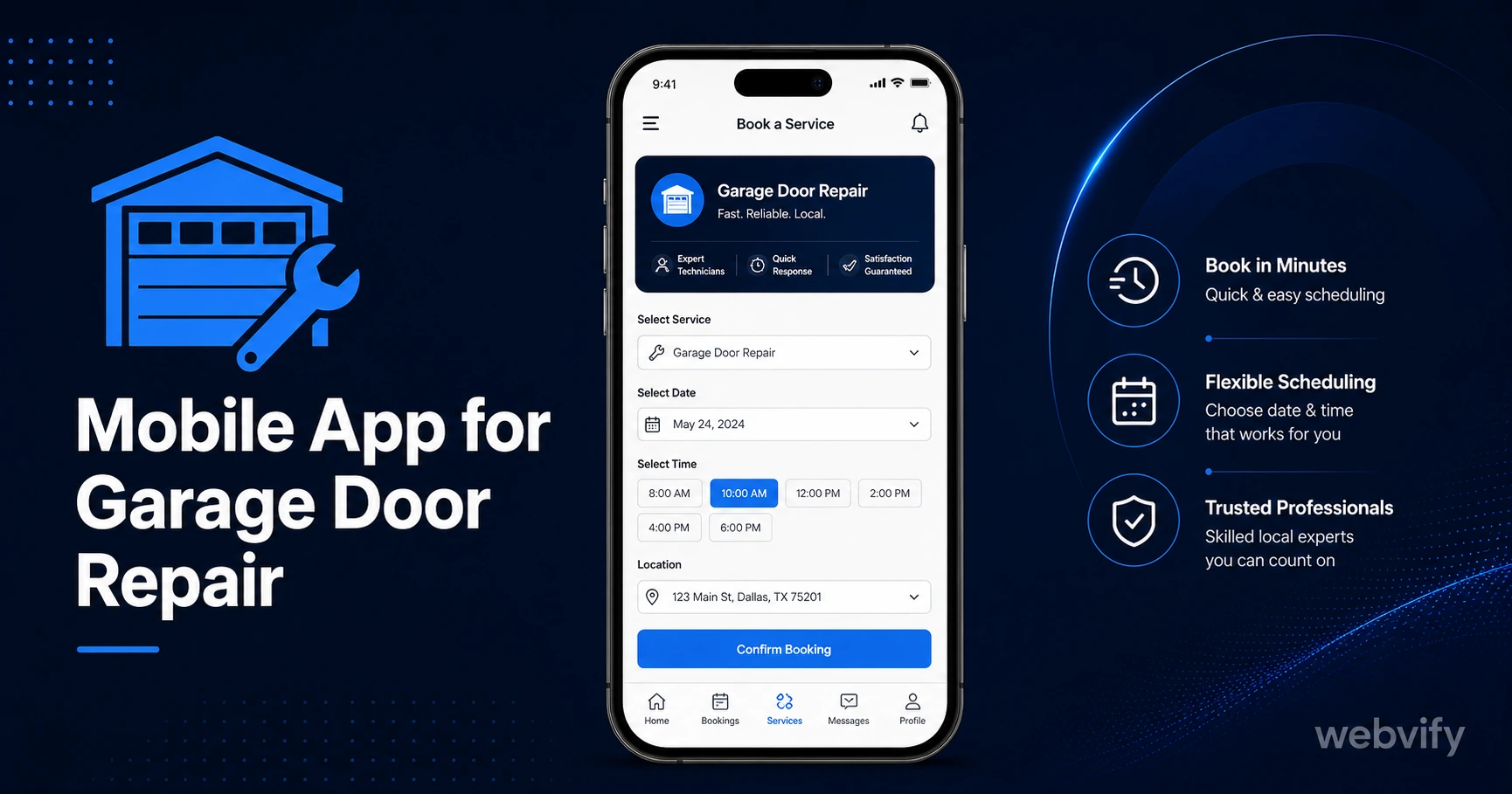
Garage door customers forget you exist between jobs. A mobile app with push notifications keeps your business on their home screen. Here's how it works.
Inside this article
- Why Garage Door Businesses Lose Repeat Customers
- What a Mobile App for Garage Door Repair Actually Does
- The Three Push Notification Campaigns That Drive the Most Repeat Revenue
- How to Get a Mobile App Without Building One From Scratch
- What to Look for in a Web-to-App Service for a Garage Door Business
- FAQ
- Ready to Stop Losing Customers to Silence?
Garage door customers finish a job satisfied, pay the invoice, and then Google "garage door repair near me" two years later — finding your competitor. Not because your work was bad. Because nothing kept your name in front of them.
A mobile app for your garage door repair business solves exactly that. Here's what it does, why it works, and how to get one without hiring a developer.
Why Garage Door Businesses Lose Repeat Customers
The average garage door customer needs service every 3–7 years for a full replacement and every 1–2 years for springs, cables, or openers. That gap is your biggest vulnerability.
During those quiet months and years, your customers are not thinking about you. They're not checking your website. They're not re-reading your invoice. When something breaks, they open Google.
If a competitor has a mobile app on their phone — or even just shows up higher in search — that's the job you lose.
The solution is not better marketing after the fact. It's staying present during the silence.
What a Mobile App for Garage Door Repair Actually Does
A mobile app is not a customer portal or a booking system you have to build from scratch. If you already have a website — even a simple one — you can turn it into a branded app that sits on your customers' home screens.
Once installed, it gives you three concrete advantages:
Push notifications. You can send a message directly to any customer who has your app installed. Unlike email (20–28% open rate), push notifications reach the lock screen at 60–90% open rates. A spring inspection reminder in March. A safety check offer in October. A "refer a friend" nudge after a job. These are the messages that create repeat business.
Home screen presence. Your logo sits on their phone next to Uber and Google Maps. When something breaks, they tap your app instead of opening Google.
App Store credibility. In a trust-sensitive trade where technicians enter customers' homes and garages, being listed on the Apple App Store and Google Play adds a layer of legitimacy that a website alone does not.
The Three Push Notification Campaigns That Drive the Most Repeat Revenue
You do not need a complex marketing strategy. Three targeted campaigns cover most of the repeat revenue opportunity in a garage door business.
Campaign 1 — Spring Safety Check (February–April) Send a short push in late February or early March: "Spring is here — garage door springs take the most stress in cold weather. Book a safety check before the busy season." This is the highest-ROI window in the year. Most customers won't have thought about their door since winter.
Campaign 2 — Autumn Tune-Up Reminder (September–October) Cold weather increases spring breakage rates. A reminder before the temperature drops positions you as proactive, not reactive: "Winter is coming — a quick tune-up now avoids a breakdown at 7am in January." This message converts well because the pain point is concrete and the timing feels right.
Campaign 3 — 18-Month Dormant Reactivation Customers who have not booked in 18 months are at high risk of going to a competitor next time. A single push — "It's been a while. We're offering a 10% spring check discount for past customers this month." — reactivates a percentage of that list every time you send it.
These three campaigns require no ongoing effort once set up. They run on a schedule and bring in jobs that would otherwise go to whoever ranks in Google.
How to Get a Mobile App Without Building One From Scratch
Most garage door business owners assume a mobile app means hiring a developer for $20,000–$100,000 and waiting six months. That was true ten years ago.
Today, if you have a website, you can convert it into a fully branded mobile app — complete with push notifications — through a web-to-app service. The app wraps your existing website in a native container and gets submitted to the App Store and Google Play under your business name.
You do not need to rewrite your website. You do not need a new booking system. If your site already handles contact forms, quote requests, or appointment booking, all of that works inside the app.
Services like Webvify handle this end-to-end: building the app from your website, submitting it to the stores, and giving you an admin panel to send push notifications — no technical skills required.
For context on what this typically costs compared to custom development, see our guide to mobile app development cost in 2026.
What to Look for in a Web-to-App Service for a Garage Door Business
Not all app services are the same. Here is what matters specifically for a local service business:
App Store submission included. Some tools give you the app file and leave the submission to you. The Apple Developer portal is not straightforward — look for a service that handles the submission end-to-end under your own developer account.
Push notification support. This is the core business value. Confirm the service includes push notification delivery, not just the ability to display your website in an app shell.
Admin panel access. After launch, you need to be able to send campaigns yourself without going back to a developer. A simple web panel where you write a message and tap send is what you're looking for.
No content rebuild required. You should not have to re-enter your services, photos, or pricing into a new system. The app should use your existing website as the source of truth.
For a broader comparison of what's available, the guide on how to choose a mobile app builder in 2026 covers the key decision criteria.
FAQ
How much does a mobile app for a garage door repair business cost?
A web-to-app service that converts your existing website into a native app typically costs $500–$2,500 for the build and submission, with a monthly fee of $50–$200 for push notifications and updates. This is a fraction of custom app development ($20,000–$100,000+) and delivers the same core business value: home screen presence and direct customer communication.
Do I need a developer to submit my app to the App Store?
No. Managed web-to-app services handle the Apple App Store and Google Play submission for you. The process requires an Apple Developer account ($99/year) and a Google Play Developer account ($25 one-time), but the service sets these up and manages the submission. You do not need to touch Xcode or Android Studio.
Will a mobile app work if I already use a booking tool like Jobber or ServiceTitan?
Yes. If your booking tool is web-based (which Jobber, ServiceTitan, Housecall Pro, and most others are), it works inside a WebView app without any modification. Customers can book through your app the same way they book through your website. The one exception to check: if you sell digital goods or subscription services through the app, Apple has specific payment rules — but this rarely applies to field service businesses.
Ready to Stop Losing Customers to Silence?
Most garage door businesses have the hardest part already done: they have a website, a service area, and satisfied customers. The gap is staying in front of those customers between jobs.
A mobile app with push notifications closes that gap — without rebuilding anything from scratch.