

Mobile App Development Cost in 2026: What It Really Costs
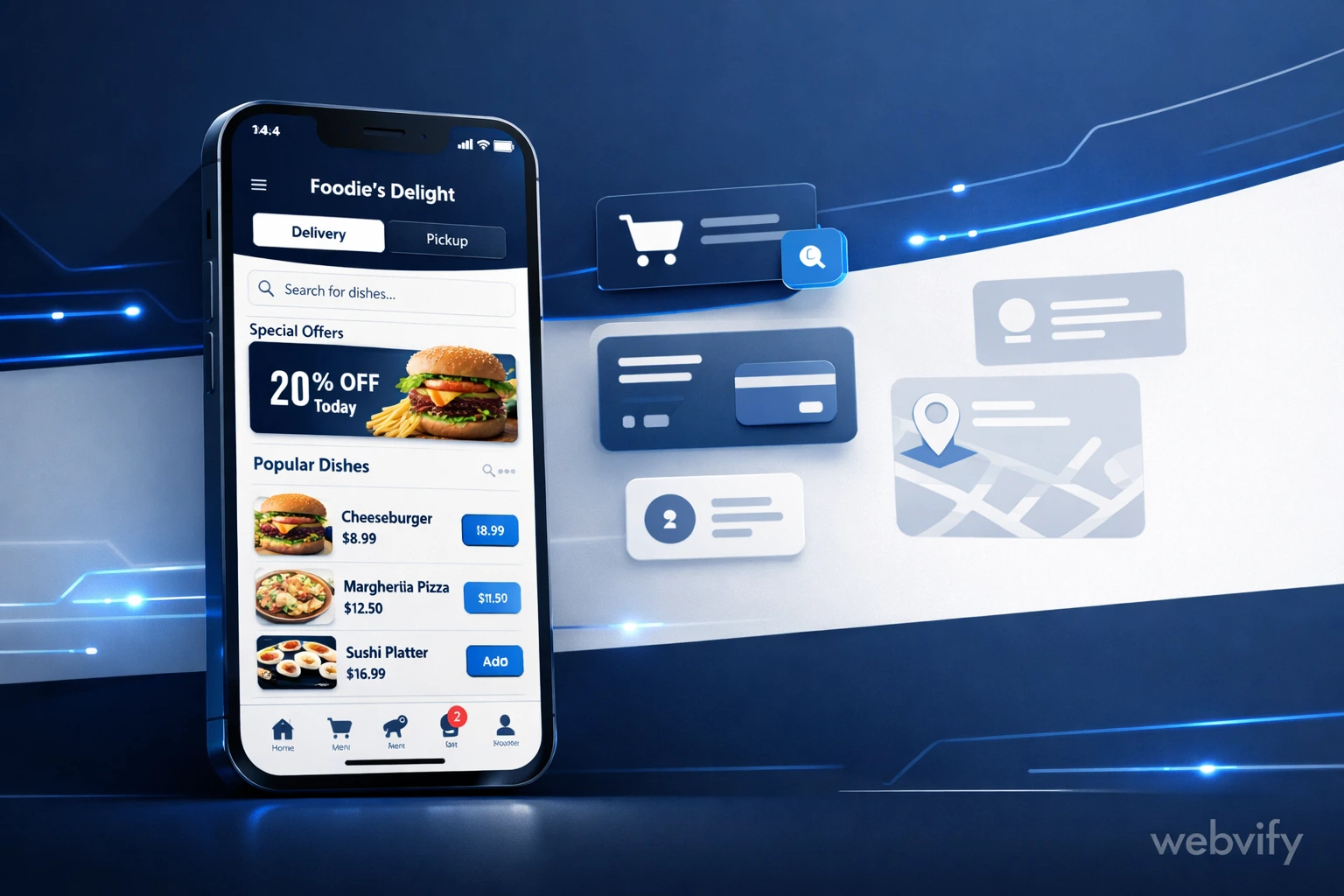
Mobile app development costs $40K–$300K+ in 2026. Here's the full breakdown — plus a faster, cheaper path if you already have a website.
Inside this article
Custom mobile app development starts at $50,000 in 2026 — and that's the low end. For most small and medium businesses, the full price lands between $80,000 and $300,000 before the first user ever opens the app.
That number stops most business owners cold. But the actual mobile app development cost depends almost entirely on how you build it, not just what it does.
What Drives the Mobile App Development Cost
Most estimates break into three layers:
Design covers every screen a user sees — onboarding, navigation, product listings, checkout, profile pages. A professional UI/UX designer charges $75–$150/hour. For a medium-complexity app, expect 200–400 hours of design work alone.
Development is where the bulk of the budget goes. A senior iOS or Android developer in North America charges $120–$200/hour. Building the same app twice — once for iOS, once for Android — effectively doubles this number unless you use a cross-platform framework like React Native or Flutter.
Project management, QA, and App Store submission add 20–30% on top. Someone has to coordinate the team, test every edge case, and navigate the App Store review process — which has its own rejection risks and resubmission cycles.
Here's a rough cost range by complexity:
A simple app (login, product list, push notifications): $40,000–$80,000.
A medium-complexity app (payments, user accounts, custom logic): $100,000–$200,000.
A complex app (real-time features, third-party integrations, custom backend): $200,000–$500,000+.
Ongoing Costs Nobody Mentions Up Front
The build price is only half the story. Once your app is live, you're looking at:
Annual developer program fees: Apple charges $99/year. Google charges a one-time $25.
Maintenance: Every iOS or Android OS update can break things. Expect 10–20% of the original development cost per year in ongoing upkeep if you have a native codebase.
Backend hosting: If your app has a server component (user accounts, orders, real-time data), hosting runs $50–$500/month depending on scale.
Resubmission work: Add a feature, change a business flow, and you're back in App Store review — which means developer time and potential rejection delays.
For a business that spent $100,000 building an app, ongoing costs of $15,000–$30,000 per year are realistic. That's before any new feature development.
Why Most Small Businesses Never Get an App
The math is straightforward: a restaurant, salon, or e-commerce store owner with $20,000 to invest in their business cannot justify $80,000–$150,000 on a mobile app. Even if the ROI would eventually be positive, the upfront cost kills the project before it starts.
This is why most SMBs rely on mobile web — responsive websites that work on phones — rather than dedicated apps. But mobile web has real limitations: no push notifications, no home screen presence, slower load times on poor connections, and none of the trust signal that comes with an App Store listing.
The gap between "too expensive to build" and "too limited to settle for" is where most business owners get stuck.
The Website-to-App Path: A Different Mobile App Cost Model
If you already have a website — on WordPress, Shopify, Wix, Webflow, or any other platform — there's a fundamentally different approach: wrapping your existing website in a native mobile app shell.
This is called a WebView app. Your website loads inside a native iOS and Android container, which then gets submitted to the App Store and Google Play as a real app. Users download it, see your branding, receive push notifications, and find it by searching the App Store.
The result looks and feels like a native app for 90%+ of real-world use cases — ordering, booking, browsing products, reading content. And the mobile app development cost is dramatically lower.
Services like Webvify handle this end-to-end: they build the native wrapper from your existing website, handle the App Store submission process (including developer accounts, screenshots, metadata, and review navigation), and give you an admin panel to manage push notifications and settings after launch. No coding required.
The cost is a fraction of custom development — a one-time setup fee rather than a six-figure build.
If you want to understand what the App Store submission process actually involves, this guide to submitting your app without a developer covers each step in detail.
When You Actually Need Custom Native Development
WebView apps are the right choice for most small and medium businesses with an existing website. But there are scenarios where custom native development is genuinely necessary:
Hardware integrations: If your app needs Bluetooth, NFC, or real-time camera processing beyond basic photo uploads, you need native code.
Complex offline functionality: Apps that must work fully offline — with local databases and background sync — typically need native development.
High-performance animations: Games, real-time video editing, or AR features need direct GPU access that a browser environment can't provide.
Regulated industries: Some medical or financial compliance requirements mandate specific security architectures that WebView apps don't support.
If you run a restaurant, salon, e-commerce store, coaching business, or any other service business — none of these apply. A WebView app covers 100% of what you need at a fraction of the native app development cost.
For web developers who want to offer mobile apps to clients without learning native development, this breakdown of the web-to-app upsell for freelancers shows how the model works in practice.
FAQ
How much does a mobile app cost in 2026?
Custom mobile app development costs between $40,000 and $300,000 depending on complexity, platform, and the location of the development team. Ongoing maintenance adds 10–20% of the original build cost per year. If you already have a website, a WebView app is a much cheaper alternative — services like Webvify typically offer one-time setup pricing that's a fraction of custom native development.
Can I build a mobile app for under $10,000?
Yes — but not with custom native development. Template-based no-code builders and WebView wrappers both fall well under $10,000. For most small businesses, a WebView app built from an existing website delivers the best combination of cost, speed, and app quality.
What is included in the app development cost estimate?
Typical agency quotes include design, iOS development, Android development, backend API work, QA testing, and App Store submission. What they often exclude: ongoing maintenance, server hosting, Apple's $99/year developer fee, and the cost of rejected submissions that require revision. Always ask for a line-item breakdown and the expected annual ongoing cost before signing a contract.
Ready to Get an App Without the Six-Figure Price Tag?
If you already have a website, you don't need to start from scratch. Webvify converts your existing website into a fully branded iOS and Android app — and handles everything from build to App Store submission to post-launch management. Most businesses are live on both stores in days, not months.