

Mobile App for Dog Trainers: Keep Clients Rebooking Between Programs
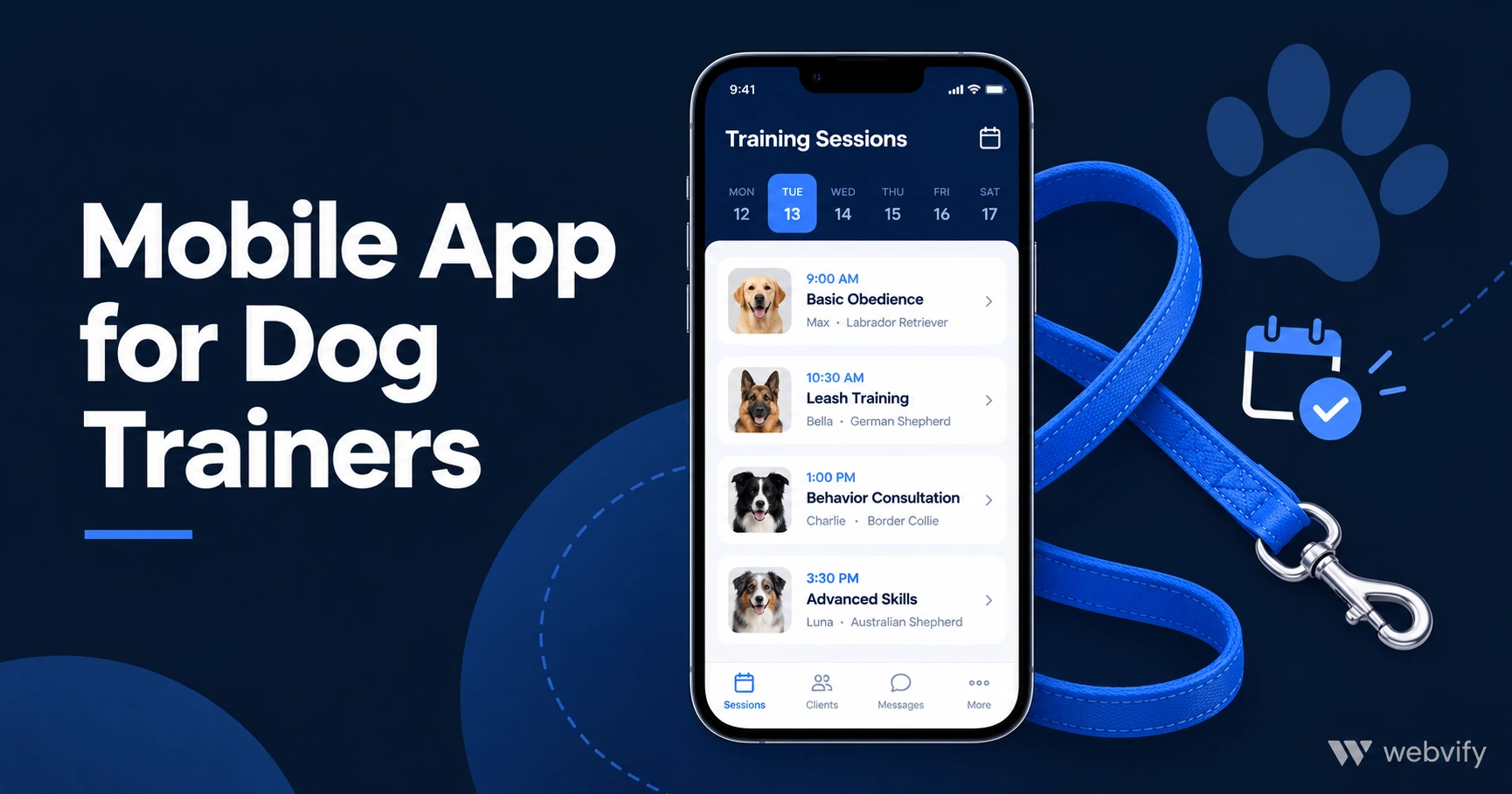
Dog trainers lose clients between programs, not because of bad training. Here's how a mobile app with push notifications closes the rebooking gap and builds long-term client loyalty.
Inside this article
A 6-week puppy class ends on a Friday. By the following Wednesday, most graduates have forgotten to ask about the intermediate course — not because the training failed, but because life got in the way. A mobile app for dog trainers solves exactly this: it puts your business on every client's home screen and lets you reach them before they start Googling alternatives.
Why Dog Trainers Lose Clients Between Programs
Dog training has a natural dropout window between courses. Clients finish basic obedience satisfied, fully intending to continue — and then the weeks pass. Their dog regresses slightly. A friend recommends someone new. They search online and land at a competitor. You never hear from them again.
This isn't a teaching problem. It's a visibility problem.
Most dog trainers rely on email and occasional social media posts to fill the next class cycle. Email reaches 20–25% of your list on a good day. Social posts reach 5% of followers on a good day with a cooperating algorithm. Neither channel is reliable enough to close the gap between "program complete" and "enrolled in the next level."
The decision to rebook typically happens 2–3 weeks after the previous program ends — exactly when you've gone quiet. If nothing on their phone is reminding them that intermediate classes are now open, they drift.
How a Mobile App for Dog Trainers Closes the Rebooking Gap
Push notifications from a branded mobile app reach 60–90% of opt-in users directly to their lock screen. That's three to four times higher than email. One well-timed message — "Intermediate obedience starts Monday. 3 spots left." — converts more than a full email sequence.
The key difference from a text message blast or an email newsletter is the channel itself. A push notification appears on the lock screen with your business name and logo. It arrives without going to spam. It doesn't compete with a promotional tab full of newsletters. Clients see it.
If you already have a website — even a basic one on WordPress, Squarespace, or Wix — services like Webvify can wrap that site into a fully branded iOS and Android app and handle the entire App Store and Google Play submission process. Your booking system, training resources, and contact form work exactly as they do on the web. The app adds push notification access and a permanent icon on your clients' phones.
For comparison, if you're already using email to reach your client list, the difference in reach is significant. Our breakdown of push notifications vs email for small businesses covers the numbers in detail.
Three Push Campaigns That Fill Dog Training Classes
The Post-Program Progression Nudge (Day 14)
Two weeks after a program ends, send a single push notification: "Ready for the next step? [Dog's name]'s advanced class opens this week."
Personalized messages that include the dog's name consistently outperform generic notifications. Most booking tools let you store this information, and your app can pass it through to the notification layer.
Day 14 is the right timing. It hits before clients have fully settled back into pre-class habits, but after the immediate post-program glow has faded. The training value is fresh in their mind. Their dog may have already shown signs of backsliding on a command or two. The message lands at the right moment.
The Seasonal Enrollment Opener (January and August)
The two highest-enrollment windows for dog trainers are January — driven by New Year resolutions and post-Christmas puppies — and August, when families reset their routines ahead of the school year.
A push notification 10–14 days before each window re-engages lapsed clients before they start searching elsewhere: "New class cycle starting soon. Limited spots for returning clients."
You're reaching people who already know your work, at the moment they're most likely to act. This campaign costs nothing to run once your app is live.
The 90-Day Dormant Reactivation
For clients who haven't booked in three months, a single reactivation message typically recovers 10–15% of the inactive list: "It's been a while. [Dog's name] might be ready for the next level — returning client spots are open this month."
Unlike email, this lands on the lock screen. It's the message that actually gets seen.
What App Store Credibility Does for Your Training Business
When a potential client searches for a dog trainer, they find your website. When they download your app from the App Store, they see your business alongside apps from established brands.
That credibility matters. Dog owners hand over animals they love deeply — sometimes off-leash in group environments, sometimes reactive dogs in controlled settings. An App Store listing with reviews reinforces that you're a professional operation, not a side project.
For trainers offering protection sports, reactive dog rehabilitation, or multi-week service dog certification programs, this signals the level of seriousness clients expect before committing to an extended program.
Dog walkers face a similar trust dynamic — see how that business category uses App Store presence as a credibility signal in our mobile app for dog walkers guide.
How to Get a Dog Training Mobile App Without a Developer
You don't need to hire a developer or learn Xcode. A WebView app converts your existing website into a native iOS and Android app without rebuilding anything from scratch. Your content, booking system, and training resources stay exactly where they are — the app wraps them and adds push notification capability.
Done-for-you services handle App Store and Google Play submission on your behalf, including the Apple Developer account ($99/year), screenshots, metadata, and content rating forms. Most trainers have their app live within 7–14 days.
You manage updates through your existing website. The app reflects them instantly — no new App Store submission needed each time you change a class schedule or add a new training package.
FAQ
How much does a mobile app for dog trainers cost?
A branded mobile app submitted to the App Store and Google Play typically costs $1,500–$4,000 as a one-time setup fee, with a monthly maintenance retainer of $50–$200 depending on the provider. This is a fraction of custom mobile development ($20,000+). The critical question to ask any provider: do they handle the full App Store and Google Play submission process, or do they leave that to you?
Can I keep my existing online booking system in the app?
Yes. Services that use a WebView approach wrap your existing website into a native app, so all functionality — including scheduling tools like Acuity, Calendly, or training management software with a web interface — works exactly as it does on your site. Clients book through the app the same way they would on your website. You manage availability in one place; the app reflects it instantly.
Do I need an Apple Developer account to put my dog training app on the App Store?
Yes, but you don't need to manage the submission process yourself. Apple requires a $99/year iOS Developer account for App Store listings, and Google charges a one-time $25 fee for Google Play. Done-for-you services like Webvify handle the submission process — screenshots, metadata, content ratings, compliance review — as part of the setup. The app lists under your business name and remains in your developer account permanently.
Stop losing clients between class cycles. Webvify turns your existing website into a branded mobile app and handles every step from App Store submission to push notification setup — no developer needed.