

Mobile App for Boutique Retail Shops: Keep Customers Coming Back Between Visits
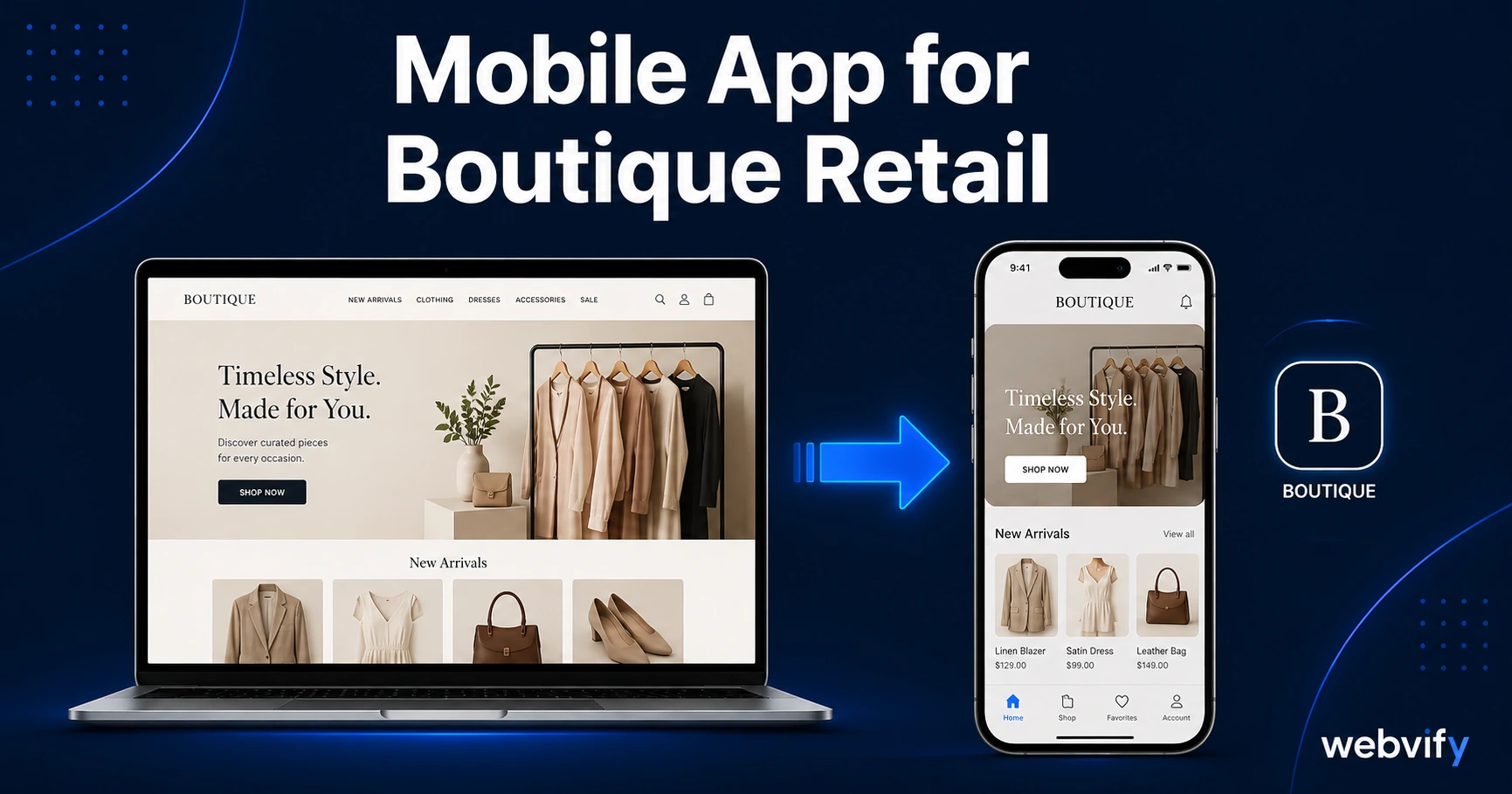
A mobile app keeps your boutique visible between visits — new arrival alerts, exclusive offers, and push notifications that bring shoppers back before competitors do.
Inside this article
- Why Boutique Retail Customers Drift Away (It's Not What You Think)
- What a Mobile App Actually Does for a Boutique Retail Shop
- The Three Push Notification Campaigns That Drive Repeat Sales
- App Store Presence and What It Signals to Your Customer
- How to Get a Mobile App for Your Boutique Retail Shop Without a Developer
- FAQ
Why Boutique Retail Customers Drift Away (It's Not What You Think)
Your customer had a great experience. They bought something, left happy, and told a friend. Six weeks later, they walked into a different boutique.
It wasn't because your shop was bad. It was because nothing reached them during those six weeks. No reminder that you got new stock in. No invite to a private sale. Just silence — and the competitor who happened to be top of mind that afternoon.
This is the core challenge for boutique retail: the gap between visits. Unlike grocery stores or coffee shops, boutique shoppers don't follow a fixed routine. They browse when the mood strikes. And if something else occupies that moment — a social media ad, a friend's recommendation, a store they pass on the way to lunch — you lose the visit.
A mobile app for your boutique retail shop changes that dynamic. It puts your brand on the customer's home screen and gives you a direct communication channel that reaches them wherever they are.
What a Mobile App Actually Does for a Boutique Retail Shop
A mobile app isn't just a digital brochure. For boutique retail, the core tools are:
Push notifications — direct alerts that land on the lock screen. Unlike email (20–30% open rate), push notifications average 60–90% open rates. When you get a new shipment in on Tuesday morning, you can tell your best customers before they even leave for work.
Home screen presence — your store icon sits next to Instagram, WhatsApp, and Apple Wallet. Every time a customer unlocks their phone, you're there. That passive visibility is worth more than any Instagram post.
App Store credibility — an app listed on the App Store or Google Play signals permanence. Boutique retail competes on trust and personal connection. An app reinforces both.
Loyalty integration — link your existing loyalty program, email list, or online shop directly inside the app. A service like Webvify converts your current website into a fully published mobile app without rebuilding it. You keep managing your store the same way; the app wraps around it.
If you're weighing whether push notifications are worth the effort compared to email, this 2026 comparison covers the real open-rate data for small businesses →.
The Three Push Notification Campaigns That Drive Repeat Sales
The most effective push notification strategy for boutique retail isn't about sending more — it's about sending the right message at the right moment.
1. New Arrivals Alert (same-day)
When new inventory arrives, send a push notification within 24 hours: "New arrivals just landed — come see what's in." This works because your regular customers already trust your curation. They don't need a hard sell. They need to know there's something worth coming in for.
2. 45-Day Rebooking Nudge
If a customer hasn't visited in 45 days, send a nudge: "It's been a while — we've had some beautiful new pieces come in since your last visit." No discount required. The reminder alone is often enough to trigger a walk-in, especially for customers who visit every 4–6 weeks naturally.
3. Seasonal Collection Opener
The spring-summer transition (March–April) and autumn-winter refresh (September–October) are the two highest-value push windows for boutique retail. Send a campaign 7–10 days before your new season display goes up: "Spring pieces are arriving this week. First look available in-store." Customers who feel like insiders come back faster and spend more.
A digital loyalty card through your app multiplies all three campaigns — shoppers are more likely to return when they can see their progress toward a reward. Here's how boutique retailers set up loyalty card apps without building a custom system →.
App Store Presence and What It Signals to Your Customer
A boutique's entire brand is built on curation, taste, and trust. Customers aren't just buying a product — they're buying confidence in your judgment.
An App Store listing reinforces that positioning. It signals that your business is established, professional, and here to stay. For boutique retail specifically — where the alternative is a temporary pop-up or a generic Etsy shop — that distinction matters to the customer evaluating where to spend.
It also opens up App Store search as an organic discovery channel. Someone searching "boutique shop [city name]" or "local clothing boutique" can find you. That's visibility that doesn't require ad spend.
How to Get a Mobile App for Your Boutique Retail Shop Without a Developer
You don't need to build an app from scratch. If your boutique already has a website — even a simple one — you can convert it into a fully published mobile app that lives on the App Store and Google Play.
The process works like this: a WebView app wraps your existing website into a native app shell. A managed service handles App Store and Google Play submission under your business name and gives you a push notification system you can use from day one.
What to look for in a service:
- End-to-end submission — they handle Apple and Google review, not just the technical build
- Your developer accounts — the app should be published under your name, not the service provider's
- Admin panel — you should be able to send push notifications yourself without contacting support each time
Most boutique retail shop apps go from initial setup to App Store approval in under two weeks. There's no code to write and nothing to learn about mobile development.
FAQ
How much does a mobile app for a boutique retail shop cost?
A custom-built app can cost $30,000–$100,000. Web-to-app services that convert your existing website into a published mobile app typically charge a few hundred dollars as a one-time setup fee, with optional ongoing support. That's the realistic option for most boutique retail owners who want professional App Store presence without a developer.
Do I need a developer to submit a retail app to the App Store?
No. Managed web-to-app services handle the Apple and Google submission process for you — setting up developer accounts, preparing the app binary, and responding to review feedback. You don't need to touch Xcode or Android Studio.
Can my existing website or online shop work inside the app?
Yes. If your loyalty program, booking system, or e-commerce store runs on a website, it works inside a WebView app by default. There's no need to rebuild it. The app wraps your current site — your existing tools, your existing inventory, your existing checkout — and packages it as a native app with a home screen icon.
Boutique retail is a relationship business. Push notifications and home screen presence are the tools that keep those relationships active between visits. See how Webvify helps boutique retail shops get live on the App Store →