

Loyalty Card App for Small Business: Keep Customers Coming Back
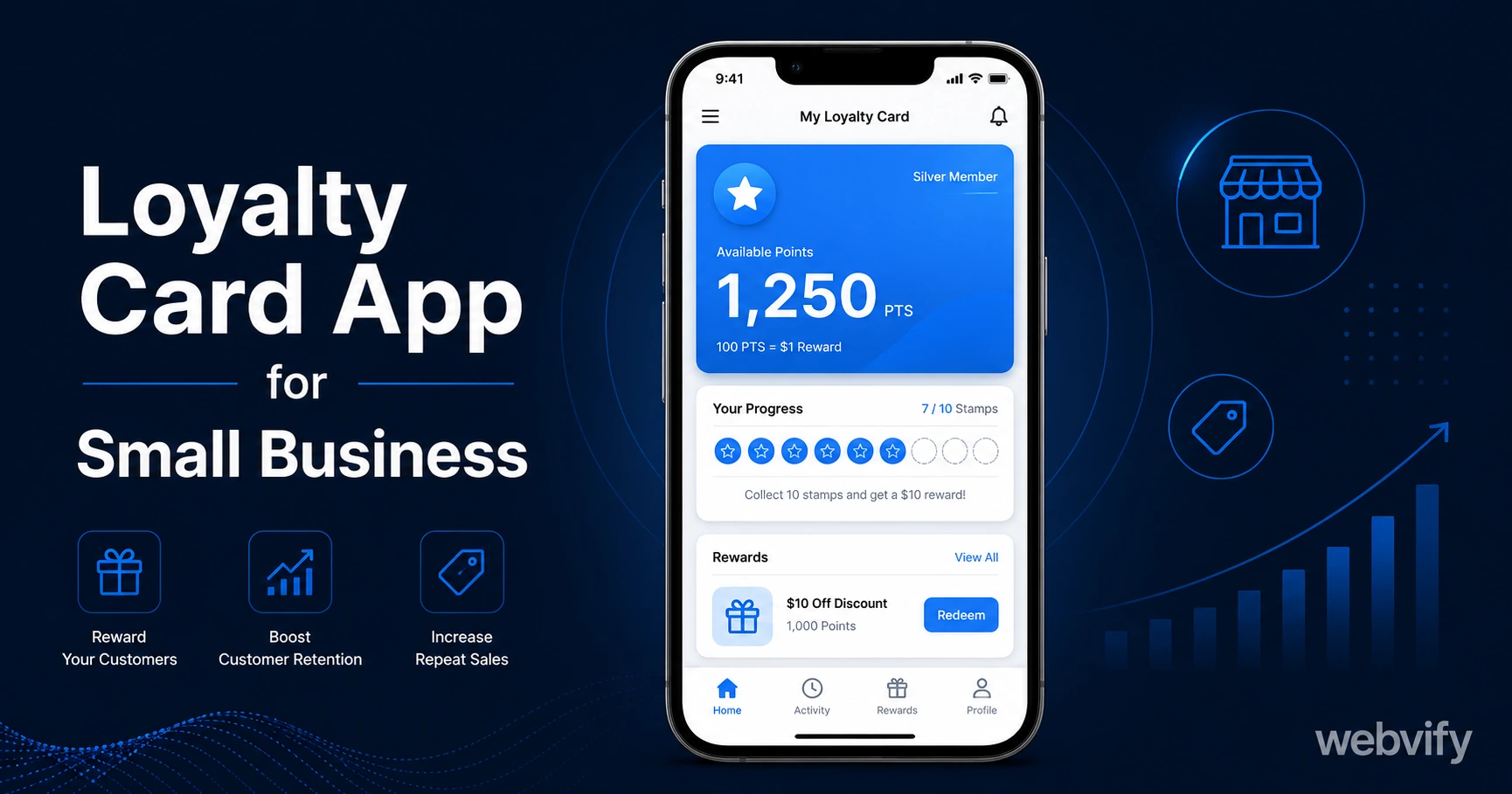
Paper stamp cards get lost before the free reward. A loyalty card app lives on your customer's phone and drives repeat visits automatically. Here's how to get one without a developer.
Inside this article
Why Paper Loyalty Cards Stop Working After the Third Visit
Forty percent of paper loyalty stamp cards are never redeemed. Customers lose them, forget them, or throw them away before earning the free reward. The problem isn't the incentive — it's that paper doesn't follow your customer home.
A loyalty card app for small business solves this at the root. Instead of a physical card a customer might remember to bring, your loyalty programme lives in their pocket at all times — and can reach out to them when they haven't been in for a while.
What a Loyalty Card App Does That Paper Can't
A loyalty card app replaces the paper punch card with a digital equivalent customers access from their phone. Every purchase gets logged, rewards are tracked automatically, and the customer never loses their progress because it's saved to their account rather than stamped on a card they may never see again.
Beyond tracking points, a well-built loyalty app does three things paper can't:
Push notifications. Instead of waiting for the customer to remember you exist, you can send a direct message. "You're 2 visits away from a free coffee" lands on their lock screen with a 60–90% open rate — compared to 20–30% for a loyalty email.
Home screen presence. A branded app sits on the customer's phone between visits. Every time they pick up their phone, your business name is visible. That visibility gap is where paper loyalty programmes fail: once the card is out of sight, so is your business.
Behaviour-triggered campaigns. When a customer hasn't been in for 30 days, you can automatically trigger a "We miss you" push with a bonus offer. Paper cards have no awareness that the customer has drifted. For a full breakdown of why home screen presence changes customer behaviour, this post on the benefits of converting your website to a mobile app covers the detail.
How Push Notifications Make Your Loyalty Card App Work Automatically
The single biggest advantage of a loyalty card app for small business isn't the digital stamp — it's the ability to run campaigns that paper simply cannot support.
Three high-return push campaigns that work for most small businesses:
The Milestone Nudge (Day 21). When a customer is two purchases away from a reward, send a push notification. This is the highest-conversion push you can run because the customer already has skin in the game. They need a reminder, not a reason.
The Slot Filler (same-day). On a slow Tuesday afternoon, send a flash double-points offer to everyone with the app installed. Fill quiet hours with existing relationships instead of running ads.
The Win-Back (Day 45). When a customer hasn't made a purchase in 45 days, trigger an automated re-engagement push with a bonus offer. Most businesses lose these customers to amnesia, not dissatisfaction. Push notifications intercept the drift before it becomes permanent.
Services like Webvify build these push notification campaigns into the app from the start — you set the trigger rules once and the app runs them in the background.
How to Get a Loyalty Card App for Your Small Business
Getting a loyalty card app set up comes down to two practical options:
Option 1: Wrap your existing website as a branded mobile app. If you already have a website with a booking system, loyalty plugin, or points page, a WebView-based service converts it into a fully branded mobile app. The app is submitted to the App Store and Google Play under your business name. No code required, and your existing loyalty logic stays intact.
Option 2: Use a standalone loyalty platform. Tools like Stamp Me, Loyalty Gator, or Square Loyalty let you build a digital punch card programme. These work well but often mean customers download a shared multi-business app rather than one with your name on it.
For most small businesses, Option 1 wins on brand recognition. A customer downloading "Joe's Coffee" from the App Store is a different experience from downloading a generic loyalty tool shared with dozens of other local businesses.
If you run a Shopify store with a loyalty plugin already in place, this guide on how to add push notifications to your Shopify store via a mobile app covers the specifics.
What to Look For in a Small Business Loyalty App
When evaluating a loyalty card app, focus on three practical filters:
Does it live under your brand on the App Store? A branded app gets downloaded more and builds more trust than a shared platform. Make sure the result is "Joe's Coffee" appearing in search results, not "Powered by LoyaltyPlatform."
Can you send push notifications directly? This is non-negotiable. A loyalty programme that can only communicate via email is half as effective as one that reaches the lock screen. Confirm push notifications are included — not an add-on at an extra tier.
Who handles App Store submission? Getting an app into the App Store and Google Play involves Apple developer accounts, binary builds, and a review process that trips up most small business owners. Look for a service that handles this end-to-end so you're not stuck waiting weeks at the submission stage.
Frequently Asked Questions
How much does a loyalty card app for small business cost?
The cost depends on how you build it. A standalone loyalty platform typically starts at $20–$50 per month. A fully branded app built on your existing website through a service like Webvify is a one-time project cost. Custom native development starts at $30,000+, which is rarely justified for a small business loyalty programme.
Do I need to rebuild my existing loyalty programme to use an app?
No. If you already have a points system or booking page on your website, a WebView-based app packages that into a mobile app without rebuilding anything. Your existing loyalty rules, customer data, and reward structure stay exactly as they are.
Can customers use my loyalty app on both iPhone and Android?
Yes. A properly built loyalty app is submitted to both the App Store (iOS) and Google Play (Android) so all customers can download it regardless of device. Make sure any service you use covers both platforms — not just one.
Your loyalty programme works harder when it lives on your customer's home screen. Get started with Webvify — we convert your existing website into a fully branded iOS and Android app, handle the App Store submission, and set up push notifications so your loyalty programme runs automatically.