

Best Shopney Alternatives in 2026 (For Shopify Stores)
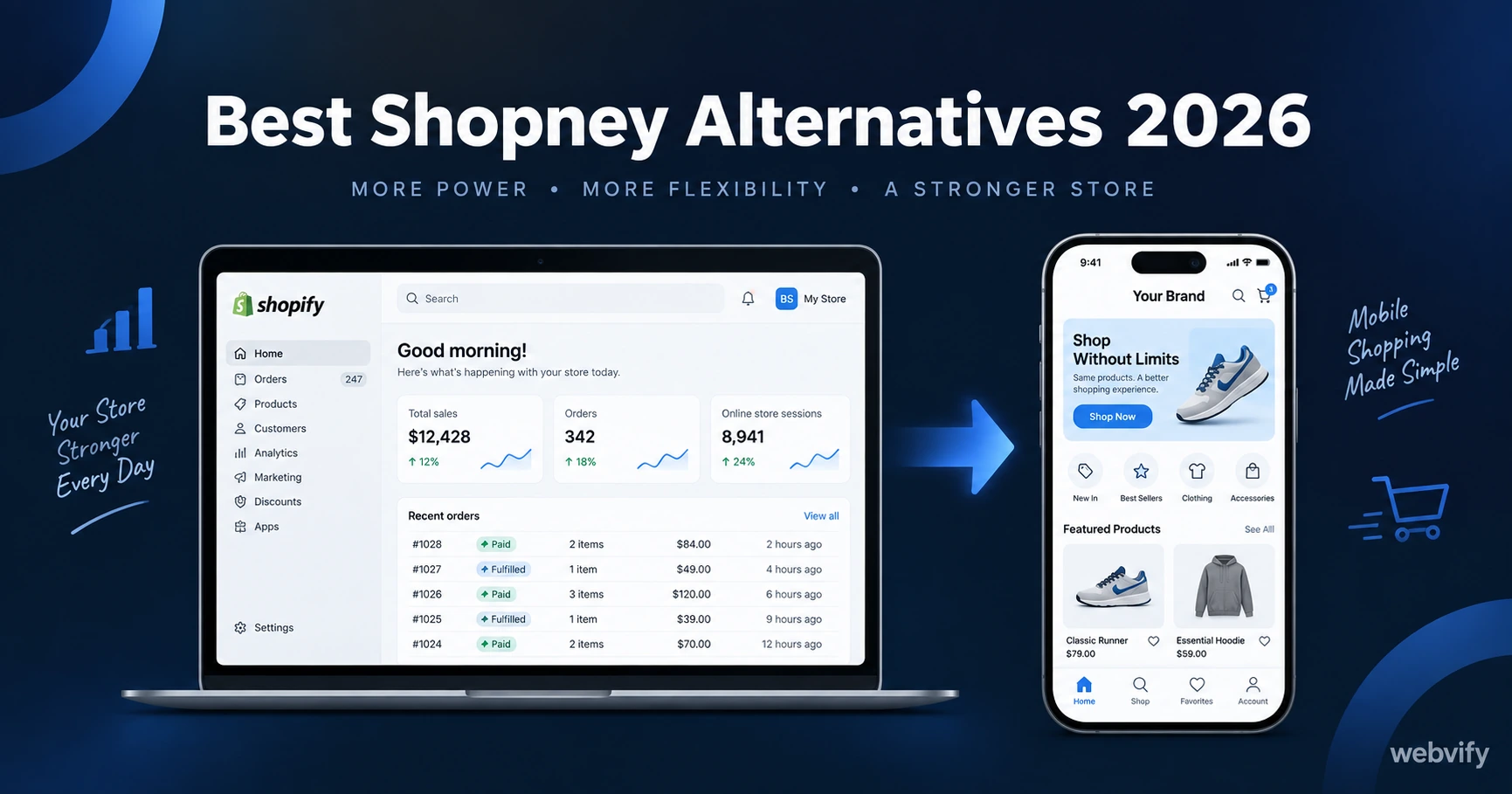
Shopney starts at $149/mo and rebuilds your store from scratch. Here are the best Shopney alternatives in 2026 — including tools that wrap your existing Shopify store.
Inside this article
Shopney charges $149/month and asks you to rebuild your Shopify store experience inside their dashboard before a single customer downloads the app. That's why Shopify merchants increasingly search for Shopney alternatives — tools that convert an existing store into a mobile app without starting from scratch.
Why Shopify Merchants Look for Shopney Alternatives
Shopney is a native app builder designed specifically for Shopify. It generates an iOS and Android app by pulling your product catalog and letting you configure the app layout inside their platform. The app can look polished, but the workflow requires ongoing maintenance across two systems: your Shopify store and your Shopney dashboard.
That dual-maintenance burden is the main reason merchants look elsewhere. Any design change, new collection, or promotional banner needs to be updated in both places. For stores that change inventory frequently, that overhead compounds fast.
The cost adds up too. At $149/month, you're committing $1,788 per year before your first push notification goes out. For growing stores still finding their footing with mobile, that's a significant line item — especially when cheaper paths to a published app exist.
What to Look For in a Shopney Alternative
Before comparing tools, it helps to understand the two types of Shopify mobile app builders:
Native builders — like Shopney, Tapcart, and Vajro — generate a fully native app by pulling your product data and letting you configure the experience inside their platform. You get polished native UI components, but you're maintaining a separate system alongside your Shopify store.
Web-to-app wrappers — convert your existing Shopify storefront directly into a mobile app. Your Shopify store is the app. Changes you make in Shopify appear in the app automatically. No parallel platform to maintain.
A second key question: who handles App Store and Google Play submission? Apple's review process and Google Play's compliance requirements are where most first-time app publishers get stuck. The best Shopney alternatives either include submission in their service or walk you through it step-by-step.
If your Shopify theme is already optimized for mobile — which most modern themes are — a web-to-app wrapper often delivers 90% of the native experience at a fraction of the ongoing cost.
The Best Shopney Alternatives in 2026
Webvify
Webvify converts your existing Shopify store (or any website) into a fully branded iOS and Android app without rebuilding anything inside a separate platform. The service is done-for-you: build, App Store submission, Google Play submission, and an admin panel for ongoing management are all included.
Your Shopify store stays the single source of truth. Product updates, collection changes, and design updates made in Shopify appear in the app automatically. Push notifications, splash screens, and app branding are configurable from a clean admin panel.
Unlike Shopney, there's no parallel platform to maintain. Submission is handled under your own developer accounts — you own the app listing, not the service provider.
For Shopify stores that want to be on the App Store and Google Play without rebuilding their store experience, Webvify is the most direct path. This comparison covers the differences in detail →
Tapcart
Tapcart is the closest like-for-like competitor to Shopney. It builds a native React app from your Shopify data and gives you a visual editor to configure layouts, blocks, and product pages. Pricing starts at $200/month.
The upside: native performance and a large library of Shopify-native blocks. The downside: the same dual-maintenance workflow as Shopney, at a higher starting price. If you've already tried Shopney and the parallel-platform approach isn't working for your team, Tapcart is unlikely to change that equation.
MobiLoud
MobiLoud is a managed service that converts your website or Shopify store into a mobile app using a web-to-app approach. It's been operating since 2012 and handles App Store and Google Play submission as part of the service.
The main consideration: pricing starts around $399/month — the highest starting price on this list. For enterprise stores with complex requirements, that reflects a white-glove managed service. For a growing Shopify store, it's worth calculating the 12-month cost before committing.
Vajro
Vajro is a Shopify native app builder starting around $99/month, making it one of the more affordable native options. Like Shopney, it builds a native app from your Shopify product data inside their dashboard. Customer support is frequently highlighted in reviews.
The tradeoff is the same as Shopney: you're building and maintaining a separate app experience. If your catalog changes frequently, that overhead adds up.
Plobal Apps
Plobal Apps targets high-growth Shopify brands and starts at $149/month, with enterprise tiers going significantly higher. It includes advanced personalization features, A/B testing for app layouts, and deeper analytics than most alternatives in this category.
If your store is doing serious monthly volume and you need enterprise-level analytics and personalization inside a native app, Plobal Apps is worth evaluating. For earlier-stage stores, the feature set may exceed what you need.
Which Shopney Alternative Should You Choose?
The decision usually comes down to one question: do you want to maintain a separate app platform alongside your Shopify store?
If maintaining a parallel system is manageable for your team — and you specifically need features like native checkout flows, custom product carousels, or gesture-based navigation — then Tapcart or Vajro are the closest Shopney alternatives.
If your Shopify store already works well on mobile and you want an app without adding a second system to manage, a web-to-app service is the more practical path. You'll launch faster, maintain one system, and own your App Store listing without being dependent on another platform continuing to operate.
A broader comparison of all major Shopify app builder options — including pricing, submission handling, and key tradeoffs — is covered in Best Shopify Mobile App Builders in 2026 →.
FAQ
How much does Shopney cost per month?
Shopney's pricing starts at $149/month billed monthly, or around $99/month on an annual plan. This does not include Apple Developer Program ($99/year) or Google Play Console ($25 one-time) fees, which are required to publish any app to the stores.
Can I keep my App Store ratings when I switch from Shopney to another builder?
App Store ratings are tied to your App ID. If you switch builders and the new provider submits under a new App ID, your review history starts over. To protect your ratings, choose a service that submits under your own developer accounts from the start — so you own the App ID and can change providers later without losing reviews.
What is the fastest way to get my Shopify store live on the App Store?
A web-to-app wrap service is typically the fastest option. Since your existing Shopify store becomes the app without rebuilding it, setup is measured in days. An end-to-end managed service — where the provider handles App Store and Google Play submission — removes the compliance bottleneck that slows most first-time publishers.
Ready to turn your Shopify store into a live iOS and Android app without rebuilding it or maintaining two systems? Webvify handles the build, submission, and admin panel end-to-end.