

Mobile App Marketing Strategy: From Zero Downloads to 1,000 in 90 Days
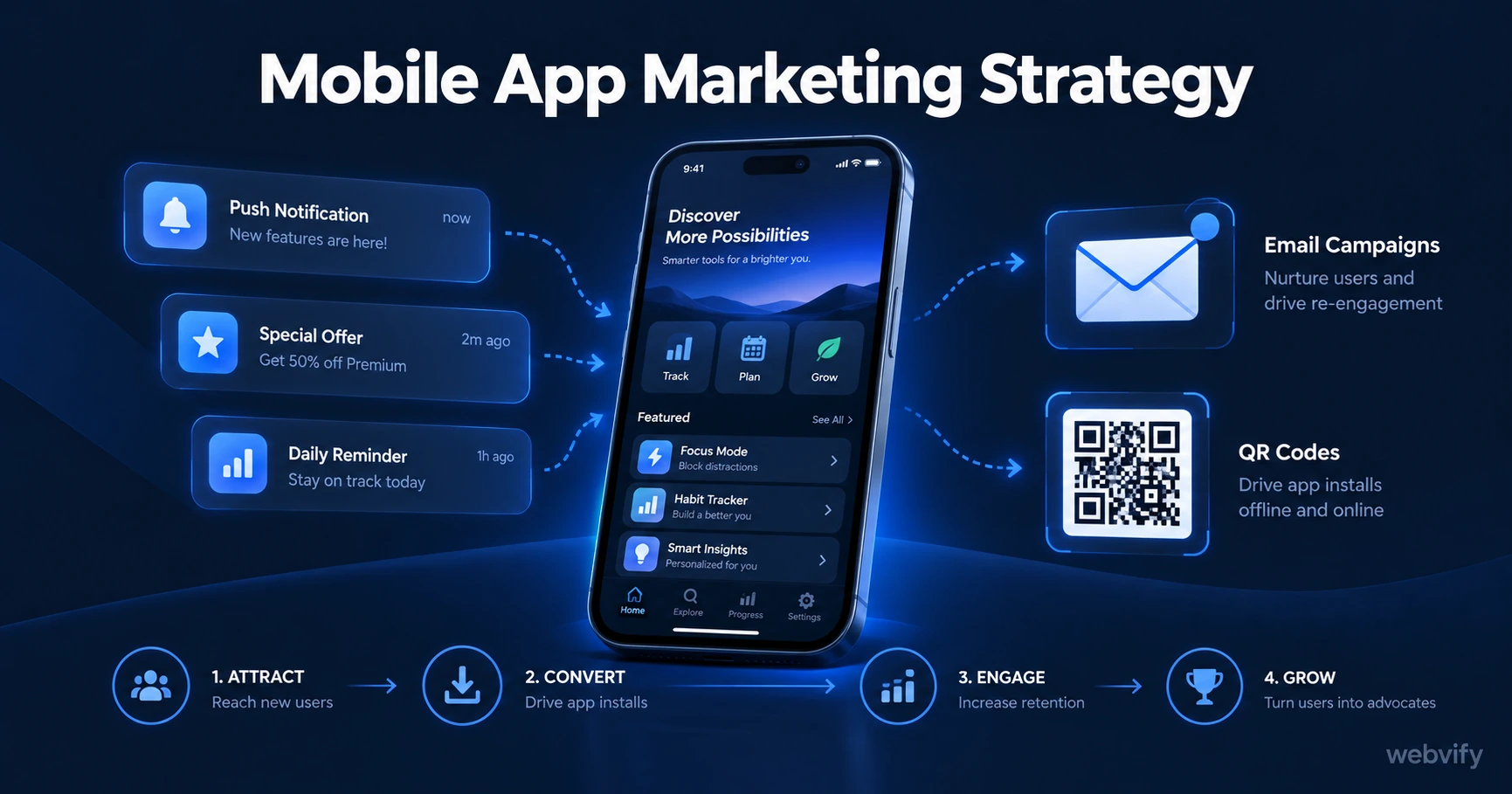
Most apps get zero downloads after launch. Here's a 90-day mobile app marketing strategy for small businesses — no ad budget required.
Inside this article
The average small business app gets fewer than 100 downloads in its first month. Not because it is a bad app — because no one knew it existed and nothing was done to change that.
Publishing to the App Store is not a marketing strategy. It is a starting point. The businesses that grow past 1,000 downloads do so because they run a deliberate sequence of actions in the 90 days after launch. This guide breaks down exactly what that looks like.
Why Most Apps Stall After Launch
Getting your app live on the App Store and Google Play is genuinely an achievement. The problem is treating submission as the finish line.
Without active promotion, a newly published app gets organic App Store search traffic only after it has enough reviews, ratings, and download momentum to rank. That takes time you do not have if downloads are not coming in.
The gap is not quality — it is visibility. You need to manufacture that early momentum from the audience you already have, then let App Store discoverability compound on top of it.
Month 1: Build Momentum From Your Existing Audience
Your existing customers are the fastest and most reliable source of first downloads. They already know your business, trust you, and will install the app if you ask them directly.
Send a personal email to your customer list announcing the app. Keep it short. One sentence of what the app does, one screenshot or mockup, one download link. A personal-feeling email converts at 5–10x the rate of a designed campaign email.
Add an app download banner to your website. Put it above the fold on mobile. Most of your website visitors are already on their phones — make the install zero-friction.
Tell your team. Staff who interact with customers daily — in-store, on calls, during service visits — should be mentioning the app in conversation. A verbal mention at checkout drives installs at near-zero cost.
If you have a Shopify or WooCommerce store, getting push notifications set up through your mobile app gives you a direct line to customers the moment they install — so the first 30 days are also when you set up your messaging sequences.
Month 2: Build Discoverability and Social Proof
After your initial customer base starts downloading, the next goal is making the app discoverable to people who do not know you yet.
Your app title, subtitle, and keyword field determine whether strangers find you in the App Store. Use your primary keyword in the title. Research what people search for when they want what you offer — "restaurant loyalty app", "booking app for salons", "fitness studio app" — and load those terms into the keyword field. App Store Connect gives you 100 characters for keywords; use every one.
Reviews matter more than any marketing channel at this stage. The fastest way to get reviews is to ask through a push notification at the right moment — right after a completed order, a finished appointment, or a successful loyalty redemption. Do not ask for a 5-star review directly; ask if they enjoyed the experience. If they tap yes, the review prompt appears.
QR codes placed at your physical location are underused by most small businesses. A table card, a receipt footer, or a simple "Download Our App" poster with a QR code converts walk-in customers who would never have searched the App Store on their own. This guide covers the full QR code strategy if you want the specifics.
Short-form video showing the app in action drives installs better than static posts. A 15-second screen recording of a customer redeeming a loyalty point, getting a booking confirmation, or receiving a deal notification is all you need. No production budget required.
Month 3: Turn Every Customer Touchpoint Into a Download Opportunity
By month three you have momentum — reviews are building, App Store search is working, and your push notification list is growing. Now the goal is making app installation a default part of every new customer relationship.
Train your team to mention the app at the point of sale or booking. The checkout moment is when the customer relationship is strongest: "You will get loyalty points in the app — want me to send you the download link?" is all it takes.
Add a one-line app download prompt to your email footer. Every email your business sends — appointment confirmations, receipts, newsletters — reaches customers where they are already reading. A link with a line like "Download our app for exclusive offers" catches customers who prefer to act later.
After completed services, a follow-up message that includes a QR code or download link reaches customers when satisfaction is highest. This is especially powerful for service businesses — cleaners, therapists, contractors — where the customer will not need you again for weeks or months. An installed app on their home screen is what keeps you visible during that silence.
A service like Webvify handles the build and App Store submission end-to-end, so you can focus on the marketing execution rather than the technical setup.
The Metric That Tells You Your Mobile App Marketing Strategy Is Working
Do not track raw downloads. Track push notification opt-in rate.
When a customer installs your app and allows notifications, they are telling you they want to hear from you. An opt-in rate above 60% means your onboarding is working. A push notification open rate above 40% means your messaging is landing.
These two numbers are more predictive of real business outcomes — repeat visits, rebookings, repeat purchases — than total install count. An app with 300 engaged, opted-in customers outperforms an app with 1,000 silent installs every time.
Check App Store Connect analytics and Google Play Console weekly in the first 90 days. The data shows you where to double down.
Frequently Asked Questions
How long does it take to get 1,000 app downloads as a small business?
For most small businesses with an existing customer base, 1,000 downloads in 90 days is achievable without paid advertising. Activating your customer list in month one typically delivers 300–500 installs from people who already know you. The remaining growth comes from App Store organic search, QR codes, and social media in months two and three.
Do I need a marketing budget to grow my app downloads?
Not for the first 1,000 downloads. Every channel in this guide — email, website banners, App Store Optimization, QR codes, push notifications, and short-form video — is free once your app is live. Paid channels like Apple Search Ads become relevant once you have optimized the free channels and want to accelerate beyond your existing audience.
What is the most important action to take in the first week after my app launches?
Send a direct email to your customer list within the first 48 hours. This is the single highest-converting action for newly launched apps. Keep it simple: what the app does, a screenshot, and a download link. Your warm audience converts far better than any cold channel, and that initial download momentum helps your App Store ranking build faster.
Turn website visitors into repeat customers on their home screen. Get your app live on the App Store and Google Play with Webvify.