

Mobile App for Tennis Clubs: Keep Members Playing and Coming Back
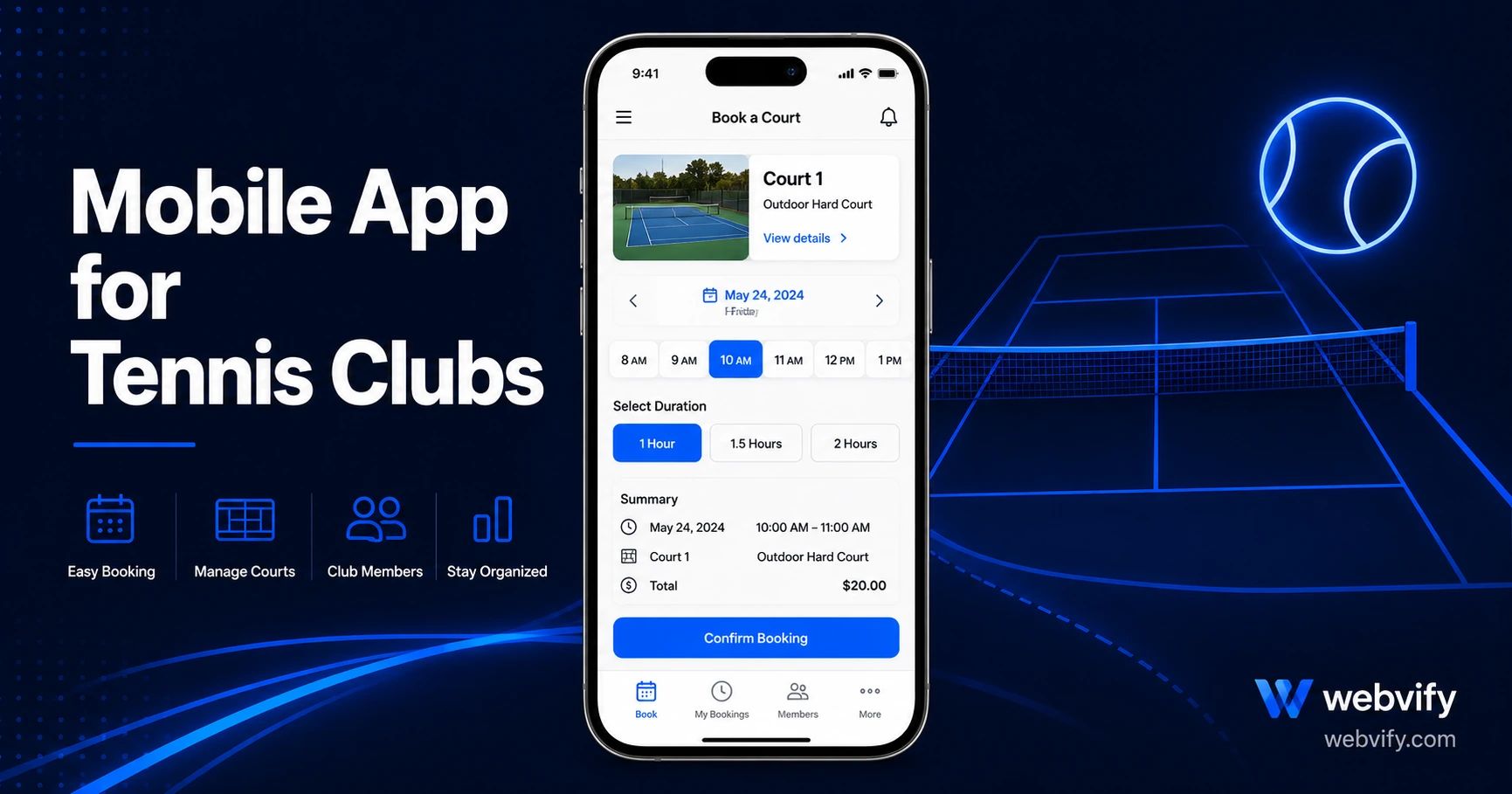
Tennis clubs lose 25–35% of members every year — not because of bad courts, but because nothing stays in touch. Here's how a mobile app fixes that.
Inside this article
Most tennis clubs lose between 25 and 35% of their members every year. The courts are well-maintained, the coaching is good, and the facilities are clean — but members still drift. The reason is usually the same: nothing maintains the connection between visits.
When a member finishes their last match of the season, your club goes quiet on their phone. No reminders, no alerts, no reason to come back. By the time spring arrives, some of them have already forgotten to renew. A mobile app with push notifications changes that dynamic — and this guide explains how.
Why Tennis Club Members Drift Away
Tennis has a seasonal problem. In most regions, outdoor clubs sit dark from October through March. Indoor clubs fare better, but still face the "new year dropout" spike — members who join in January, play twice, and quietly let their membership lapse.
The issue isn't motivation. Members who already play tennis are already motivated. The issue is visibility. When your club goes quiet, members don't actively choose to leave — they just stop returning.
Most clubs try to solve this with email newsletters. The problem: email open rates in the sports and recreation sector average 20–25%. Push notifications delivered through a mobile app reach 60–90% of recipients on the lock screen. That's not a small difference — it's the gap between a reminder that gets ignored and one that actually drives a booking.
How a Mobile App for Tennis Clubs Keeps Members Coming Back
A mobile app puts your tennis club on a member's home screen. That alone — the icon on the phone — maintains visibility between visits in a way that no email or social media post can replicate.
But the real leverage comes from push notifications. Unlike email, push notifications appear directly on the lock screen without requiring the member to check an inbox. For a sports club with seasonal gaps, that's the difference between being remembered and being forgotten.
Services like Webvify convert your existing club website into a fully branded mobile app — available on both the App Store and Google Play — without requiring you to rebuild your website or hire a mobile developer. Your booking system, member portal, and content all stay exactly where they are. The app wraps what you already have and adds the push notification channel you've been missing.
Three Push Notification Campaigns Every Tennis Club Should Run
These three campaigns cover the most critical points in the tennis club member lifecycle:
The Seasonal Opener (February–March)
For clubs in temperate climates, February and March are the highest-leverage weeks of the year. Members are starting to think about getting back on the court. A push notification on the first warm weekend of the year — "Courts are open. Book your first session of the season →" — captures that intent before they book anywhere else.
Send it on a Saturday morning. Keep it under 80 characters. Link directly to your booking page.
The Court Availability Alert
"Sorry, everything was booked" is the fastest way to lose a member. A real-time or scheduled push notification when court slots open — especially during peak hours — solves two problems at once: it fills your dead inventory and gives members a reason to open the app.
Run this year-round. It requires no design or copywriting — just a short template and a trigger.
The Membership Renewal Nudge (30–45 Days Before Expiry)
Most clubs send one renewal email when the membership lapses. By then, the decision is already made. Push notifications sent 45 days, 14 days, and 3 days before expiry — each short and specific — recover a meaningful percentage of at-risk members before they go cold.
The 45-day push is the most important one. It arrives while members are still actively playing, not after they've already mentally moved on.
What to Look for in a Tennis Club Mobile App
Not every app solution works the same way for a membership business. Here's what matters specifically for a tennis club:
Your existing booking system must work inside the app. If your club uses Clubspark, CourtReserve, or another court management platform, the app needs to load those pages correctly — including login flows and payment steps. A good web-to-app solution wraps your existing setup rather than replacing it.
Push notification scheduling should be manageable without a developer. You need to be able to schedule and send notifications from an admin panel, not by filing a support ticket with a tech team.
The app must be published under your club's name on the App Store and Google Play. Members trust "Oakwood Tennis Club" in the App Store far more than a generic third-party platform's listing. Your name, your branding, your credibility.
For a detailed look at what the App Store submission process involves, the how to submit your app to the App Store guide covers what's required — and how done-for-you services handle the parts most club managers find daunting.
Getting Started: A Realistic Timeline
Getting a mobile app for your tennis club live is shorter than most managers expect. With a web-to-app service, the typical path looks like this:
- Week 1: App built from your existing website and reviewed
- Week 2: App Store and Google Play submission
- Week 3–4: Approval and live on both stores
The App Store review takes 1–3 days for most apps. Google Play is typically faster. You don't need a developer, you don't need to learn Xcode, and your website doesn't change at all.
Once live, the first campaign to set up is the seasonal opener — ideally before February, when members are making their first "do I want to play this year?" decision. The same retention mechanics apply across other membership-based venues: the mobile app for golf courses guide covers how clubs with similar seasonal patterns have approached it.
Frequently Asked Questions
How much does a mobile app for a tennis club cost?
Costs vary significantly by provider. Custom native app development typically runs $30,000–$150,000 plus ongoing maintenance. Web-to-app services offer a done-for-you model at a fraction of that cost — the app is built from your existing website and submitted to both stores under your club's developer accounts. Pricing for this category is typically a one-time or annual flat fee rather than a percentage of membership revenue.
Do I need to rebuild my website or booking system to get an app?
No. A WebView-based mobile app wraps your existing website and booking system — whatever you're currently using for court bookings loads inside the app as-is. You don't need to switch platforms or re-enter any content.
Can a tennis club send push notifications to all members at once?
Yes. Push notifications can be broadcast to all app users at once, or sent to segments. For a seasonal opener or a flash court availability alert, a broadcast to all members is the most common approach. Renewal nudges timed to individual membership expiry dates are also possible through most app admin panels.
Your tennis club's best retention tool isn't a loyalty card or a newsletter — it's being on the home screen when a member decides whether to book. Webvify converts your existing club website into a fully branded mobile app, published on the App Store and Google Play under your name, with push notifications built in. Get started at webvify.app.