

Mobile App for Podiatrists: Keep Patients Rebooking Between Visits
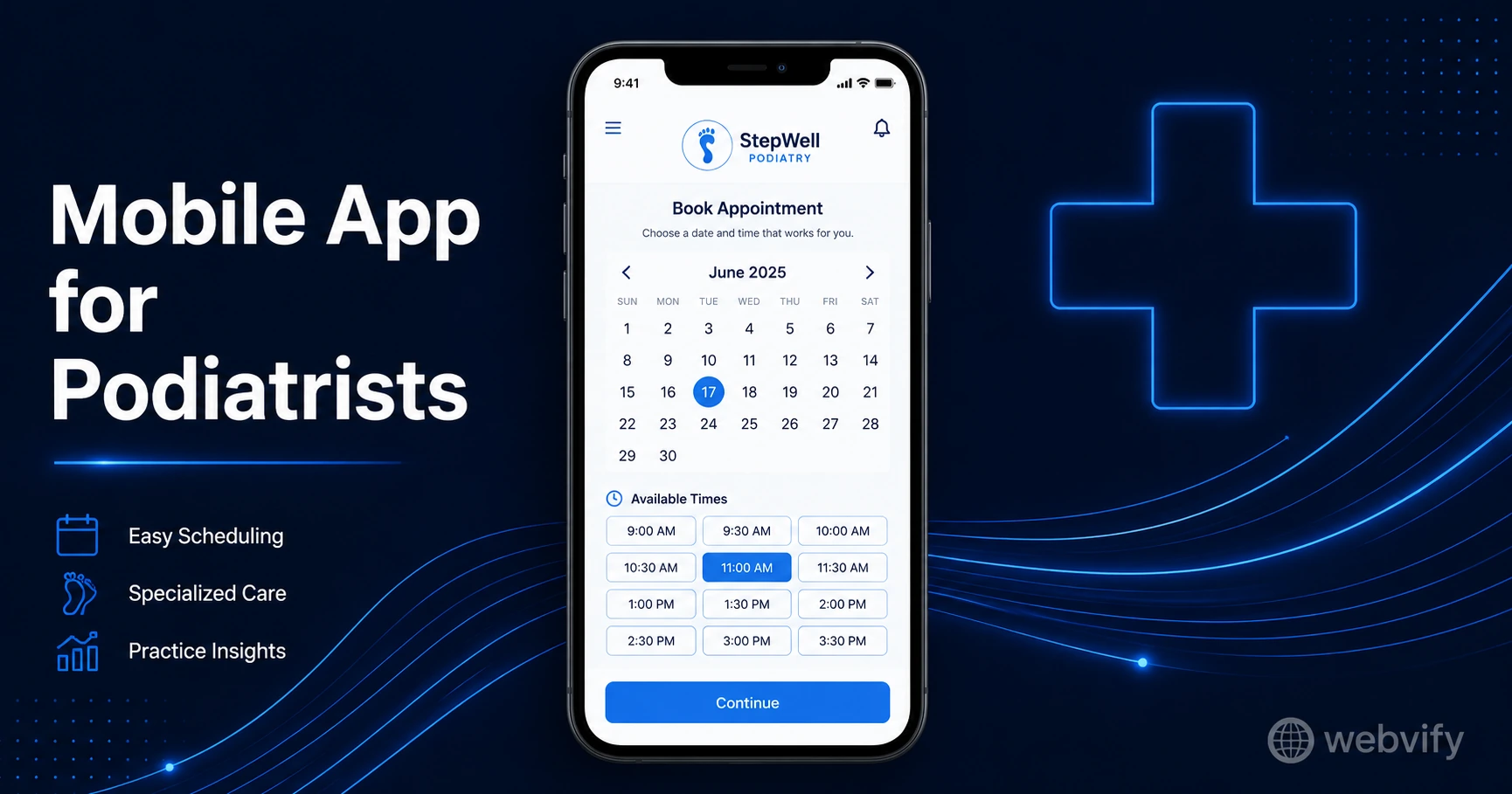
Podiatry patients drift away between visits — not because of bad care, but because nothing follows up. Here's how a mobile app changes that.
Inside this article
- Why Podiatry Patients Drift Away Between Appointments
- What a Mobile App for Podiatrists Actually Does
- Three Push Notification Campaigns That Drive Rebookings
- App Store Presence: The Credibility Signal You're Missing
- What Getting on the App Store Actually Involves
- FAQ
- Get Your Podiatry App Live Without a Developer
Your patient walks out of the clinic feeling better than they have in months. Six weeks later, they're limping again — and they're Googling a different podiatrist because yours isn't on their phone.
This is the retention gap. It isn't a care problem. It's a visibility problem.
Podiatry practices run on repeat visits. Diabetic foot care patients need checks every 8–12 weeks. Orthotics patients come back for adjustments. Ingrown nail treatments return seasonally. The revenue is recurring — but only if you stay visible between appointments. A mobile app for podiatrists gives your practice a home screen presence, a direct push notification channel, and a one-tap path back to your booking page.
Why Podiatry Patients Drift Away Between Appointments
The podiatry rebooking problem is different from most healthcare verticals. Patients don't always leave an appointment with a confirmed follow-up. They're told to "come back in six weeks" — and then life gets in the way.
Email reminders average a 20–25% open rate in healthcare. That means three out of four patients don't see your follow-up. Text messages are better, but they feel intrusive in a clinical context and don't carry the visual weight of a branded notification.
Push notifications from a branded app sit in a different category entirely. They arrive on the lock screen from your practice's name and icon, feel intentional, and don't compete with promotional clutter. Open rates for healthcare push notifications consistently run between 60% and 90%.
The patient who stopped rebooking usually didn't leave on purpose. They forgot you existed because nothing prompted them to act.
What a Mobile App for Podiatrists Actually Does
A podiatry app doesn't need to be a complex custom build. The most practical approach is a WebView app — your existing booking website or patient portal wrapped into a native-looking mobile app, published on the App Store and Google Play under your practice's name.
Patients install the app once. From that point forward:
- Your practice is on their home screen, visible every time they unlock their phone
- You can send push notifications for appointment reminders, seasonal campaigns, and rebooking nudges
- They can book appointments, access their information, and contact you without searching for your website
Services like Webvify handle this end-to-end — building the WebView app, submitting it to both stores under your developer accounts, and providing an admin panel for managing push notifications without needing a developer.
If you already run online booking through Cliniko, Nookal, or a similar practice management system, there's nothing to rebuild. The app wraps your existing booking flow exactly as-is. Update your website and the app reflects it automatically.
Three Push Notification Campaigns That Drive Rebookings
The business case for a podiatry app is built on three campaigns that require no advertising spend:
The 42-Day Rebooking Nudge. Six weeks after a patient's last visit, send a push: "Your last visit was six weeks ago — time to schedule your next foot health check." One notification. Open rates of 70%+ are typical. No spam filter, no inbox competition, no reminder for your front desk to chase manually.
The Seasonal Foot Health Campaign. Spring and summer are high-intent windows. Patients who've been ignoring a problem through winter become motivated when sandal season arrives. A push notification campaign in March and September to your full patient list fills appointment slots at zero cost.
The 18-Month Dormant Reactivation. For patients who haven't visited in over a year, a short reactivation message lands more effectively than a cold email. Push notifications reopen a direct communication line without the friction of finding your number or website again.
For practices running a standard booking system, none of this requires changing how you manage appointments. The app just adds a direct notification channel on top.
App Store Presence: The Credibility Signal You're Missing
Healthcare is a trust-sensitive category. Patients evaluating a clinic for the first time make judgments before they book. An App Store listing — with your practice name, patient reviews, and a professional icon — functions as a credibility signal that a website or Google Business profile alone doesn't replicate.
Patients in your area searching for "podiatrist" or "foot clinic" can also discover your practice directly through App Store and Google Play search. That's a discovery channel most podiatry practices aren't using at all.
The same trust dynamic applies across musculoskeletal and allied health verticals. The mobile app for chiropractors and mobile app for physical therapists posts cover how this retention pattern plays out in similar practices.
What Getting on the App Store Actually Involves
This is the step that stops most practice managers from moving forward. App Store and Google Play both require developer accounts, compliance documentation, and an app binary.
The practical checklist:
- Apple Developer account ($99/year) — registered under your practice or business name
- Google Play Developer account ($25 one-time fee)
- App privacy policy (required by both stores — your practice likely already has one)
- WebView app binary (this is what a service like Webvify builds for you)
Apple reviews healthcare apps carefully, but a WebView app that connects to your existing, compliant booking website is straightforward to approve. The key requirement is that the app delivers a clear patient utility — which a real podiatry booking experience does. Review time is typically 24–48 hours.
For most practices, the end-to-end process from briefing to live app takes one to two weeks.
FAQ
How much does a mobile app for a podiatry clinic cost?
Custom native apps cost $20,000–$80,000 or more to build, plus ongoing developer time for updates. A WebView app using a managed service like Webvify is a fraction of that — typically a one-time build fee and an annual plan, with no mobile development skills required. For a small-to-medium practice, the comparison isn't close.
Can I use my existing Cliniko or Nookal booking system inside the app?
Yes. A WebView app wraps your existing booking website exactly as-is. Patients use the same interface they'd use in a browser, but inside a native mobile app with home screen presence and push notification capability. You don't rebuild anything, and you don't manage two separate systems.
How long does it take to get a podiatry app live on the App Store?
From briefing to published: typically one to two weeks. Build time is fast when you're wrapping an existing website. Most of the timeline is Apple's review period (24–48 hours) and setting up developer accounts if you don't already have them. Google Play is typically faster — usually under a week.
Get Your Podiatry App Live Without a Developer
The patients who stopped rebooking didn't leave your practice. They just ran out of reasons to come back before the next problem flared up.
A branded mobile app puts your practice on their home screen, gives you a direct notification channel, and removes the friction between a patient thinking "I should book" and actually booking. Your booking system stays the same. Your website stays the same. You gain a persistent presence on every patient's phone.
See how Webvify builds and submits your podiatry app end-to-end →