

How to Get a Mobile App for Your Massage Therapy Practice (Without Hiring a Developer)
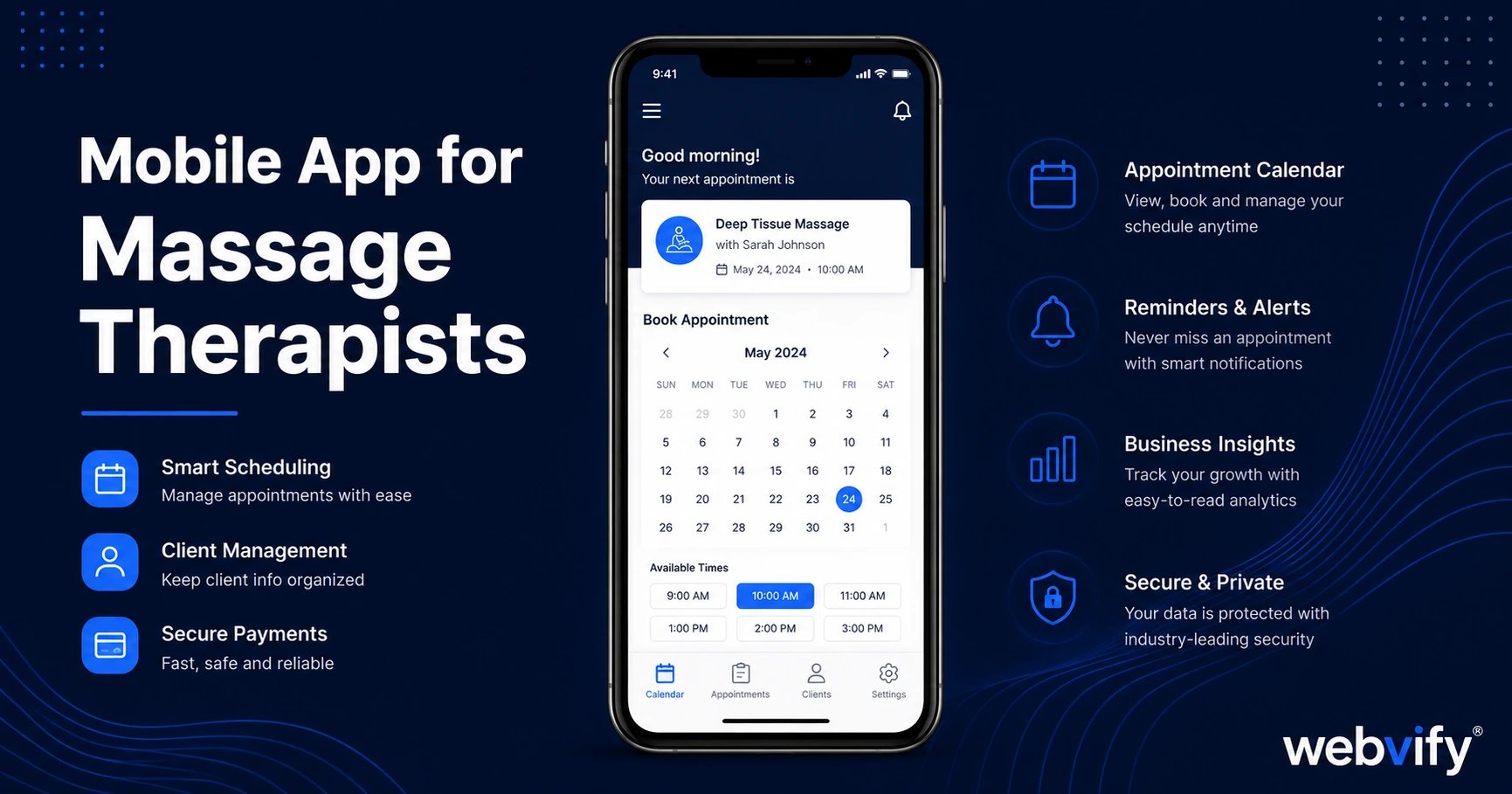
Massage clients drift away between sessions. A mobile app with push notifications brings them back. Here's how to get one without a developer.
Inside this article
Massage therapy clients don't leave because they had a bad experience. They drift away because 4 to 6 weeks pass, life gets busy, and they simply forget to rebook — and you have no reliable way to remind them.
A mobile app changes that equation. This guide explains what a mobile app for massage therapists actually does, why push notifications outperform every other retention tool, and how to get your practice on the App Store and Google Play without hiring a developer.
Why Massage Therapy Clients Stop Coming Back
Most massage therapists assume client churn is about price, inconvenience, or a competing practice. Research consistently tells a different story: clients stop booking because the gap between sessions breaks the habit.
The typical massage therapy client aims to come in every 4 to 6 weeks. That sounds manageable until you factor in a vacation, a hectic work month, or a minor schedule change. By week 8, the rebooking intention has faded. By week 12, they've moved on without ever consciously deciding to leave.
Email reminders help, but open rates for wellness businesses average 25 to 30 percent — and most of those opens happen hours or days after the email lands. SMS works better but can feel intrusive, and many clients opt out after the first message.
Push notifications through a branded mobile app deliver your reminder directly to the client's lock screen, with open rates of 60 to 90 percent. More importantly, your app icon sits on their home screen — a quiet, daily reminder that you exist, even when they're not actively thinking about booking.
What a Mobile App for Massage Therapists Actually Does
A mobile app for a massage therapy practice isn't a separate system you build from scratch. The most practical approach converts your existing website — and the booking system already embedded in it — into a native app on the App Store and Google Play.
Here's what that looks like in practice:
Your website already has your services, booking calendar, and contact information. A WebView app packages that website inside a native app shell, making it available as a real downloadable app with your business name, logo, and branding. Clients tap your icon, book in one tap, and you appear in the App Store search results alongside practices that spent $30,000 on custom development.
The key addition is push notifications, which your website alone cannot deliver on mobile. Once a client installs your app, you can send targeted rebooking nudges, slot-filler alerts for cancellations, and seasonal promotions — all delivered to the lock screen, not buried in an inbox.
Services like Webvify handle this end-to-end: they convert your existing booking site, submit the app to Apple and Google on your behalf, and hand you a simple admin panel to manage notifications after launch. You don't need to touch Xcode or a Google Developer account.
Push Notifications: The Rebooking Tool Your Booking Software Doesn't Have
Your booking platform — whether it's Vagaro, MindBody, Acuity, or a custom form — handles scheduling well. What it cannot do is send a push notification to a client's home screen 28 days after their last appointment.
That's the gap a mobile app fills. Here are three notification campaigns that work consistently for massage therapy practices:
Day-30 rebooking nudge. Thirty days after a session, send a gentle reminder: "It's been a month — your next session is waiting. Book in 30 seconds." No discount needed. The timing alone drives a significant share of rebookings from clients who intended to come back but hadn't acted yet.
Same-day slot filler. When a cancellation opens up, push an alert to clients who have opted into "last-minute availability" notifications. These fill gaps that would otherwise become lost revenue.
Seasonal check-in. At the start of a new season — back-to-school stress in September, end-of-year fatigue in November — a single well-timed push notification can spike bookings for a full week. No advertising spend required.
The same retention gap logic applies to other appointment-based wellness businesses. If you're curious how it works across different service types, the appointment booking mobile app guide covers the broader framework.
What to Look for in a Mobile App for Your Massage Business
Not all app solutions are built for small service businesses. Here's what actually matters:
Works with your existing booking system. You shouldn't have to rebuild your schedule inside a new platform. If the app requires you to enter all your services, times, and client data into a second system, the maintenance burden cancels out the benefit.
App Store and Google Play submission included. Building the app is step one. Getting it approved and live is step two — and it's where most business owners get stuck. Apple's developer portal and Google Play Console have specific compliance requirements that aren't obvious. Look for a service that handles the full submission process, not just the build.
Push notifications from a simple panel. You need to be able to send a notification without a developer's help. The admin panel should let you write a message, choose a send time, and publish — nothing more complicated than a text message.
Your name on the listing. The app should appear under your practice name in the App Store, not under a generic platform account. This is a branding question, but it's also a trust signal for new clients discovering you through store search.
For a broader look at what to prioritize when evaluating tools, the mobile app for salons guide walks through the same decision criteria for service-based businesses.
How to Get Your Massage App on the App Store Without a Developer
The process is simpler than most massage therapists expect once you understand what's actually required:
Step 1: Get an Apple Developer account. This costs $99 per year and takes 24 to 48 hours to activate. You'll need it to publish on iOS — the app must be listed under your account, not a shared platform account, if you want your practice name on the listing.
Step 2: Get a Google Play Developer account. One-time fee of $25. Google's review process is typically faster than Apple's.
Step 3: Choose a conversion service. A WebView-based service converts your existing website into an app-ready package and handles the submission to both stores on your behalf. The turnaround is usually a few business days.
Step 4: Set up your first push notification campaign. Once the app is live, configure your 30-day rebooking nudge in the admin panel. This single automation will recover more lapsed clients than any email campaign you've run.
The full App Store review process for a new app takes 24 to 48 hours on Apple and 1 to 3 days on Google Play. Most practices are live within a week of starting.
FAQ
How much does a mobile app for a massage therapy practice cost?
A custom-built native app typically runs $25,000 to $80,000 upfront plus ongoing developer fees. A WebView app built from your existing website — the approach used by most solo and small-group practices — costs a fraction of that and is live within days rather than months. Pricing for done-for-you services like Webvify starts well below the cost of a single month of custom development.
Do I need a developer to submit my app to the App Store?
No. You need an Apple Developer account ($99/year) and a Google Play account ($25 one-time), but the technical submission process can be handled entirely by a conversion service. They package the app, prepare the store listings, and manage the submission on your behalf. You approve the final listing and receive login access to both accounts.
Will my existing booking system still work inside the app?
Yes. A WebView app loads your existing website inside a native app shell, so your booking calendar, intake forms, and client login all work exactly as they do in a browser. The only addition is the push notification layer, which sits outside the booking system and doesn't require any changes to your current setup.
Ready to stop losing clients to a 6-week gap? Webvify converts your existing massage therapy website into a branded app on the App Store and Google Play — and handles the entire submission process for you. No developer required.