

Mobile App for Karate Gyms: Keep Students Training and Coming Back
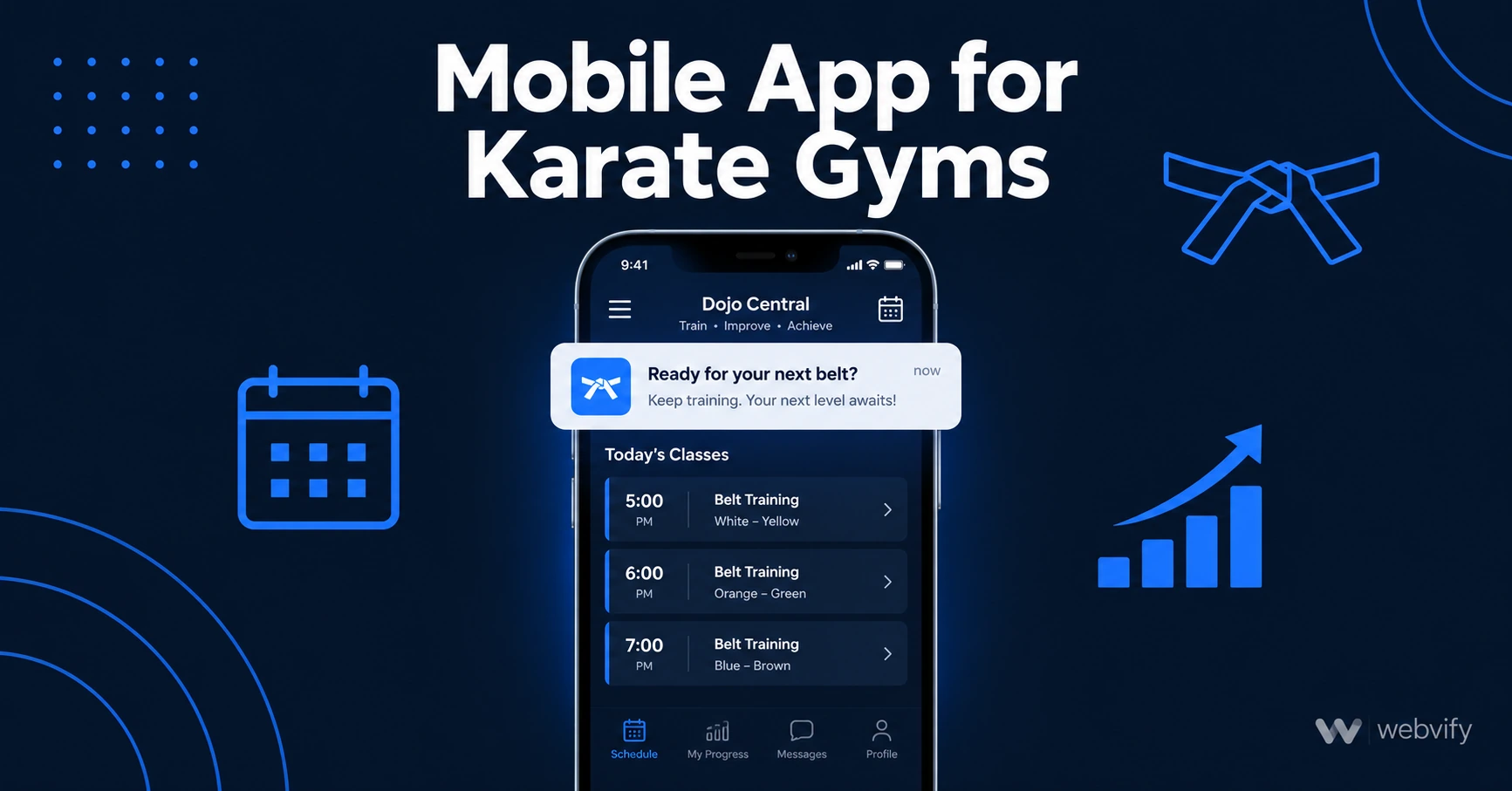
Karate students quit after belt tests — not because the dojo failed them. Here's how a mobile app keeps students enrolled and coming back year-round.
Inside this article
The week after a belt test, average dojo attendance drops 20–30%. Students who trained hard for months — who showed up consistently — suddenly go quiet. Not because they failed. Not because they disliked the class. Because the belt test was the goal, and once it passed, nothing reached out to give them the next one.
That gap between motivation spikes is where most karate gyms lose students. A mobile app for karate gyms changes that dynamic completely.
What a Mobile App for a Karate Gym Actually Does
A karate dojo app isn't a flashy website wrapped in an icon. It's a direct channel to your students' lock screens — one that email and Instagram can't match.
Push notifications from a branded app reach students at a 60–90% open rate. Email averages 20–25%. Instagram's algorithm decides who sees your posts. A push notification from your app arrives directly, regardless of algorithm changes or spam filters.
The core value proposition for a karate gym is simple: your students are on their phones all day. Your dojo is on their home screen. That visibility changes rebooking behavior.
The Three Push Campaigns That Retain Karate Students
Mobile apps for karate gyms work best when push notifications are structured around the natural rhythm of the martial arts training cycle — not generic "come back!" messages.
1. The Post-Belt-Test Rebooking Nudge (Days 10–14)
Send a push notification 10–14 days after a belt test. The message doesn't need to be complicated: "Ready for the next belt? New training cycle starts Monday." This lands at the exact moment post-test drift begins. It's the single highest-ROI campaign for any martial arts gym.
2. The Seasonal Re-Enrollment Opener (Late August / January)
Summer breaks and New Year resets are the two biggest churn windows for karate gyms. A seasonal push two weeks before the new term — "Autumn classes are filling up — register your spot" — reactivates dormant students before they sign up elsewhere.
3. The Slow-Class Spot Filler
If Tuesday morning slots are underbooked, a same-day push at 7 AM ("Two spots left in today's 6 PM junior class") fills capacity without discounting. Students who already have the app installed respond because the notification is direct and timely — no digging through an inbox.
For a complete breakdown of how retention push campaigns work across martial arts businesses, see our guide on mobile apps for martial arts studios.
App Store Presence Builds Trust for New Enrollments
Beyond retention, an App Store listing does something subtle but valuable: it makes your dojo look like a serious, established business.
When a parent searches "karate classes near me" and finds your app on the App Store alongside your website, that app icon signals permanence and commitment. It separates you from gyms that only have a Facebook page.
Services like Webvify handle the entire submission process end-to-end — from building the app to submitting it to Apple and Google on your behalf — so you don't need to touch Xcode or navigate Apple's developer portal.
What to Look for in a Karate Gym App
Not all app solutions are built the same. Here's what actually matters for a martial arts business:
Push notifications included, not an add-on. Some platforms charge extra for push. This is the core retention tool — it must be included from day one.
App published under your name. Your app should appear as "[Your Gym Name]" on the App Store, not inside a shared platform app. Brand ownership matters for trust.
Works with your existing website. The best solutions wrap your current site rather than requiring you to rebuild everything in a new system. Your class schedule, enrollment forms, and member portal stay exactly as they are.
Admin panel you can manage yourself. You should be able to send a push notification to your entire student base in under a minute without calling a developer.
For comparison with a similar setup, read about mobile apps for boxing gyms — the retention mechanics are closely aligned.
How Much Does a Mobile App for a Karate Gym Cost?
Done-for-you services that handle App Store submission typically range from $500–$2,000 as a one-time build fee, with monthly maintenance around $50–$150. Compare that to the lifetime value of even two retained students who might have quit after their first belt test — most gyms see the math work out within a month.
DIY app builders start cheaper on paper but often require you to manage submission yourself, which involves Apple's developer program ($99/year), provisioning profiles, and a lengthy compliance checklist. For a dojo owner, that's time better spent on the mat.
Frequently Asked Questions
How much does a mobile app for a karate gym cost?
Done-for-you app services that include App Store submission typically cost $500–$2,000 upfront and $50–$150 per month for maintenance and push notification tools. Most karate gyms recover the cost within weeks by reducing post-belt-test churn alone.
Do I need a developer to build a karate dojo app?
No. Services like Webvify convert your existing website into a branded mobile app and handle the full App Store and Google Play submission process. You don't write code or manage Apple's developer portal — it's done for you.
Will Apple approve a karate gym app?
Yes. Apple approves WebView apps for martial arts businesses routinely. The key requirements are a custom domain (not a free subdomain), mobile-responsive design, and proper handling of any digital payment flows under App Store guidelines. Webvify manages all of this as part of the submission process.
Keep your students training — not just between belt tests, but for years after. Get your karate gym's app live on the App Store and Google Play today.