

Mobile App for Interior Designers: Turn One-Time Projects into Repeat Clients
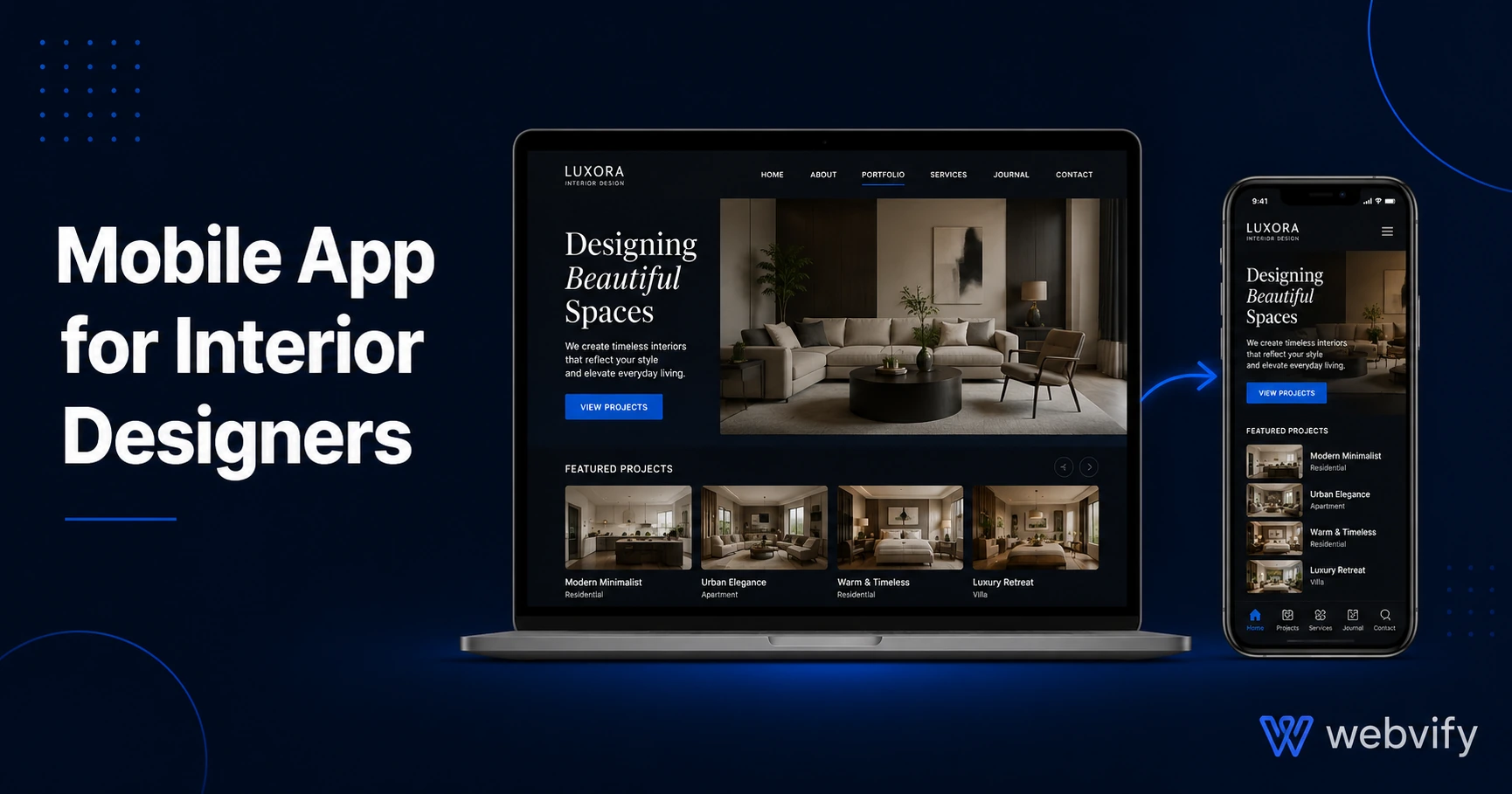
A mobile app for interior designers keeps you on clients' home screens long after a project ends. Here's how push notifications turn one-time clients into repeat bookings.
Inside this article
- Why Interior Design Clients Disappear Between Projects
- How a Mobile App for Interior Designers Closes the Visibility Gap
- Three Push Notification Campaigns Interior Designers Can Run Today
- What to Look for in a Mobile App for Interior Designers
- From Website to App: How the Process Works
- Frequently Asked Questions
- Keep Clients Between Projects — Not Just During Them
Most interior design projects end with a satisfied client and a thank-you message. Then two or three years pass — and when that client renovates their master bedroom, they Google "interior designers near me" and hire someone new. Not because your work wasn't exceptional. Because you weren't visible.
Why Interior Design Clients Disappear Between Projects
Interior design is a high-trust, high-value business with one structural problem: the purchase cycle is very long. A client might hire you once for a kitchen renovation, once for a nursery, and once more when they move house — spread across a decade. In between, you're invisible.
Email newsletters average a 20–25% open rate on a good day, and most clients don't opt in after a project wraps. Social media algorithms decide who sees your posts. You're competing with hundreds of accounts for space in a feed.
The result: clients who loved your work forget you exist by the time they need you again.
That forgetting gap is where most interior design businesses lose money — not to bad reviews, but to silence.
How a Mobile App for Interior Designers Closes the Visibility Gap
A branded mobile app puts your business on your client's home screen. Not their Instagram feed, not their email inbox — their home screen, one tap away.
The mechanism that makes this work is push notifications. Unlike email, push notifications are delivered directly to the lock screen, regardless of whether the client has your app open. Push notification open rates typically run 60–90%, compared to 20–25% for email.
For interior designers, the most valuable notification isn't a promotional offer. It's a well-timed message that feels relevant: a seasonal refresh prompt in early October ("Thinking about updating your living room for the holidays?"), an anniversary message a year after their project completed, or a real estate staging tip during spring selling season.
These aren't cold-sales messages. They're reminders that you exist, that you know their space, and that you're ready for the next project.
If you want a deeper look at how push notifications work across service businesses, this guide covers the mechanics in detail →.
Three Push Notification Campaigns Interior Designers Can Run Today
Once your app is live, you can run the same notification sequences that service businesses use to generate consistent repeat bookings:
The Seasonal Opener (September and March) Send a notification in early autumn and early spring — the two peak renovation decision windows. Keep it specific: "Autumn's the perfect time to refresh your living room before the holidays. Book a consultation →" Open rates for seasonally-timed messages are consistently higher than generic promotions because they match the moment clients are already thinking about their spaces.
The Project Anniversary Send a follow-up notification one year after a client's project completed. This has two benefits: it reminds them you exist, and it invites them to review what's working and what they might want to change. Clients who receive an anniversary message are significantly more likely to book a follow-on project than clients who receive nothing.
The Referral Prompt When a client has been quiet for six or more months, a short message asking for referrals generates results: "Loving your space? If you know someone planning a renovation, I'd love an introduction." This works because the app keeps the relationship warm — a cold email from a designer they haven't heard from in 18 months would feel intrusive. A push notification from an app already on their phone feels natural.
What to Look for in a Mobile App for Interior Designers
Not all app solutions are built for independent service professionals. Here's what actually matters:
A real App Store listing. Your app needs to appear in the App Store and Google Play under your business name — not inside a shared platform app. App Store presence signals professionalism to clients who research vendors carefully before inviting them into their home. It's the same reason a brick-and-mortar address builds trust; your app listing does the same thing in a digital context.
Push notification controls. You should be able to send a campaign from an admin panel without touching code. Timed sequences, manual blasts, and the ability to schedule campaigns around key seasonal windows are the features that generate direct ROI.
WebView wrapper, not a rebuild. If you already have a website or online portfolio, a WebView app converts that directly into an app without rebuilding your content. Services like Webvify handle this end-to-end — from converting the website to submitting the app to the App Store — so you don't need a developer or any coding knowledge.
No-code admin panel. You're running a design business, not a software company. You need to be able to update content, send notifications, and review download analytics without developer involvement after launch.
From Website to App: How the Process Works
The most common question interior designers ask is whether they need to rebuild their portfolio or website to have an app. The answer is no.
A WebView app wraps your existing website inside a native app shell and submits it to the App Store and Google Play. Clients download it, install it, and see your website in a clean, full-screen app experience with push notification support — exactly like a native app.
For interior designers, this means your Houzz profile, Squarespace portfolio, or custom website becomes an app without any re-entry of content. The app is published under your own developer account so it appears as your business on the stores, not as "powered by [platform name]."
The typical timeline from kick-off to App Store approval is 5–10 business days. Apple's review averages 24–48 hours; the rest of the time is the initial build and submission prep.
For photographers and other creative professionals who've taken the same step, the outcome is nearly identical — if you're curious how it plays out for a similar business type, this guide on mobile apps for photographers walks through the same process →.
Frequently Asked Questions
How much does a mobile app for an interior design business cost?
A WebView app built from an existing website typically costs $500–$2,000 as a one-time project fee, plus an optional monthly admin panel subscription. This is significantly less than custom native app development, which starts at $25,000–$75,000. For an independent interior designer or small studio, a WebView app delivers the core value — push notifications, App Store presence, home screen placement — at a fraction of the cost.
Do I need a developer to submit an interior design app to the App Store?
No. Done-for-you services like Webvify handle the full App Store and Google Play submission on your behalf. You provide your Apple Developer account credentials (or Webvify helps you set one up), and they manage the technical submission, compliance checks, and any resubmission if Apple returns questions. Most interior designers have their app live within two weeks of starting the process.
Can I send push notifications to clients through a mobile app built from my website?
Yes. Push notifications are natively supported in WebView apps on both iOS and Android. You can send manual campaigns, set up timed sequences based on days since last visit or project completion date, and segment by client type — all from a web-based admin panel without writing code. The notification appears on the client's lock screen just like any other app notification.
Keep Clients Between Projects — Not Just During Them
Interior design clients don't leave for competitors. They drift away during the silence between projects. A branded mobile app with push notifications addresses that drift directly — keeping you visible, accessible, and on their home screen from the first project through the next referral.