

Mobile App for Hotels: Win More Direct Bookings and Keep Guests for Life
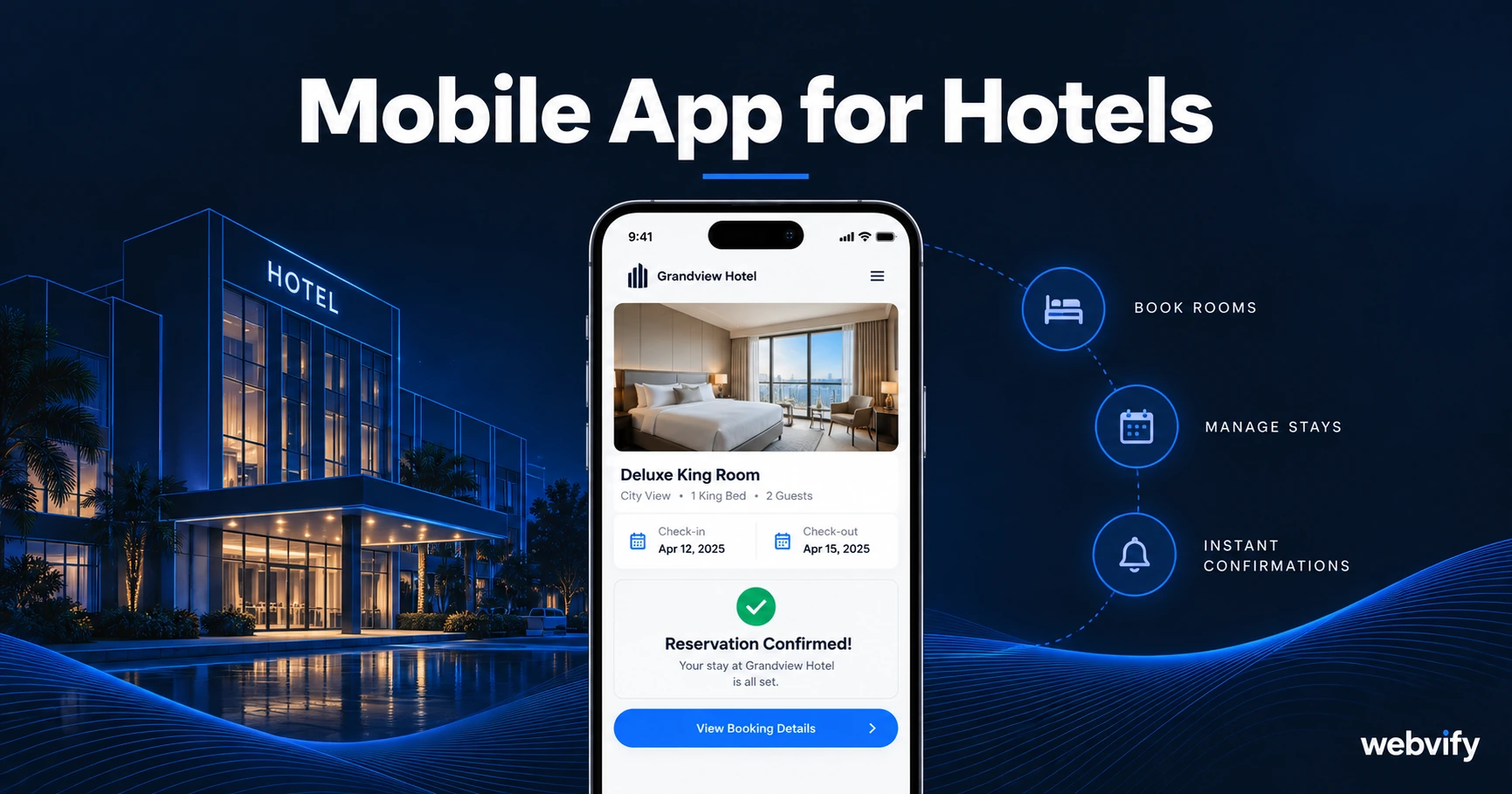
Hotel guests book their next stay on Expedia, not your website. A branded hotel app puts you on their home screen before OTAs do. No developer needed.
Inside this article
Why Hotels Keep Losing Repeat Guests to OTAs
Your last guest had a great stay. They left a 5-star review and said they'd be back. Twelve months later, they booked the same room — through Expedia.
This happens to independent hotels every day. OTAs are not winning because they offer a better product. They win because they have an app on the guest's phone. When travel intent comes back, the Booking.com notification gets there first.
A mobile app for your hotel changes that sequence. Your property gets a slot on the guest's home screen. Your push notifications reach guests directly — before any OTA does.
What a Mobile App for Hotels Actually Does
A hotel guest app is not a booking engine replacement. It is a direct channel between your property and the guest's lock screen.
The practical features that matter most for hotels are straightforward. Push notifications let you send seasonal offers, early check-in deals, anniversary stay reminders, and loyalty alerts directly to the phone — without fighting email spam filters. Push notifications open at 60–90% versus 20–25% for hotel marketing emails (full comparison here →).
Home screen presence means your hotel's icon is one tap away when travel planning starts, not buried in an inbox. And because the app uses a WebView approach, it simply packages your existing website into a native shell — guests see your rooms, your booking page, and your content inside a polished app experience. No rebuild required.
For guests, the result is frictionless: no browser jumping, no re-entering card details if your booking flow saves sessions, and a faster path to the information they need.
The Three Push Notification Campaigns Every Hotel Needs
Most hotel apps sit unused because nobody sends push notifications. The value is in the campaigns, not the icon.
Post-stay follow-up (Days 7–14 after checkout). This is the highest-value window. The stay is still fresh. A single short message — "Hope we see you again — here's your direct booking link for next time" — requires no discount and costs nothing. You are simply getting there before the OTA remarketing cycle starts.
Seasonal opener (8 weeks before peak season). Send one push in February before summer, and in September before Christmas travel. "Summer dates are filling fast — here's your returning guest link." Guests in the planning phase respond to this before they have searched anywhere else.
Anniversary reminder (Day 335 from last checkout). One push before the 12-month mark: "One year ago you stayed with us. Same dates available?" This triggers at precisely the right moment with personal context no OTA can match. It is the most underused campaign in independent hotels.
These three sequences alone justify the cost of the app for most properties.
How to Get a Mobile App for Your Hotel Without a Developer
The most common question from hotel owners is whether they need a developer. If you already have a website, the answer is no.
A WebView app packages your existing hotel website into a native iOS and Android shell. The result is a fully branded app published on the App Store and Google Play under your own name, displaying your rooms, your booking page, and your content — without rebuilding anything.
Services like Webvify handle the entire process end-to-end: building the app, configuring push notifications, and submitting it to both stores under your own developer accounts. You do not need Xcode or Android Studio.
If you run a boutique property, this guide covers the boutique hotel app use case in detail →.
The process from brief to live app typically takes 5–10 business days. Once live, you send push notification campaigns from a simple admin panel — no code, no developer calls required.
What to Look for in a Hotel App Service
Not all web-to-app services are equal. Four things matter specifically for hotels.
App Store submission included. Submitting to Apple requires an Apple Developer account ($99/year), an App Store listing with screenshots, a privacy policy, and review compliance. Make sure the service handles submission for you, not just builds the file.
Push notification admin panel. You need to send campaigns yourself without calling a developer. Confirm the service includes a self-service push dashboard.
Booking system compatibility. Because the app displays your existing website, any booking engine that runs in a browser — Cloudbeds, Little Hotelier, ResNexus, Booking.com widget — works automatically inside the app. Room bookings and physical services carry no App Store in-app purchase restrictions.
Automatic content updates. A WebView app pulls content from your live site, so new room photos, updated menus, and price changes appear in the app without resubmitting to the App Store.
FAQ
How much does a mobile app cost for a small hotel?
Custom mobile app development typically costs $50,000–$150,000. A WebView wrapper service converts your existing hotel website into a branded iOS and Android app at a fraction of that — typically a one-time build fee plus a low annual fee. You will also need an Apple Developer account ($99/year) and a Google Play account ($25 one-time fee).
Do hotel guests actually download and use the app?
Independent hotel apps see higher engagement than most industries because the use case is specific: guests who download the app have already stayed and want to return. The key metric is not total downloads but repeat booking rate among app users. Hotels running direct push notification campaigns typically see 15–25% of their repeat bookings shift from OTA to direct within the first year.
Can I connect my hotel's existing booking system to the app?
Yes. Because a WebView app displays your existing website inside a native shell, any booking engine that works in a browser works in the app — including Cloudbeds, Little Hotelier, ResNexus, SiteMinder, and direct booking buttons you already have on your site. You do not need to integrate a new reservation system or rebuild your booking flow.
Ready to get your hotel app live? Webvify builds, submits, and manages it for you — no developer needed.