

Mobile App for Home Care Agencies: Keep Families Informed and Clients Coming Back
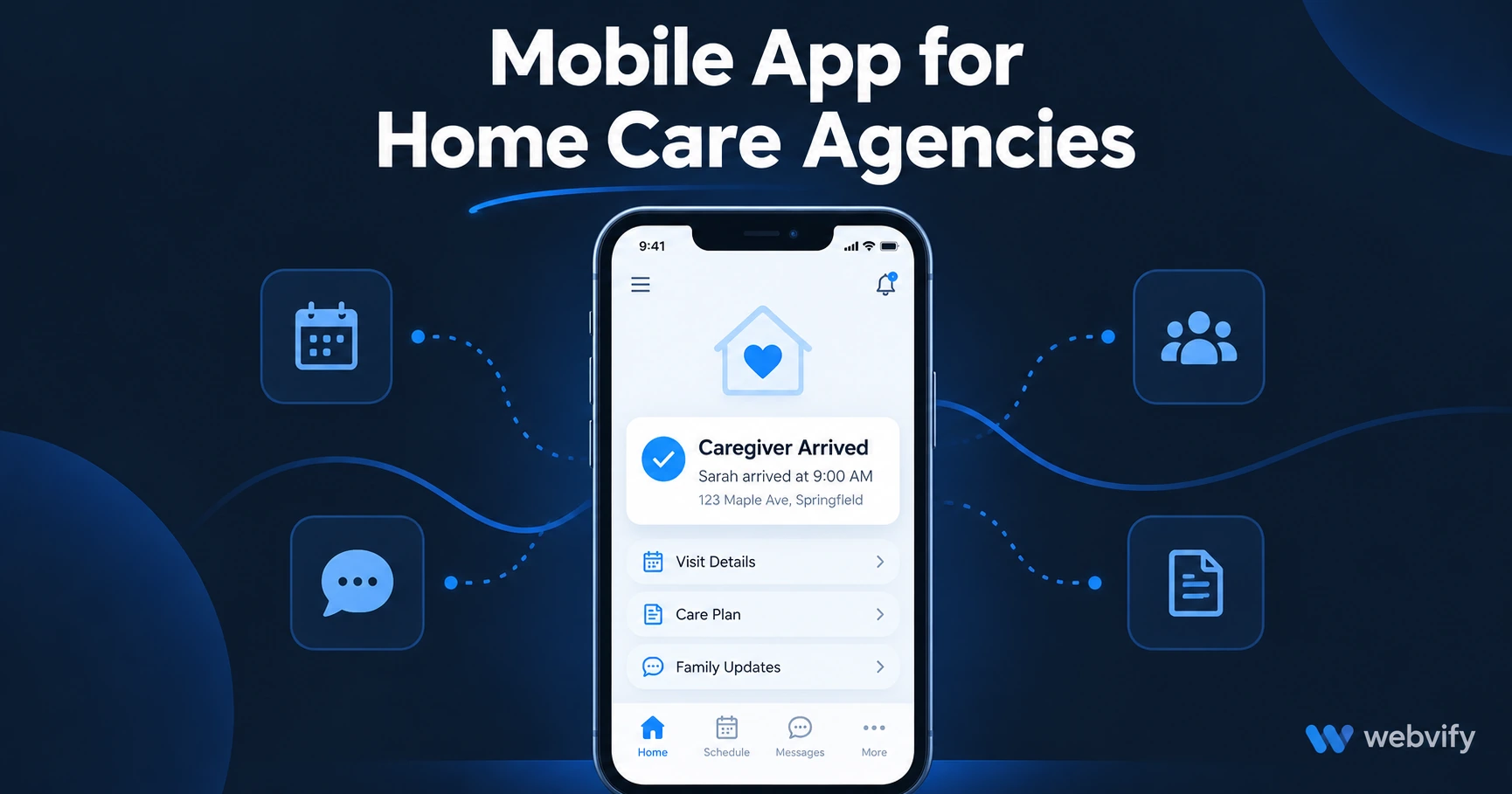
Home care agencies lose clients during visit gaps. A mobile app keeps your agency visible with push notifications and App Store credibility.
Inside this article
Most home care clients stop service within six months — not because the care was bad, but because the agency went silent between visits.
That's the retention gap in home care. The caregiver shows up, does excellent work, and disappears until the next scheduled visit. The family doesn't hear from the agency until an assessment is due or an invoice arrives. When a friend recommends a different provider, or when the client's condition changes, there's no branded touchpoint to keep your agency front of mind.
A mobile app for your home care agency solves this — not by replacing your caregiver relationships, but by keeping your agency visible in the moments between visits.
Why Home Care Agencies Lose Clients Between Visits
Home care is a trust-driven business. Families choose agencies carefully, often during a crisis, and they expect ongoing communication. The problem is that communication typically happens only during scheduled visits or billing cycles.
The result: families start to wonder whether they made the right choice. If a competitor reaches out at the right moment — or if the family simply searches for other options during a quiet period — your agency loses a client it already earned.
The retention gap in home care is structural. There's no natural touchpoint between caregiver visits, and email open rates in healthcare average just 20–25%. A branded mobile app on the family's home screen changes that.
What a Home Care Mobile App Actually Does
A mobile app for a home care agency is not a scheduling platform or a case management system. It's a communication and retention tool built from your existing website.
Services like Webvify convert your current website into a branded iOS and Android app — with your logo, your colors, your domain — and handle the entire App Store and Google Play submission process. You don't need to rebuild your content or hire a developer.
Once live, the app gives your agency three high-value capabilities:
Push notifications. Send direct alerts to families' lock screens — caregiver arrival confirmations, care plan updates, wellness check reminders, and seasonal health tips. Push notifications reach 60–90% of recipients, compared to 20–25% for email.
Home screen presence. Your logo on the family's phone is a daily trust signal. In a business where families hand over the care of a parent or spouse, visibility builds confidence. An App Store listing also adds credibility that a website alone cannot match.
Real-time updates from your website. Because the app wraps your existing site, any update you publish — new caregiver profiles, policy changes, service expansions — is immediately visible in the app. No dual maintenance.
Three Push Notification Campaigns That Drive Retention
The goal of a mobile app for home care agencies is not to get downloads. It's to reduce the silence between visits. These three campaign types deliver the highest return:
Caregiver arrival alert (same-day). A push notification when a caregiver is en route — "Your caregiver Maria will arrive in 30 minutes" — reduces family anxiety and eliminates the anxious phone calls agencies receive on visit days. Families who receive these consistently report higher satisfaction scores.
Monthly wellness check-in (Day 30 post-visit). A gentle "How is your loved one doing this month?" notification keeps your agency in the family's awareness during a low-contact period. It prompts a response, which opens a care review conversation before a crisis forces it.
Annual care plan renewal reminder (60 days before anniversary). A push notification that your team is ready to review and adjust the care plan signals proactive service. This is the highest-value campaign for reducing cancellations at contract renewal time.
These campaigns run through a simple admin panel after your app is live — no developer required to set them up or adjust them.
Mobile App for Home Care Agencies: End-to-End Setup
Most home care agencies assume building a mobile app means starting from scratch — custom development, a mobile developer, months of back-and-forth. That's not the only path.
Webvify converts your existing website into a branded iOS and Android app and handles App Store and Google Play submission under your own developer accounts. Your agency keeps full ownership of the app listing. After launch, you manage push notifications and updates through a simple admin panel.
If you're already using a scheduling or care management platform (Alayacare, WellSky, HHAeXchange, ClearCare), the app wraps your website or family portal URL without touching your existing workflows.
App Store Credibility in a Trust-Sensitive Business
In home care, the decision to trust an agency with a family member is one of the most emotionally charged purchasing decisions a family makes. An App Store listing is a tangible credibility signal.
Families searching for home care providers see two types of agencies: those with a professional digital presence — including an App Store listing — and those without. The app doesn't just retain existing clients. It also converts prospects who are still evaluating.
This is the same trust dynamic that works in other healthcare fields. Mobile apps for chiropractors and mobile apps for pharmacies see adoption driven as much by credibility as by retention — because the App Store listing signals that a business is established and professional.
FAQ
How much does a mobile app for a home care agency cost?
Custom-built native apps run $50,000–$200,000 with ongoing maintenance costs. A WebView app service like Webvify converts your existing website into a branded app and handles App Store submission as a done-for-you service — at a fraction of that cost. There are no per-caregiver or per-family fees, and the monthly cost is comparable to a basic email marketing tool.
Does my home care app need to be HIPAA-compliant?
If your app displays or stores protected health information (PHI), HIPAA compliance requirements apply. Most home care mobile apps built on a WebView wrapper simply display your existing website — they follow the same compliance posture as your site. If your website is already HIPAA-compliant, your app is too. For apps that handle PHI directly (scheduling data, care notes), consult your compliance team before launch.
How long does it take to get a home care agency app live?
With a managed service like Webvify, most apps go live within one to two weeks. Apple's review process typically takes 24–48 hours for new submissions. Google Play reviews run 24–48 hours as well. The setup phase — brand configuration, App Store assets, developer account setup — takes the most time, not the review itself.
Ready to put your home care agency in families' pockets? Start with Webvify — we handle the build, the App Store submission, and the admin panel setup so you can focus on care.