

Mobile App for Chiropractors: Keep Patients Coming Back After the Pain Is Gone
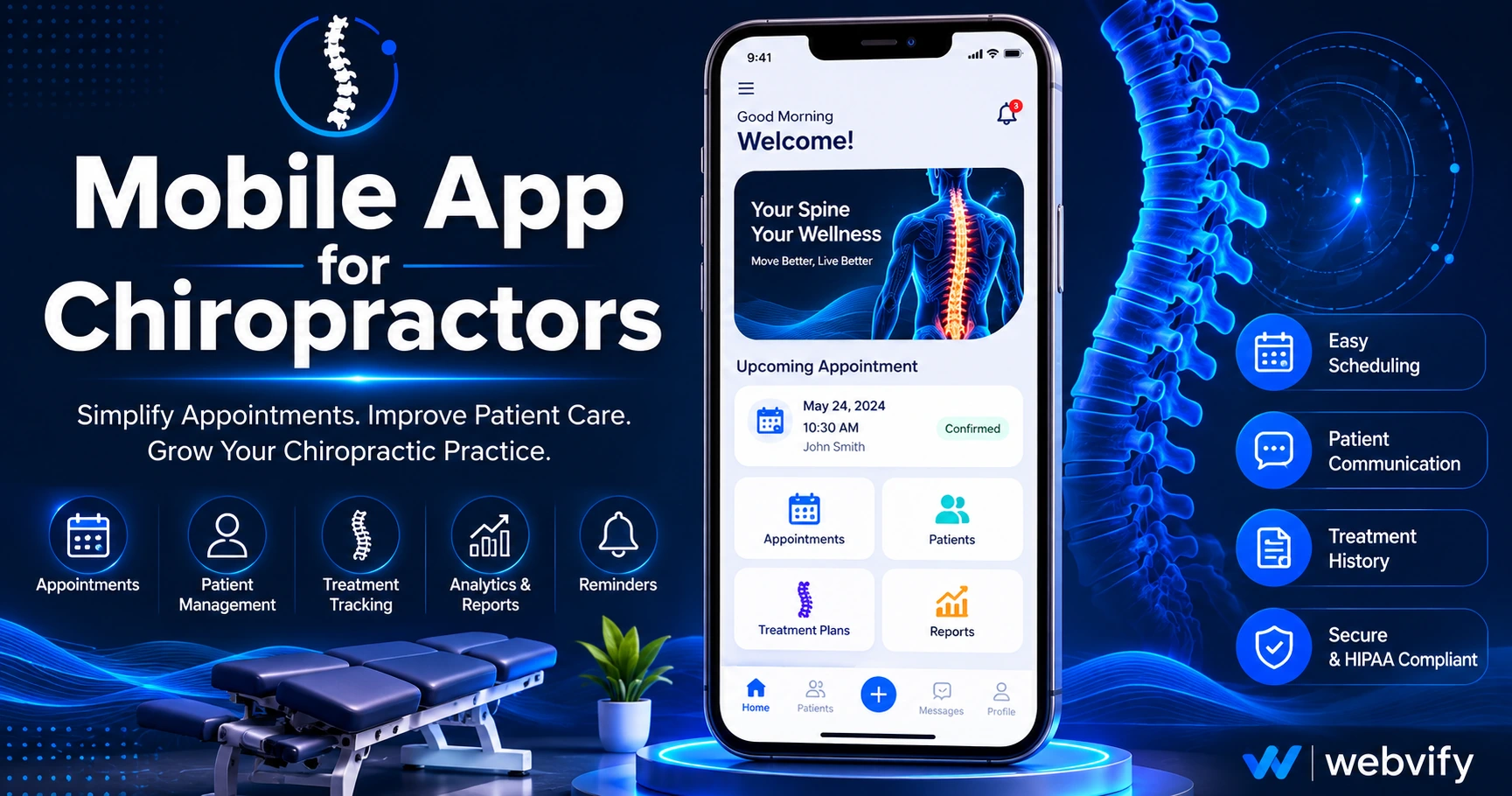
Chiropractic patients stop coming once pain fades. A mobile app with push notifications keeps them on your schedule — without hiring a developer.
Inside this article
Most chiropractic patients disappear the moment their pain stops — not because care failed, but because nothing keeps them connected between visits.
A mobile app with push notifications changes that. This guide covers how chiropractors use a branded app to reduce dropout, fill maintenance schedules, and stay visible during the months-long silence that follows a completed treatment plan.
Why Chiropractic Patients Drop Off (The Discharge Gap)
Chiropractic care has a built-in retention problem: acute treatment works too well. A patient comes in three times a week with back pain, improves steadily, then feels well enough to stop scheduling. They intend to continue with maintenance visits — but life gets busy, the pain is gone, and your practice is out of sight.
The typical gap between a patient's last acute visit and their next maintenance appointment runs anywhere from 3 to 12 months. During that window, they're not actively disengaged — they just have no trigger to rebook. A competitor's ad, a friend's recommendation, or a new insurance plan is enough to send them elsewhere.
The tools most practices rely on — email newsletters, appointment reminder texts, front-desk follow-up calls — hit this window inconsistently. Email open rates in healthcare average 20–25%. A push notification sent directly to a patient's lock screen reaches 60–90% open rates.
What a Mobile App for Chiropractors Actually Does
A mobile app built on your existing website converts your online presence into an App Store listing and gives you a direct communication channel with patients — without rebuilding your website or hiring a mobile developer.
The core value for a chiropractic practice comes from three things:
Push notifications. Send rebooking reminders, seasonal wellness alerts, and reactivation campaigns directly to a patient's home screen. Unlike email, push notifications don't get filtered into a promotions tab.
Home screen presence. When a patient's back flares up on a Wednesday evening, your app icon is already on their phone. They tap it. They book. The alternative — Googling "chiropractor near me" — puts you back in the search results against every competitor in your area.
App Store credibility. For a profession where patients are trusting you with their spine, a published app on the App Store sends a professional signal that differentiates you from the practice down the road that only has a basic website.
Push Notification Campaigns That Work for Chiropractors
The highest-value campaigns for a chiropractic practice focus on specific timing windows — moments when a patient is most likely to need a nudge.
Day-30 maintenance reminder. Four weeks after a patient's last visit, send a single push: "It's been a month — time to check in on your alignment. Book your next appointment." This catches the majority of patients before they drift past the 6-week mark where dropout accelerates.
Seasonal wellness alert. January (New Year resolutions, return-to-gym injuries), May (gardening season, spring cleaning strains), and September (back-to-school posture awareness) are natural windows where patient intent is high. A targeted push campaign timed to each season converts at significantly higher rates than a generic "we miss you" email.
12-month reactivation. For patients who have been silent for a year, a direct message — "It's been a while. Regular maintenance appointments catch issues before they become acute problems." — reaches the lock screen in a way a buried email does not. This campaign alone can recover 10–15% of dormant patients who would otherwise be counted as lost.
Services like Webvify handle the end-to-end process: building the app from your existing website, submitting it to the App Store and Google Play, and giving you an admin panel to manage push notifications yourself after launch — without touching a line of code.
App Store Presence as a New Patient Conversion Tool
Beyond retention, a published app gives you an asset most local chiropractors don't have: a listing in the App Store and Google Play.
Patients searching for health services increasingly check whether a practice has an app before committing to a first appointment. An app icon on the App Store signals investment, professionalism, and longevity. For a profession built on trust — where patients are handing over the health of their spine — that signal matters.
It also gives you a word-of-mouth advantage. A patient who recommends your practice to a colleague can say "just search for [Practice Name] in the App Store." That referral converts at a higher rate than sending someone to a website URL.
If you're also managing appointment bookings online, the app surfaces your booking system directly — the same system you already use, wrapped in a native app experience. No rebuilding required. For a practical breakdown of how this works with appointment-based practices, the appointment booking mobile app guide covers the specifics.
What to Look for in a Mobile App Solution for Chiropractors
Not every mobile app tool is built for a small healthcare practice. The questions to ask before committing to a solution:
Does it wrap your existing website or require rebuilding? If you already have a functioning website with online booking, the right solution converts it into an app — it doesn't ask you to re-enter your content, services, and patient portal into a new platform. That path creates a second system to maintain and is rarely worth the time.
Who handles App Store submission? Getting an app approved on the App Store is not as simple as clicking upload. Apple requires a developer account ($99/year), a compliant app binary, privacy policy documentation, and an understanding of Guideline 4.2 (Minimum Functionality). Many app tools provide the app file and leave submission to you. A managed service handles the entire process under your own developer account.
Is the admin panel yours to operate? Once live, you should be able to schedule push notification campaigns without calling your app provider. Look for an admin panel that a front-desk staff member can operate without technical training.
For healthcare-adjacent practices looking at similar retention challenges, the guide for physical therapists covers related compliance considerations and patient communication mechanics that apply across manual therapy disciplines.
FAQ
How much does a mobile app for a chiropractic practice cost?
A custom-built native app typically costs $30,000–$150,000 plus ongoing maintenance. A WebView app built from your existing website — the approach used by most independent and small-group chiropractic practices — runs significantly less, typically as a one-time setup fee without requiring a developer. Look for a service that includes App Store and Google Play submission in the price, as submission alone can add unexpected costs if handled separately.
Will a mobile app work with my existing booking system?
Yes. If your booking system is web-based (Mindbody, Jane App, SimplePractice, or any browser-accessible system), it loads natively inside the app. Patients book the same way they do on your website, but from a native app experience on their phone. No migration required.
Do I need a developer to submit my chiropractic app to the App Store?
No — but you do need to understand Apple's submission requirements. The most common rejection for healthcare-adjacent apps is Guideline 4.2 (Minimum Functionality), which requires the app to do more than simply display a website. Services that build WebView apps properly handle this by adding native elements (push notifications, splash screens, offline handling) that satisfy Apple's requirements. A managed service submits under your Apple Developer account and handles any resubmission if Apple requests changes.
Getting patients through the door the first time is the hard part. Keeping them on a maintenance schedule — and reactivating them when life gets in the way — is where a mobile app pays for itself.
If your practice already has a website, you're closer than you think. Webvify converts your existing site into a fully branded mobile app, submits it to the App Store and Google Play, and gives you the push notification tools to run these campaigns yourself. No developer, no duplicate system to maintain.