

Mobile App for Car Rental Companies: Win More Repeat Bookings and Stop Losing Customers to OTAs
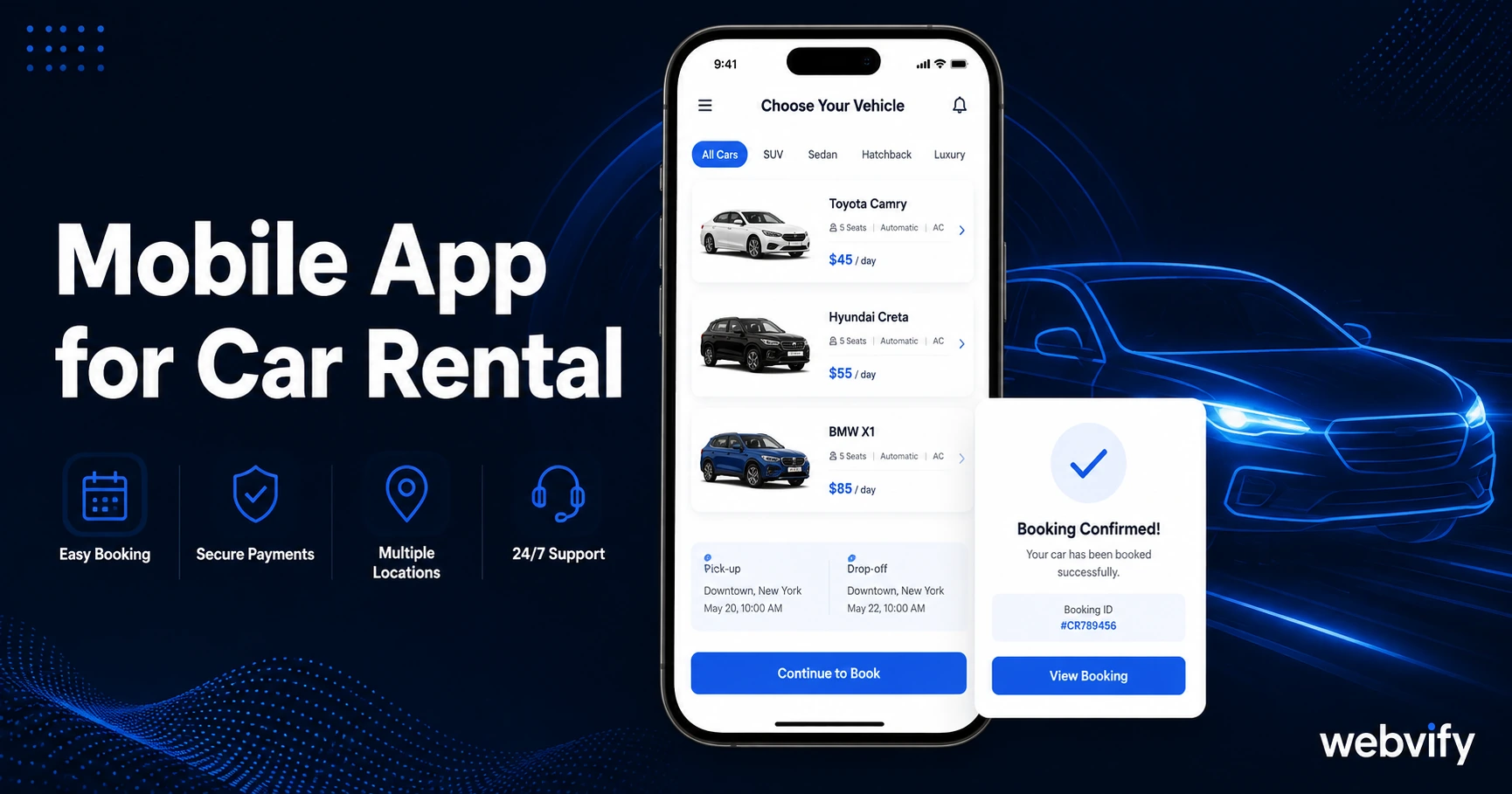
A mobile app for car rental companies puts your brand on customers' home screens before they open Kayak. Here's how to get one without a developer.
Inside this article
- Why Car Rental Customers Keep Booking Through OTAs
- What a Car Rental Mobile App Does for Your Business
- The Three Push Notification Campaigns That Drive Repeat Bookings
- What It Costs — and How It Compares to Custom Development
- App Store and Google Play Compliance for Car Rental Apps
- How to Get a Mobile App for Your Car Rental Company
- FAQ
Car rental customers love your service and drive away satisfied — then book with Kayak or Expedia next time. Not because your price was worse. Because your number wasn't somewhere convenient when they needed a car again.
A mobile app for car rental companies solves exactly that problem. It puts your brand on the customer's home screen before they even think about opening a comparison site. Here's what that looks like in practice, and how to get one without hiring a mobile developer.
Why Car Rental Customers Keep Booking Through OTAs
The average car rental customer books 1–3 times per year. Between those bookings, there's a silence gap of four to twelve months with zero touchpoints. During that gap, OTA habit forms: they open Kayak, they see your competitor, they book through the platform.
The OTA doesn't win on price. It wins on presence. The Kayak app is already on the phone. Yours isn't.
A branded mobile app for your car rental company changes the equation. Your brand occupies home screen real estate before the next booking need arises. Push notifications reach customers directly at 60–90% open rates — compared to 20–30% for email — which means a seasonal promotion or exclusive direct-book offer actually gets seen.
What a Car Rental Mobile App Does for Your Business
The core value isn't a flashy feature list. It's three things:
Home screen presence. When a customer installs your app, your brand icon sits between their Uber and their banking app. That visibility creates booking instinct — they reach for your app before they reach for a search engine.
Push notifications. You can send a 10-day rebooking nudge after a rental ends, a seasonal opener before summer peak, or a direct-book discount that isn't available on OTAs. Push notifications reach the lock screen — email doesn't.
Direct booking channel. Every booking through your app bypasses OTA commission (typically 15–25%). For an independent car rental operator doing 200 rentals per month, shifting even 30% to direct bookings saves thousands in fees annually.
Services like Webvify convert your existing website into a fully branded mobile app — published under your own name on the App Store and Google Play — without you rebuilding anything or touching code.
The Three Push Notification Campaigns That Drive Repeat Bookings
Most car rental businesses think about apps at booking time. The businesses that see the biggest return use push notifications between bookings to stay visible.
The 10-day post-rental rebooking nudge. Send a push 10 days after a rental return: "Need wheels again? Book direct and skip the fee." This catches customers while your service is still fresh and before OTA habit reasserts.
The seasonal opener. Send a campaign 14 days before peak demand (summer travel, holiday weekends): "Summer booking is open — reserve now before availability goes." Customers who'd forgotten your brand are reminded before they open a comparison site.
The 90-day dormant reactivation. If a customer hasn't booked in 90 days, send a direct-book exclusive: "It's been a while. Here's 10% off your next rental — book direct, no commission site needed." This converts dormant customers before they're lost entirely.
For context on how this fits into a broader retention strategy, the guide on loyalty card apps for small business covers the same compounding logic applied to repeat customer relationships.
What It Costs — and How It Compares to Custom Development
Custom mobile app development for a car rental company typically runs $25,000–$80,000 upfront, plus $5,000–$15,000 per year in maintenance. That's the price of a native app built from scratch — which most independent and regional rental companies can't justify.
A WebView-based app converts your existing booking website into a native app. Your website content becomes the app. The App Store and Google Play see a native binary — built by a wrapper around your site — while customers experience your brand, your booking flow, and your confirmation process exactly as it already works.
For a deeper breakdown of what mobile app development actually costs at different tiers, the mobile app development cost guide for 2026 covers the full spectrum.
The WebView approach removes the upfront cost barrier. You're not paying for a rebuild. You're paying for packaging, submission, and an admin panel — typically a fraction of the cost of custom development.
App Store and Google Play Compliance for Car Rental Apps
Car rental is a physical service — customers rent a physical vehicle. This is important for App Store compliance.
Apple's Guideline 3.1.1 (which requires a 30% cut on digital goods purchased inside apps) does not apply to physical services or physical goods. A car rental is a physical service. You can accept payments through your existing web booking flow inside the app without triggering Apple's in-app purchase rules.
What you do need:
- A custom domain (e.g., book.yourrental.com) — Apple rejects apps running on shared subdomains.
- A mobile-responsive booking flow — if your website doesn't work well on mobile, it won't work well in the app.
- A privacy policy page — required by both App Store and Google Play.
Both Apple and Google review WebView apps and approve them routinely when the checklist is followed. A managed service handles compliance verification before submission.
How to Get a Mobile App for Your Car Rental Company
The process with a web-to-app service is straightforward:
- Share your booking website URL.
- The service configures your branded app — icon, splash screen, name — and tests it against App Store guidelines.
- They submit under your Apple Developer account ($99/year) and Google Play account ($25 one-time).
- You receive an admin panel to push notifications and manage the app after launch.
Turnaround from submission to live app is typically 7–14 days — Apple review averages 24–48 hours; the rest is submission prep and account setup.
There's no new booking system to build, no content to migrate, and no code to maintain. Your website updates automatically appear in the app.
FAQ
How much does a mobile app for a car rental company cost?
A WebView-based car rental app typically costs a fraction of custom development — compared to $25,000–$80,000 for a native build from scratch. The ongoing cost is your Apple Developer account ($99/year) and any per-month admin panel fee charged by the service provider. One-time commission savings from direct bookings often cover the annual cost within the first few months.
Do car rental apps need Apple's in-app purchase system?
No. Apple's in-app purchase requirement (Guideline 3.1.1) applies to digital goods and digital subscriptions — not physical services. A car rental is a physical service, so you can process payments through your existing booking system inside the app without paying Apple's 30% commission.
How long does it take to get a car rental app live on the App Store?
With a managed web-to-app service, the typical timeline is 7–14 days from submission to live listing. Apple's review process averages 24–48 hours. The rest of the time is submission preparation, developer account setup, and compliance verification before the app is submitted.
Your customers aren't disloyal. They're just using whatever app is already on their phone. A branded mobile app puts your rental company there first — before they open Kayak, before they check Expedia, before OTA habit kicks in.
Ready to put your rental brand on your customers' home screens? Start with Webvify — we handle the build, the App Store submission, and the admin panel so you can focus on running your fleet.