

Hybrid App vs Website-to-App: Which One Should Your Business Build in 2026?
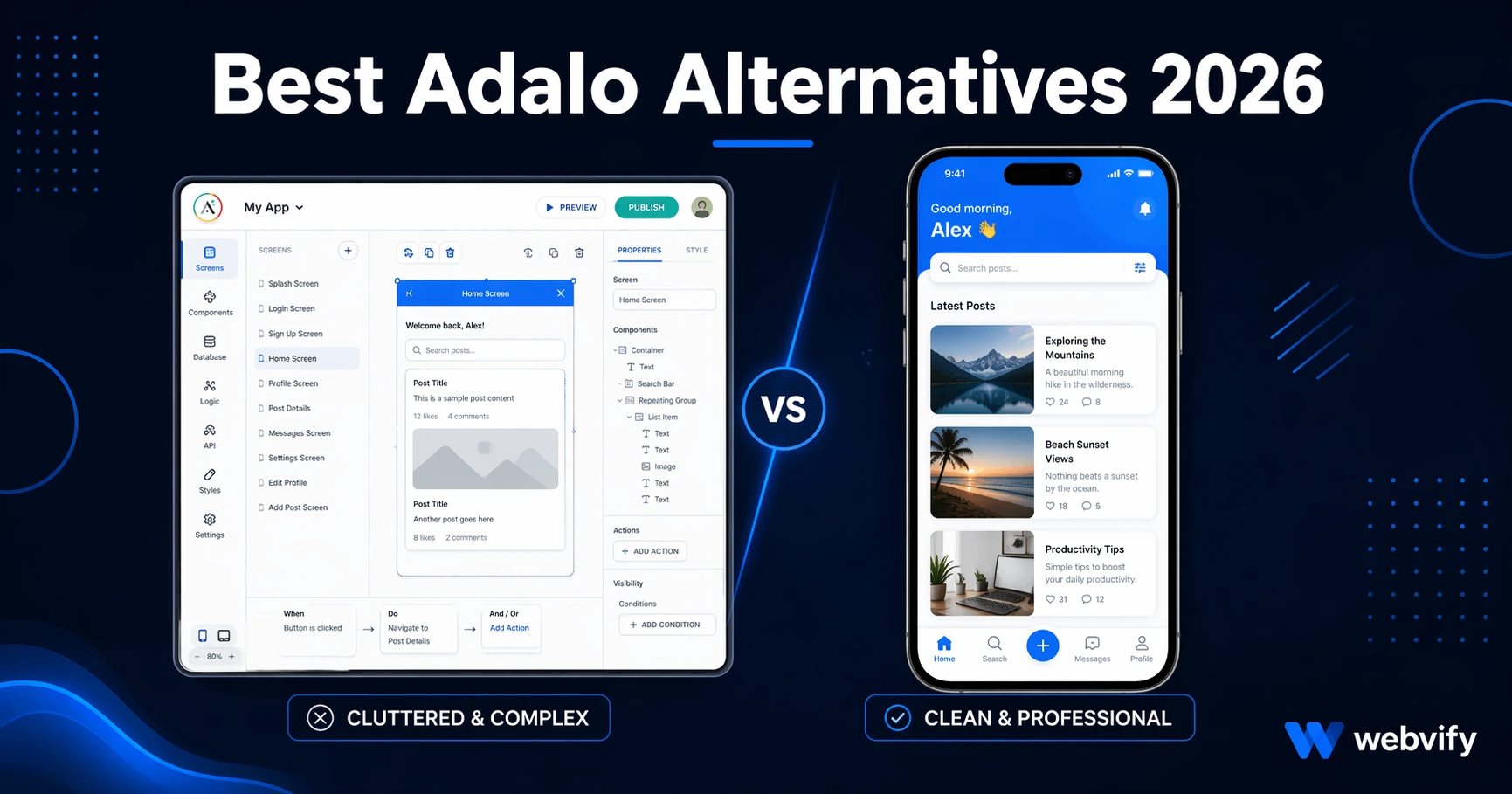
Hybrid apps cost $15K–$80K and take months to build. Here's when a website-to-app wrapper delivers everything a small business actually needs in 2026.
Inside this article
- What is a hybrid app vs a website-to-app wrapper?
- When hybrid apps are worth the investment
- What a website-to-app wrapper covers (and why it's enough for most businesses)
- The cost and timeline gap is wider than you think
- App Store approval and compliance for WebView apps
- Which approach is right for your situation?
Hybrid app quotes start at $15,000. A website-to-app wrapper can go live in 48 hours. The question isn't which is technically superior — it's which one actually solves your problem without burning your budget.
Most small businesses that pay for a hybrid app end up with a second system to maintain, a developer they're dependent on indefinitely, and an app that does exactly what their website already did. This guide breaks down what each approach actually delivers, and which one fits your situation in 2026.
What is a hybrid app vs a website-to-app wrapper?
A hybrid app is built with a cross-platform framework — React Native, Ionic, or Flutter — that compiles into a native-ish app for both iOS and Android. You still need a developer to write the app code, design the screens, and maintain a separate codebase alongside your website. The app and the website exist as two distinct systems that need to stay in sync.
A website-to-app wrapper (also called a WebView app) does something different: it takes your existing website and packages it inside a native app shell. Your website becomes the app. When you update your website, the app updates automatically — there's no separate codebase to manage, no developer needed for content changes, and no double-entry of data.
The key distinction is this: a hybrid app rebuilds your product for mobile. A website-to-app wrapper extends your existing product onto mobile.
When hybrid apps are worth the investment
Hybrid apps make sense when your business requires deep device integration that a website can't provide — Bluetooth sensor data, offline-first functionality where users work without a connection and sync later, or real-time features that require a purpose-built backend.
If you're building a field service management tool that logs data offline and syncs when connectivity returns, or a healthcare app that reads from wearable devices, a hybrid framework may be the right call. These are real use cases that justify the complexity.
But they're also narrow. The number of small businesses that genuinely need Bluetooth integration or offline data sync is small. For the vast majority — restaurants, retail stores, service businesses, coaches, agencies — the website already handles the core functionality. The gap isn't in what the app does. It's in how customers access it.
What a website-to-app wrapper covers (and why it's enough for most businesses)
A WebView app wraps your existing website and delivers it through a native shell on iOS and Android. In practice, this means:
- Your site appears on the App Store and Google Play as a branded app under your own developer account
- Customers download and install it — it lives on their home screen alongside every other app they use
- You can send push notifications directly to their lock screen
- The app updates whenever your website updates, with no app store resubmission for content changes
That last point matters more than it sounds. Updating a hybrid app requires a developer build, testing, and often an app store review cycle. Updating a WebView app means updating your website — the same way you've always done it.
Push notifications are where the business case becomes concrete. Email open rates average 20–30%. Push notification open rates run 60–90%. That's not a marginal improvement — it's a fundamentally different communication channel reaching customers where they already spend their attention. For the specific benefits that come from moving from website-only to a published app, this overview breaks them down →.
Services like Webvify handle the full process end-to-end: they wrap your existing site, submit the app to both stores, and give you an admin panel to send push notifications and manage the app without touching code.
The cost and timeline gap is wider than you think
Hybrid app development typically runs $15,000–$80,000 for initial build, with a 3–9 month timeline depending on scope. Ongoing maintenance adds $1,000–$3,000 per month for a retained developer to handle OS updates, bug fixes, and feature requests.
A website-to-app wrapper costs a fraction of that and goes live in days. There's no new codebase. No separate design system. No second deployment pipeline. Your existing website is the product.
The timeline gap has a less obvious cost: every month before your app goes live is a month your competitors have App Store presence and you don't. App Store presence builds reviews, ASO ranking, and brand familiarity over time. Starting 9 months later means starting 9 months behind.
For businesses comparing these options against custom native development, the numbers are even starker — this breakdown of no-code vs custom development covers the full cost picture →.
App Store approval and compliance for WebView apps
A common concern is whether a WebView app will get approved. Apple and Google have specific guidelines — primarily that the app must offer genuine value to users (Guideline 4.2 Minimum Functionality) and that digital goods sold inside the app must use Apple's in-app purchase system rather than external payment processors.
These requirements are real but well-understood. Millions of WebView apps are live on both stores, including apps from major brands. The approval rate improves significantly when the submission is handled by someone who knows the guidelines — which is another reason to use a managed submission service rather than a DIY tool.
If your business sells physical products, books appointments, or provides content — there are no in-app purchase complications. The Minimum Functionality bar is met by adding push notifications, which give the app a capability that the mobile browser cannot match.
The businesses that run into rejection issues are usually those who attempt self-submission without understanding these guidelines, not those using a managed service that has submitted hundreds of apps before.
Which approach is right for your situation?
The decision comes down to two questions.
Do you already have a website that handles your core business functions? If yes, a website-to-app wrapper gives you App Store presence, push notifications, and home screen placement without rebuilding what already works.
Does your business model require device capabilities that your website fundamentally can't access? If you need offline data sync, Bluetooth hardware integration, advanced camera processing, or augmented reality — a hybrid framework may be worth the cost. If not, the added complexity doesn't pay off.
For most small and medium businesses, the answer is straightforward. The website exists and works. Customers are already using it on mobile. The gap is distribution: you're not on the App Store, you can't send push notifications, and you're not on your customers' home screens. A hybrid app vs website-to-app comparison almost always lands the same way — the wrapper solves the actual problem without the overhead.
Frequently Asked Questions
What is the difference between a hybrid app and a native app?
A native app is built specifically for one platform — Swift for iOS, Kotlin for Android — and provides the deepest access to device hardware and OS features. A hybrid app is built with a cross-platform framework that compiles to both platforms from one codebase, reducing development cost while keeping most native capabilities. A WebView app is different from both: it packages an existing website into a native shell without writing new app code for either platform.
Can a WebView app get rejected from the App Store?
Yes, if it doesn't meet Apple's published guidelines — specifically Guideline 4.2 (Minimum Functionality) and Guideline 3.1.1 (in-app purchases for digital goods sold inside the app). These are navigable requirements. Apps that include push notifications satisfy the Minimum Functionality bar, and businesses selling physical products or services aren't subject to in-app purchase restrictions. Managed submission services handle this compliance work as part of their process.
Is a hybrid app faster than a WebView app?
For most business use cases — browsing products, booking appointments, reading content, contacting a business — the performance difference is imperceptible to users. Hybrid apps can load certain interactions faster because they render using native components. But unless your app has complex animations, heavy data processing, or real-time graphics, users won't feel the difference on a modern device.
Your website already does the job. Getting it onto the App Store and Google Play — with push notifications and your brand on every customer's home screen — is what a website-to-app service delivers. Webvify handles the build, both store submissions, and gives you an admin panel to manage everything yourself.