

Bubble Native Mobile vs WebView Wrapper: Which Is Right for Your Bubble App?
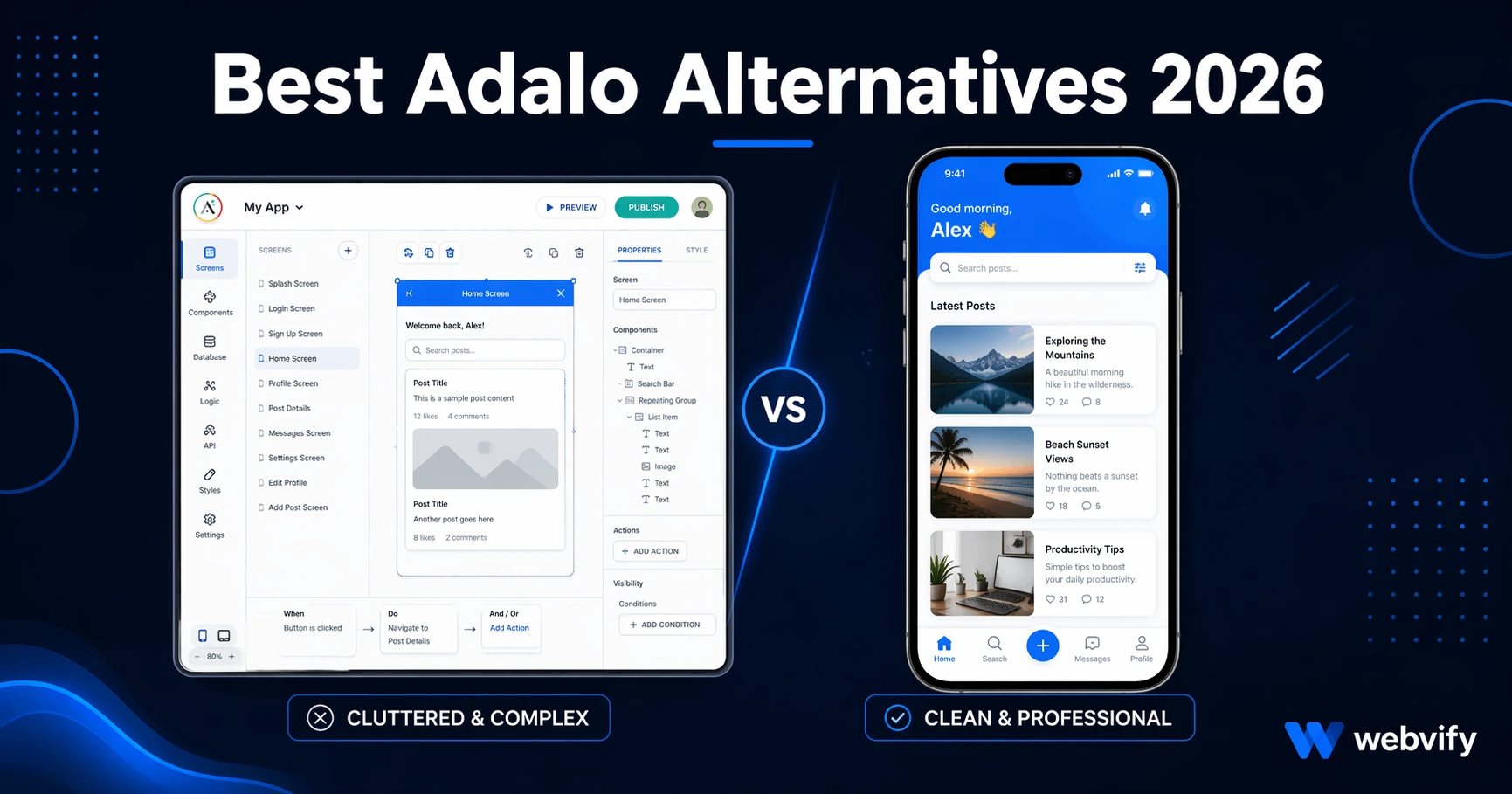
Bubble Native Mobile vs WebView wrapper: what each actually costs, what Apple approves, and which gets your Bubble app on the App Store faster.
Inside this article
Bubble introduced Native Mobile in 2024, and since then two questions dominate every Bubble community thread about the App Store: "Should I use Bubble Native, or wrap my web app in a WebView?" The answer depends on what you already have, what you are willing to pay, and how fast you need to be on the App Store.
Here is a clear breakdown of both paths so you can decide in minutes, not days.
What Bubble Native Mobile Actually Is
Bubble Native Mobile is Bubble's official tool for building a React Native mobile app from scratch inside the Bubble editor. It is a separate app from your existing Bubble web app. You design screens using mobile-specific components, configure navigation, and Bubble generates the React Native code.
The result is a true native app — it uses the phone's native UI components, not a browser window. That matters for animations, performance, and the native feel of the UI.
But there are real constraints. Bubble Native Mobile is available only on Bubble's Production plan ($349/month) or higher, plus an additional Native Mobile add-on fee. Your existing Bubble web workflows, pages, and elements do not transfer to the native editor — you are starting from scratch. And App Store submission is still your responsibility: Bubble generates the app file, but you handle the Apple Developer account, certificates, and review process.
For teams building a new mobile app from the ground up in Bubble, this is a legitimate path. For businesses that already have a working Bubble web app and want to be on the App Store without rebuilding from scratch, the picture changes.
What a Bubble Native Mobile App Looks Like in Practice
A bubble native mobile app built in Bubble's native editor looks and behaves differently from your Bubble website. Navigation, layouts, and interactive elements need to be rebuilt using mobile-specific components. If your web app has complex workflows, nested groups, or custom plugins, you will need to recreate the equivalent mobile logic from scratch in the native editor.
The learning curve is real. Bubble's native documentation is growing, but community support is significantly thinner than for Bubble's web editor. Most businesses underestimate the rebuild time until they are two weeks in.
What a WebView Wrapper Is and How It Works
A WebView wrapper takes your existing Bubble web app and packages it inside a native iOS or Android shell. The app uses the phone's WebView engine to display your site — just like a browser — but from the user's perspective it looks, feels, and launches like any other app from the home screen.
The advantages are significant. Your existing Bubble web app is the app — no rebuild, no migration, no duplicate system to maintain. Update your Bubble app, and the mobile app updates automatically. Speed to market is days, not months. A WebView wrapper can go from your existing Bubble app to live on the App Store in under two weeks.
Services like Webvify handle the entire process end-to-end: building the WebView wrapper, submitting to both stores under your developer accounts, and providing an admin panel so you can manage the app after launch — without touching Xcode or Android Studio.
If you want a step-by-step walkthrough of the submission process for Bubble apps, this guide covers every step from account setup to App Store review approval.
The App Store Approval Question
Both approaches can get approved on the App Store. Apple reviews the submitted binary — whether it came from React Native (Bubble Native) or a WebView wrapper. What Apple checks is whether the app meets its guidelines, not how it was built.
For WebView apps, the two main approval factors are Guideline 4.2 (Minimum Functionality) — the app must do something meaningful beyond just displaying a website — and Guideline 3.1.1 (In-App Purchases) — if your Bubble app sells digital goods or subscriptions, the payment flow must route through Apple's IAP system or redirect to an external browser. The same requirement applies to Bubble Native apps.
A properly configured WebView wrapper with push notifications and a clear user purpose consistently passes App Store review. Rejection typically happens when the submission does not address these two guidelines upfront.
When Bubble Native Mobile Makes Sense
Bubble Native Mobile is the right choice in specific situations. You are building a mobile-first experience from scratch and the product is primarily a mobile app — a consumer utility, a mobile game, or an app where the web version does not exist yet. Your app requires heavy animations, gesture-based interactions, or deep device integrations that a browser window cannot replicate. Or you have a development team that can manage the ongoing native codebase and the Production plan cost is already in your budget.
When a WebView Wrapper Makes More Sense
A WebView wrapper is the right choice for most Bubble app owners who already have a working web app.
You already have a Bubble web app with customers using it. Rebuilding the same app in the native editor costs months of work and puts two systems in parallel. A no-code mobile app wrapper has your existing Bubble app on the App Store this week.
Your Bubble web app is a business tool — a booking system, a service platform, a marketplace, a SaaS product. These work well as WebView apps. The user gets the same experience they expect from your website, on their home screen, with push notifications.
You want push notifications without rebuilding. Push notifications are the primary reason most businesses want a mobile app. A WebView wrapper supports them natively. For a comparison of what Webvify specifically offers over building natively, this breakdown covers the key differences.
You need App Store presence, not a fundamentally different mobile product. Many Bubble builders want the App Store listing for credibility and user acquisition — not because the mobile UX needs to be rebuilt from scratch. A bubble webview wrapper delivers that without the cost and timeline of a native rebuild.
FAQ
Does Bubble Native Mobile require a paid Bubble plan?
Yes. Bubble Native Mobile is only available on the Production plan ($349/month) or above, plus an additional Native Mobile add-on. The WebView wrapper approach works with any Bubble plan — you only need your app to be accessible via a public URL.
Can a WebView wrapper get rejected from the App Store?
Yes, if it does not meet Apple's guidelines — specifically Guideline 4.2 (Minimum Functionality) and Guideline 3.1.1 (in-app purchases for digital goods). A properly configured wrapper with push notifications and a clear user purpose consistently passes review. Most rejections happen when these two guidelines are not addressed in the submission.
Which approach gets the app live faster?
A WebView wrapper using a done-for-you service typically takes 5–14 days from your existing Bubble app to live on the App Store. Bubble Native requires rebuilding the app from scratch in the native editor — timelines depend on app complexity but typically range from several weeks to months.
Turn your existing Bubble web app into a fully branded iOS and Android app without rebuilding from scratch. Get started with Webvify →