

How a Mobile App Helps Veterinary Clinics Increase Appointment Bookings and Pet Owner Retention
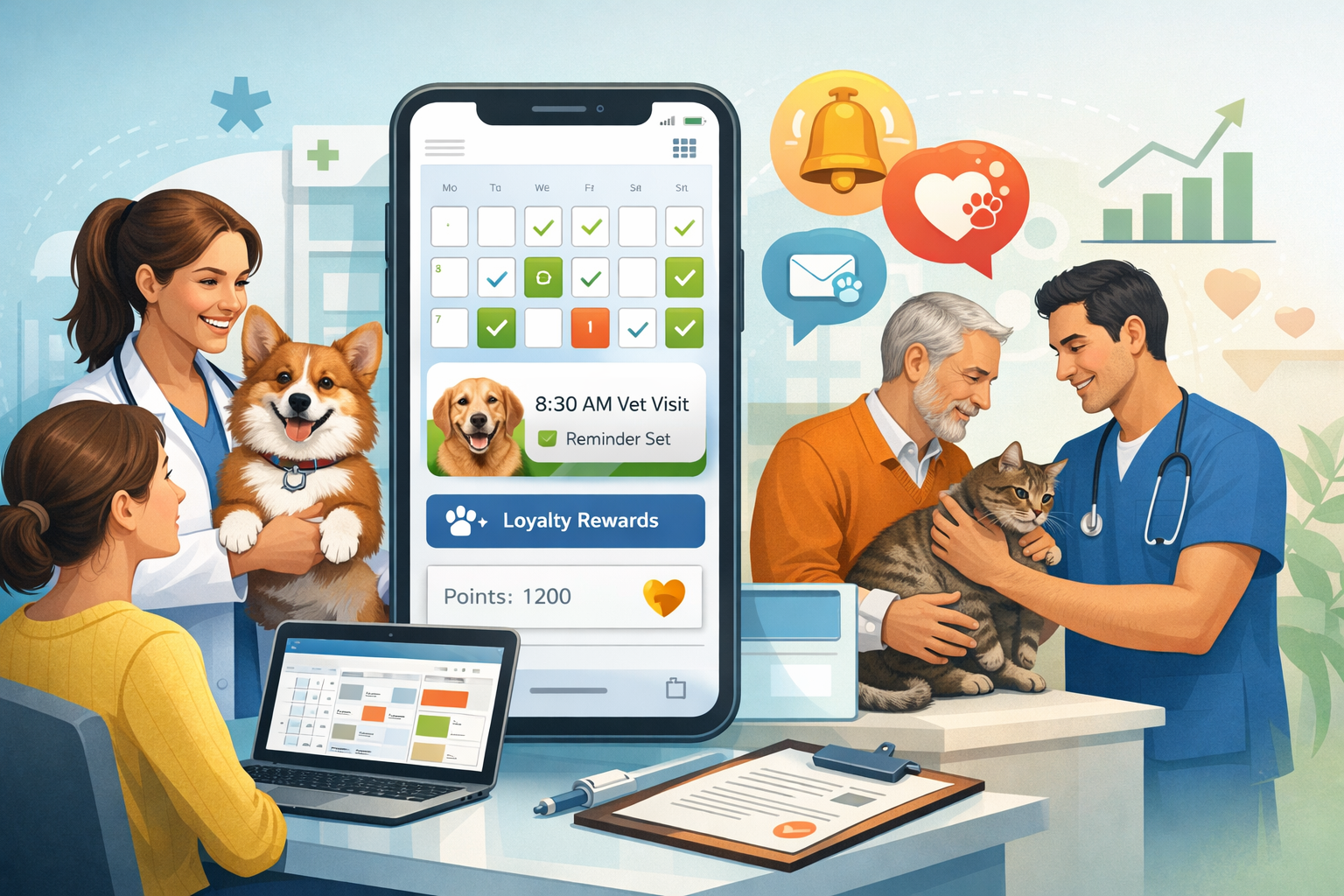
Learn how veterinary clinics can increase appointment bookings, improve reminders, and grow pet owner retention by turning their website into a mobile app.
Inside this article
- The short answer
- Why veterinary clinics lose bookings on mobile
- What changes when a veterinary clinic has a mobile app
- Mobile website vs mobile app for veterinary clinics
- Why retention matters so much in veterinary businesses
- A simple real-world example
- Why many clinics delay launching an app
- Why speed of launch matters
- The practical path: turn your website into an app
- What to look for in a launch partner
- FAQ
- Final takeaway
The short answer
A mobile app helps veterinary clinics increase bookings and pet owner retention because it makes appointment booking easier, reminders more reliable, and follow-up care much easier to manage on mobile.
That matters because many clinics do not lose clients in one big moment.
They lose them through small delays and forgotten follow-ups.
A pet owner means to book. They forget. A vaccination reminder should happen. It gets missed. A follow-up visit is needed. Nobody comes back at the right time.
These are quiet leaks, but they directly affect revenue and long-term client value.
Why veterinary clinics lose bookings on mobile
Most clinics today rely on a mix of:
- mobile websites
- WhatsApp messages
- Instagram DMs
- calls and manual reminders
On the surface, it feels manageable.
But mobile behavior creates friction that is easy to underestimate.
Booking is too easy to delay
A pet owner visits your website, checks services, maybe looks at pricing or reviews, and decides to book later.
Later often does not happen.
That is not because the interest was weak.
It is because the booking path was easy to leave and easy to forget.
Follow-up care depends too much on memory
Veterinary clinics often depend on repeat visits for:
- vaccinations
- annual check-ups
- treatment follow-ups
- chronic care plans
- grooming or recurring services
If those return visits depend only on the owner remembering, many of them will happen late or not at all.
Messaging channels are useful but limited
WhatsApp and Instagram help communication, but they are not strong systems for structured retention.
Messages get buried, conversations scatter, and staff end up handling too much manually.
What changes when a veterinary clinic has a mobile app
A mobile app shifts the clinic from being something a client visits once to something that stays present on the phone.
Booking becomes faster
Instead of searching again, reopening a browser, or finding an old link, the client taps the app and books much faster.
That lower friction improves completed appointments.
Reminders become more effective
Push notifications can support the exact moments that matter most.
Examples:
- “Your pet’s appointment is tomorrow at 2 PM.”
- “Vaccination follow-up may be due this week.”
- “Time for your pet’s annual wellness check.”
These reminders are timely, practical, and much easier to notice than email alone.
Repeat visit behavior becomes more natural
A strong clinic grows through ongoing relationships, not only first-time visits.
An app supports a simple retention loop:
- visit
- reminder
- follow-up
- next appointment
That helps clients return more consistently without heavy manual work.
Trust improves
Pet owners make emotional decisions.
They want to feel that the clinic is:
- organized
- caring
- modern
- reliable
A clean app can reinforce that feeling.
It shows that follow-up and convenience are part of the service, not an afterthought.
Mobile website vs mobile app for veterinary clinics
| Area | Mobile Website | Mobile App |
|---|---|---|
| Booking speed | Slower | Faster |
| Appointment reminders | Mostly manual or email | Push notifications |
| Follow-up care | Easier to miss | Easier to structure |
| Brand presence | Passive | Visible on the home screen |
| Repeat visits | Lower | Stronger |
| Client relationship | Less direct | More direct and consistent |
This is why a clinic can already have a decent website and still lose retention on mobile.
The issue is not only visibility.
It is whether the client comes back and acts.
Why retention matters so much in veterinary businesses
Many clinics spend a lot of effort on new client acquisition.
That matters, but long-term growth usually depends on retention.
A returning pet owner is often more valuable because:
- trust already exists
- booking resistance is lower
- lifetime value is higher
- service continuity is better
If the clinic does not have a good mobile system for follow-up, that value is harder to protect.
A simple real-world example
Imagine two clinics.
Clinic A
- booking happens through website or WhatsApp
- no structured reminder loop
- clients return only when they remember
Clinic B
- booking happens through a mobile app
- reminder notifications are built in
- follow-up visits are easier to trigger
Over time, Clinic B usually sees:
- more completed appointments
- fewer missed follow-ups
- higher retention
- more predictable revenue
Not because the vets are more skilled.
Because the system supports repeat behavior better.
Why many clinics delay launching an app
A lot of clinic owners assume that building an app means:
- long development time
- high cost
- technical complexity
- another system to manage
That assumption delays good decisions.
But if you already have a working website, the smartest path is often not building from zero.
It is turning that website into an app and improving the mobile experience faster.
Why speed of launch matters
Every month without a stronger mobile retention system can mean:
- missed bookings
- weaker follow-up care
- lower repeat visits
- more pressure to keep finding new clients
Speed matters because retention improvements create value quickly.
The sooner the app exists, the sooner the clinic stops losing revenue in small, repeated ways.
The practical path: turn your website into an app
This is where a web-to-app model makes sense.
Instead of rebuilding everything from scratch, you can use the website you already have as the foundation for a mobile app.
That approach can help clinics:
- launch faster
- reduce cost and complexity
- keep existing flows working
- add app-level benefits like notifications and easier repeat engagement
For many clinics, this is the most practical route.
What to look for in a launch partner
If you decide to move forward, focus on business outcomes.
A good launch partner should help you:
- keep your current website and booking flow usable
- support push notifications
- publish correctly to the app stores
- create a clean mobile experience
- launch faster than a traditional custom build
FAQ
Do I need to rebuild my whole system to launch an app?
No. In many cases, the fastest option is to convert your current website into an app instead of starting over.
Will pet owners actually use a veterinary clinic app?
Yes, especially existing clients who already trust your clinic and want a faster way to book, receive reminders, and manage follow-ups.
Is this only useful for large animal hospitals?
No. Smaller clinics often benefit more because repeat visits and client loyalty matter heavily for growth.
How does an app help retention?
It improves reminders, follow-up visibility, and repeat booking convenience, which makes it easier for pet owners to come back consistently.
How fast can this launch?
With the right setup, much faster than traditional custom app development.
Final takeaway
Most veterinary clinics do not only need more demand.
They need a better mobile path from first interest to booking, and from one visit to the next.
A mobile app helps create that path by improving convenience, reminders, trust, and repeat behavior.
If you want a practical way to turn your existing website into a mobile app and improve bookings and retention, Webvify can help you launch faster without unnecessary complexity.
See how it works at https://webvify.app