

Why Sporting Goods Retailers Need a Mobile App in 2026
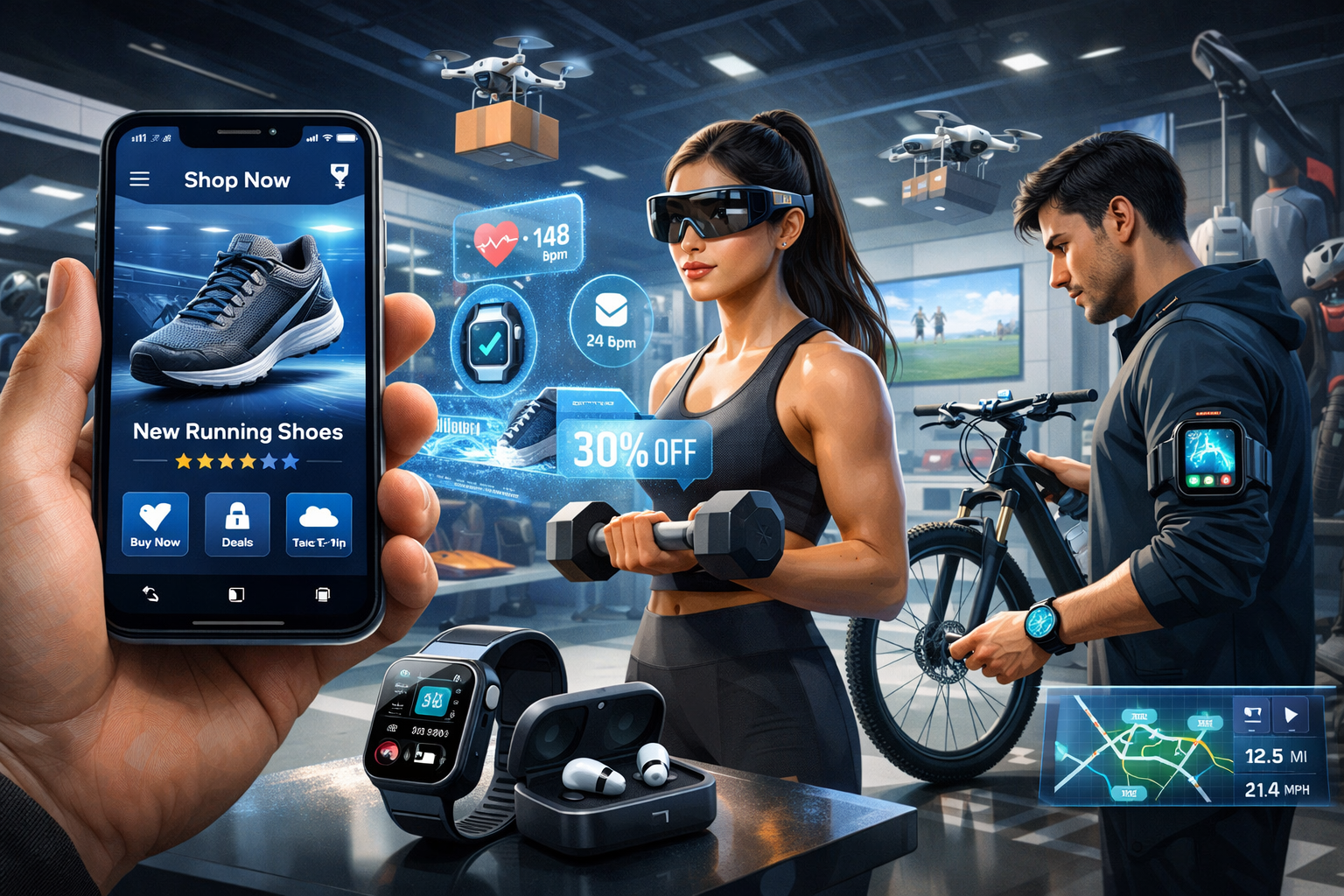
See why sporting goods retailers are turning websites into mobile apps to increase repeat purchases, loyalty engagement, and customer retention.
Inside this article
- The short answer
- Why websites fall short for sporting goods retail
- What a mobile app can improve
- Mobile app vs website for sporting goods retail
- Which retailers benefit most
- This is not only about ecommerce
- Do you need a full rebuild?
- What to improve before launch
- Questions retailers often ask
- The practical takeaway
- CTA
The short answer
Sporting goods retailers need a mobile app in 2026 because customers often come back in cycles.
They buy for seasons, events, team needs, personal goals, and follow-up items.
That means repeat behavior matters just as much as the first sale.
A mobile app helps make that return journey easier.
Why websites fall short for sporting goods retail
Most sporting goods retailers already have a website.
Many also have offers, loyalty tools, or store pages.
The problem is not availability.
The problem is repeat engagement.
Customers often buy in phases
Sporting goods buyers often come back for:
- accessories
- replacement items
- seasonal gear
- team purchases
- training equipment
- upgrades
A browser works for discovery, but it is weaker for long-term habit.
Promotions are tied to timing
In this category, timing matters a lot.
Retailers often run campaigns around:
- seasonal starts
- school periods
- tournaments
- fitness goals
- outdoor activity windows
If customers do not see those campaigns at the right moment, conversion drops.
Loyalty is easier to ignore on the web
Even when retailers have loyalty or member offers, customers often forget to check them.
A mobile app keeps those benefits more visible.
What a mobile app can improve
Better repeat purchases
A mobile app can make it easier for customers to return for:
- consumables
- gear upgrades
- apparel
- accessories
- seasonal restocks
That helps increase lifetime value.
Better loyalty engagement
Customers can access:
- reward balances
- member-only campaigns
- saved products
- purchase history
- personalized reminders
without friction.
Better campaign visibility
Push notifications can support real retail moments such as:
- limited offer live
- seasonal launch
- restock alert
- pickup ready
- reward unlocked
- saved item discount
These are useful prompts, not random interruptions.
Better local store connection
For chains and multi-location brands, an app can also support:
- nearby store access
- local stock context
- branch-specific promotions
- opening hours
- pickup and follow-up updates
Mobile app vs website for sporting goods retail
| Area | Website | Mobile App |
|---|---|---|
| Access | Search or browser dependent | One tap from home screen |
| Repeat purchases | More friction | Easier re-entry |
| Loyalty visibility | Easier to miss | Easier to revisit |
| Promotions | Mostly email/social dependent | Push notifications available |
| Local store support | More passive | Faster access |
| Brand habit | Weaker | Stronger |
Which retailers benefit most
This approach is especially useful for:
- sporting goods chains
- outdoor equipment retailers
- fitness gear stores
- team sports retailers
- footwear and training retailers
- multi-location sports brands
If your customers already return for seasonal or repeat buying behavior, a mobile app can create real value.
This is not only about ecommerce
For sporting goods retailers, a mobile app can support:
- repeat purchases
- loyalty engagement
- better campaign timing
- stronger retention
- local store convenience
- better customer reactivation
That makes it a retention tool, not just a sales channel.
Do you need a full rebuild?
Usually, no.
If your website, product catalog, and customer flows already work, a web-to-app approach is often the practical move.
It lets retailers launch faster while keeping the core digital system in place.
What to improve before launch
1. Focus on repeat customer flows
Think beyond first purchase behavior.
2. Make loyalty and saved items easy to access
If the value is visible, customers return more often.
3. Use notifications carefully
Only send messages that support timing and action.
4. Support seasonal shopping behavior
This category depends heavily on return cycles.
Your app should reflect that.
Questions retailers often ask
Will customers install the app?
If your brand already has repeat buyers, loyalty users, or seasonal demand, many customers will install an app that makes shopping easier.
Is this only for large chains?
No.
Mid-sized retailers can benefit quickly because retention and repeat purchases matter at every level.
Does the app replace the website?
Not necessarily.
The website can support discovery while the app becomes the stronger repeat-use channel.
Is this worth it if the website is already mobile friendly?
Often, yes.
Mobile-friendly access is not the same as persistent visibility, loyalty engagement, and repeat habit.
The practical takeaway
If your sporting goods retail brand depends on seasonal buying, repeat purchases, and stronger customer loyalty, a mobile app can become a practical growth layer.
It helps customers return faster, stay engaged longer, and buy again with less friction.
CTA
If your sporting goods retail brand already has a website, catalog, or customer account flow and you want to turn it into a practical mobile app, Webvify can help you launch faster with a web-to-app approach built for repeat retail behavior: https://webvify.app