

Why SaaS Companies Are Turning Client Portals Into Mobile Apps in 2026
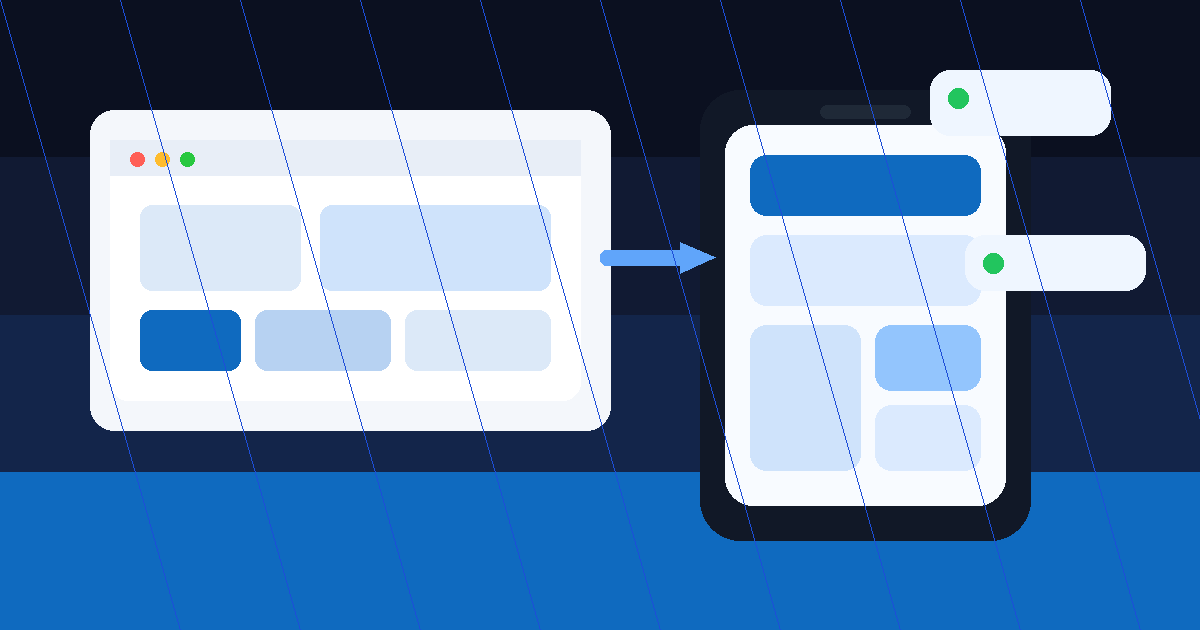
See why SaaS companies turn client portals into mobile apps to increase retention, reduce support friction, and keep customers engaged every day.
Inside this article
- The short answer
- Why browser-based client portals lose momentum
- What improves when the portal becomes a mobile app
- Mobile app vs browser portal for SaaS
- Which SaaS products benefit most
- This is not only a UX decision
- Do you need to rebuild the product from scratch?
- What to improve before launch
- Questions SaaS founders often ask
- The practical takeaway
- CTA
The short answer
SaaS companies are turning client portals into mobile apps because customers expect faster access, better visibility, and a simpler way to complete routine tasks without living inside a browser tab.
In many SaaS products, the portal is where ongoing value is delivered.
That may include:
- checking dashboards
- approving requests
- managing subscriptions
- reviewing reports
- responding to notifications
- uploading documents
- handling support tasks
- monitoring team activity
When all of that stays locked inside a browser workflow, adoption often becomes weaker than it should be.
A mobile app does not fix a bad product.
But it can make a useful product easier to revisit, easier to trust, and easier to build into daily habits.
Why browser-based client portals lose momentum
Most SaaS companies already have a responsive portal.
The problem is that responsive does not automatically mean convenient.
A portal may technically work on mobile while still creating just enough friction to reduce real usage.
Tabs are fragile, habits are not
A browser tab is temporary.
A mobile app on the home screen is persistent.
That difference matters because many SaaS products depend on repeat behavior.
If customers need your product every day or every week, they should not have to:
- search their inbox for the login link
- reopen a forgotten tab
- log in from scratch more often than needed
- remember where a key action lives on mobile
Small delays stack up.
Over time, low-friction alternatives usually win attention.
Important actions get postponed
In many SaaS businesses, value depends on customers taking small but repeated actions.
Examples include:
- approving workflows
- checking new leads
- responding to tickets
- reviewing analytics
- following up on account alerts
- managing internal team tasks
When those actions feel annoying on mobile, customers delay them.
And delayed actions often become lower adoption, slower expansion, and weaker retention.
Email cannot carry the whole engagement model
A lot of SaaS teams try to solve low usage with more emails.
That has limits.
Email is useful, but it is crowded, passive, and easy to ignore.
If your product only comes back into the customer’s mind through email reminders, you are depending on someone else’s inbox to drive your usage.
That is a weak foundation.
What improves when the portal becomes a mobile app
A mobile app can turn your product from “something users visit when they remember” into “something that stays present and easy to act on.”
Your product becomes one tap away
This is simple, but powerful.
When your SaaS product sits on the customer’s home screen, access gets easier and usage becomes more natural.
That helps with:
- quicker check-ins
- faster responses
- more consistent product usage
- stronger brand recall
- better reactivation of inactive users
Notifications become part of the product experience
Push notifications are often one of the biggest practical advantages.
Useful SaaS examples include:
- new task assigned
- report ready
- lead received
- payment issue
- approval pending
- support update
- unusual activity detected
- subscription renewal reminder
These are not generic campaigns.
They are product moments.
When handled well, they reduce delay and bring users back at the right time.
Adoption gets stronger across busy teams
In many SaaS products, the buyer is not the only user.
There may be:
- managers
- operators
- field teams
- account owners
- support staff
- sales reps
A mobile app can make the product more usable for people who are moving, multitasking, or working away from a desk.
That can increase total usage depth across the account.
Retention becomes easier to protect
Retention is not only about pricing or feature breadth.
It is also about how easy your product is to keep using.
When customers can complete core actions quickly from mobile, your product becomes more embedded in their routine.
That makes churn less likely, especially in products where value depends on steady engagement.
Mobile app vs browser portal for SaaS
| Area | Browser Portal | Mobile App |
|---|---|---|
| Access | Link, tab, or login flow dependent | One tap from home screen |
| Re-engagement | Mostly email based | Push notifications available |
| Habit formation | Weaker | Stronger over time |
| Team responsiveness | Easier to delay | Faster to act |
| Brand visibility | Passive | Persistent |
| Daily utility | Often lower on the go | Much stronger on the go |
Which SaaS products benefit most
This model is especially useful for SaaS companies where customers return frequently for practical tasks.
Examples include:
- CRM and sales tools
- support and help desk platforms
- field service software
- booking and scheduling systems
- analytics dashboards
- internal operations tools
- B2B self-service portals
- client communication platforms
If users already log in often, a mobile app can make that usage easier to sustain.
This is not only a UX decision
Many teams treat a mobile app as a branding layer.
That is too narrow.
For SaaS, this is often a growth and retention decision.
A stronger mobile experience can help you:
- increase product usage frequency
- reduce missed actions
- improve account stickiness
- support multi-user adoption
- lower support friction
- create better retention signals
When your product becomes easier to access and easier to act inside, business outcomes usually follow.
Do you need to rebuild the product from scratch?
Usually, no.
If your client portal already works well on the web, you may not need a full native rebuild to create value.
That is why web-to-app approaches are attractive for many SaaS companies.
They allow teams to move faster while keeping the core product, workflows, and business logic in place.
With the right structure, a portal can become a mobile app that adds:
- app store presence
- home screen access
- push notifications
- stronger retention loops
- cleaner mobile navigation
That is often a more practical move than starting over.
What to improve before launch
1. Focus on repeated actions first
Do not try to put everything into the first version.
Start with the actions users repeat most often.
2. Reduce mobile friction aggressively
Navigation, login flow, page speed, and session continuity matter more on mobile than many teams think.
3. Use notifications with discipline
Send alerts that help users act, not alerts that beg for attention.
4. Design for ongoing usage, not one-time visits
The goal is not just mobile access.
The goal is creating a product that feels easier to keep using.
Questions SaaS founders often ask
Will customers really install the app?
If your product solves recurring problems and users already return often, many customers will install an app that makes key actions faster.
Is this only for large SaaS platforms?
No.
Mid-sized SaaS products can benefit a lot, especially when retention depends on repeated engagement.
Does an app replace the web portal?
Not necessarily.
In many cases, the app becomes the stronger mobile layer while the web portal remains important for desktop use.
Is this worth it if our product is already mobile responsive?
Often, yes.
Responsive design helps readability.
It does not automatically solve visibility, habit formation, or re-engagement.
The practical takeaway
If your SaaS product already has a client portal, you may already have the foundation for a stronger mobile experience.
The opportunity is not always building a new product.
It is making your existing product easier to revisit, easier to act on, and harder to forget.
That usually means better adoption, better retention, and a more valuable experience for customers.
CTA
If you already have a SaaS portal and want to turn it into a practical mobile app, Webvify can help you launch faster with a web-to-app approach built for real usage and retention goals: https://webvify.app