

How a Mobile App Reduces No-Shows and Increases Repeat Bookings for Service Businesses
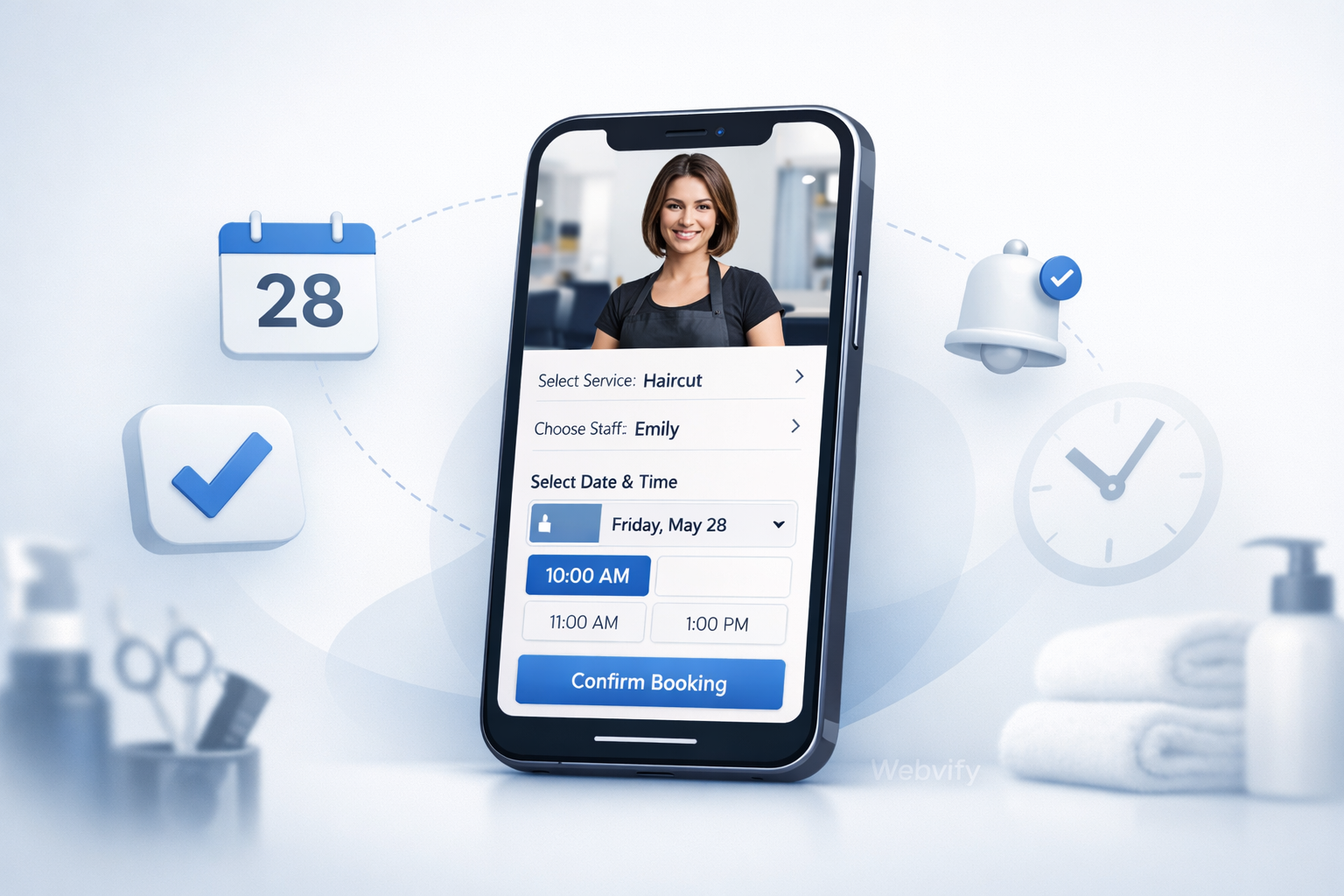
Learn how a service business mobile app can reduce no-shows, improve repeat bookings, and turn your website into a stronger booking engine.
Inside this article
- The short answer
- Why service businesses lose bookings without noticing
- Why a service business mobile app changes customer behavior
- How a mobile app helps reduce no-shows
- How a mobile app increases repeat bookings
- Mobile website vs mobile app for booking businesses
- Why trust also improves when customers book through an app
- A common question: do you need to build a new app from scratch?
- What types of businesses benefit most from this model?
- A practical framework to reduce no-shows and improve repeat bookings
- Why waiting can be expensive
- FAQ
- Final takeaway
The short answer
If you run a salon, clinic, beauty center, dental practice, spa, or any appointment-based business, a mobile app helps in two simple ways:
- it reminds people before their appointment
- it makes it very easy to book again
That matters because most no-shows and lost repeat bookings do not happen because customers dislike your service.
They happen because people get distracted, forget, postpone, or decide that booking again feels like too much effort.
A website helps people discover your business. A mobile app helps them return, confirm, and book again.
Why service businesses lose bookings without noticing
Many businesses look at no-shows as a scheduling problem.
In reality, it is often a mobile behavior problem.
A customer may visit your website, book once, and have a good experience. But after that first visit, your website becomes passive.
It waits for the customer to:
- remember your brand
- open a browser
- search again
- log in again
- find the booking page again
- choose a time again
That is a long chain of small actions.
On mobile, every extra step lowers the chance that the customer will complete the next booking.
This is why many service brands say:
- “We get traffic, but repeat bookings are lower than expected.”
- “People book once, then disappear.”
- “We send emails, but people still miss appointments.”
The issue is rarely demand alone. It is usually friction.
Why a service business mobile app changes customer behavior
A service business mobile app changes the relationship between your brand and the customer’s phone.
Instead of being one more website in a browser, your business becomes:
- a visible app icon on the home screen
- a faster way to access booking
- a direct notification channel
- a more consistent place to manage appointments
That creates a different habit loop.
With an app, the customer does not need to “find you again.”
They are already one tap away.
For appointment businesses, that one change can improve:
- booking completion
- appointment confirmations
- repeat visit rate
- customer retention
How a mobile app helps reduce no-shows
If your goal is to reduce no-shows, the biggest advantage of an app is not that it looks modern.
It is that it helps people act at the right moment.
Push reminders are more visible than email
Email reminders still matter, but they are easy to miss.
People receive too many emails. Many open them late. Some never see them at all.
Push notifications work differently.
They appear directly on the phone screen at the moment they matter.
For example:
- “Your appointment is tomorrow at 2:00 PM.”
- “You are booked in 2 hours. Tap to confirm.”
- “Need to reschedule? Choose a new time in seconds.”
This is one of the clearest ways to reduce no-shows.
You are not waiting for the customer to check inboxes, tabs, or spam folders. You are reaching them in real time.
One-tap confirmation removes hesitation
Many businesses lose customers between reminder and confirmation.
The reminder is sent, but the action still feels annoying.
If people need to:
- open a browser
- log in
- find the booking page
- locate the appointment
- confirm manually
some will simply postpone it.
An app can reduce that friction dramatically.
The flow becomes:
- customer sees the reminder
- customer taps the notification
- customer confirms the appointment
That speed matters.
The easier it is to confirm, the more likely people are to follow through.
Rescheduling becomes easier than disappearing
Some no-shows are not true no-shows.
They are failed reschedules.
The customer cannot attend, but changing the appointment feels slow or inconvenient. So they delay. Then they forget. Then they miss it.
A booking app for salons, clinics, and service brands can fix that by making rescheduling simple.
If the customer can open the app, view available slots, and move the booking in seconds, you do not lose the revenue. You only move it.
That is an important difference.
How a mobile app increases repeat bookings
Reducing no-shows protects today’s revenue.
Repeat bookings grow future revenue.
This is where a mobile app for an appointment business becomes especially valuable.
One-tap rebooking turns intent into action
Many repeat customers want the same thing again.
They want:
- the same service
- the same team member or provider
- a similar date or time
But on a website, rebooking often means starting from zero.
That is unnecessary friction.
A mobile app can present a much easier option:
- “Book again”
- “Repeat your last appointment”
- “Book with your previous provider”
That simple shortcut can increase repeat bookings because it removes the need to rebuild the booking journey every time.
Timed reminders bring customers back before they drift away
Many service businesses already know their normal repeat cycle.
Examples:
- hair salons: 4–8 weeks
- aesthetic clinics: based on treatment schedule
- dental clinics: check-up cycles
- spas and wellness brands: monthly or seasonal routines
An app lets you use that rhythm intelligently.
You can send messages like:
- “It’s been 5 weeks since your last visit.”
- “You may be due for your next treatment.”
- “Weekend slots just opened for returning clients.”
This is more effective than broad email campaigns because the message is timely and personal.
It feels useful, not random.
Home screen presence keeps your brand top of mind
A website must be rediscovered.
An app is already present.
That home screen presence sounds simple, but it is powerful.
It quietly increases recall, which means your business stays visible between visits. When the customer thinks, “I need to book again,” your brand is already in front of them.
You do not need to win that attention from scratch each time.
Mobile website vs mobile app for booking businesses
Here is the practical difference for an appointment-based brand.
| Area | Mobile Website | Mobile App |
|---|---|---|
| Booking access | User must open browser and find the page | User opens the app in one tap |
| Appointment reminders | Mostly email or SMS | Push notifications on the phone screen |
| Confirmation flow | Often multiple steps | Faster confirmation inside the app |
| Rescheduling | Can feel slow or hidden | Quick and easier to complete |
| Rebooking | Usually manual | Can be one tap or pre-filled |
| Brand visibility | Only when searched or revisited | Always visible on the home screen |
| Repeat bookings | Lower because of friction | Higher because re-entry is easier |
| No-show reduction | Limited | Stronger because reminders and actions are direct |
For most service businesses, this is not a cosmetic difference.
It is an operational difference.
Why trust also improves when customers book through an app
Trust affects bookings more than many businesses realize.
When customers see that your business has a real mobile app, they often read it as a sign of stability and professionalism.
It suggests that your business is:
- established
- organized
- easy to work with
- serious about customer experience
That matters even more for clinics, beauty services, and any business where appointments involve time, payment, and personal trust.
A smoother app experience also makes the business feel more reliable because customers know what to expect.
They use the same interface each time. They see the same booking path. They do not need to relearn the process.
Consistency reduces hesitation.
A common question: do you need to build a new app from scratch?
Usually, no.
This is the point where many founders pause. They assume launching an app means a long development process, large budgets, and technical complexity.
That is not always true.
If you already have a working website and booking flow, a smarter option is often to convert your website to app instead of rebuilding everything from the ground up.
That approach can help you:
- launch faster
- lower cost
- keep your current booking system
- avoid maintaining two separate products unnecessarily
For many service brands, this is the most practical route.
What types of businesses benefit most from this model?
A booking app for clinics, salons, and appointment-driven brands is especially useful when repeat visits matter.
This includes:
- hair salons and barbershops
- beauty centers and med spas
- dental clinics
- aesthetic and wellness clinics
- fitness studios
- massage and therapy centers
- coaching or consultation businesses
- any service brand with scheduled appointments
If your business depends on customers coming back regularly, a mobile app can support that pattern directly.
A practical framework to reduce no-shows and improve repeat bookings
If you want to apply this in a simple way, start with these five moves.
1. Add push reminders at the right times
A good sequence is often:
- 24 hours before the appointment
- 2 hours before the appointment
- a final reminder if needed
The goal is not to spam. The goal is to reduce forgetfulness.
2. Make confirmation fast
Do not make customers work to confirm a booking.
The action should feel immediate.
3. Make rescheduling easy
If someone cannot attend, help them save the appointment instead of losing it.
4. Create a visible rebook shortcut
Give returning clients a simple option like:
- “Book again”
- “Rebook last appointment”
- “Book with your usual provider”
5. Use timing based on customer behavior
Do not wait for customers to remember your cycle. Remind them when they are likely ready to return.
Why waiting can be expensive
Many businesses say they want an app later.
But later often means more missed bookings, weaker retention, and more dependence on paid ads to bring people back.
If your competitors make booking, confirming, and returning easier before you do, they gain an advantage that compounds over time.
They become easier to rebook with. They stay more visible. They keep more repeat revenue.
The cost of waiting is not only about development.
It is about all the bookings you do not recover while your customer journey stays harder than it needs to be.
FAQ
Does a mobile app really help reduce no-shows?
Yes. A mobile app helps reduce no-shows because push reminders are more visible than email, and confirmation or rescheduling can happen in fewer steps.
How does a mobile app increase repeat bookings?
It makes the return journey easier. Customers can rebook faster, receive timely reminders, and keep your brand visible on their phone.
Is a booking app for salons or clinics only useful for large businesses?
No. Smaller service businesses often benefit the most because repeat customers are a major part of revenue, and every missed booking matters more.
Do I need a new booking system to launch an app?
Not always. If your website already has a booking system, it can often be used as the foundation for your app experience.
What is the fastest way to launch a service business mobile app?
For many brands, the fastest path is to convert an existing website into an app instead of building a new product from scratch.
Final takeaway
If your business depends on appointments, your growth does not only depend on getting found.
It depends on getting booked again.
That is why a website alone is often not enough.
A mobile app helps you reduce no-shows, improve repeat bookings, and create a smoother customer habit around your brand.
If you already have a website and want a faster path to a mobile app, Webvify can help you turn that existing experience into something customers can book, confirm, and return to more easily.
Learn more at https://webvify.app?utm_source=blog&utm_medium=cta&utm_campaign=reduce-no-shows-repeat-bookings-mobile-app-2026 .