

How a Mobile App Helps Physiotherapy Clinics Increase Appointment Bookings and Repeat Visits
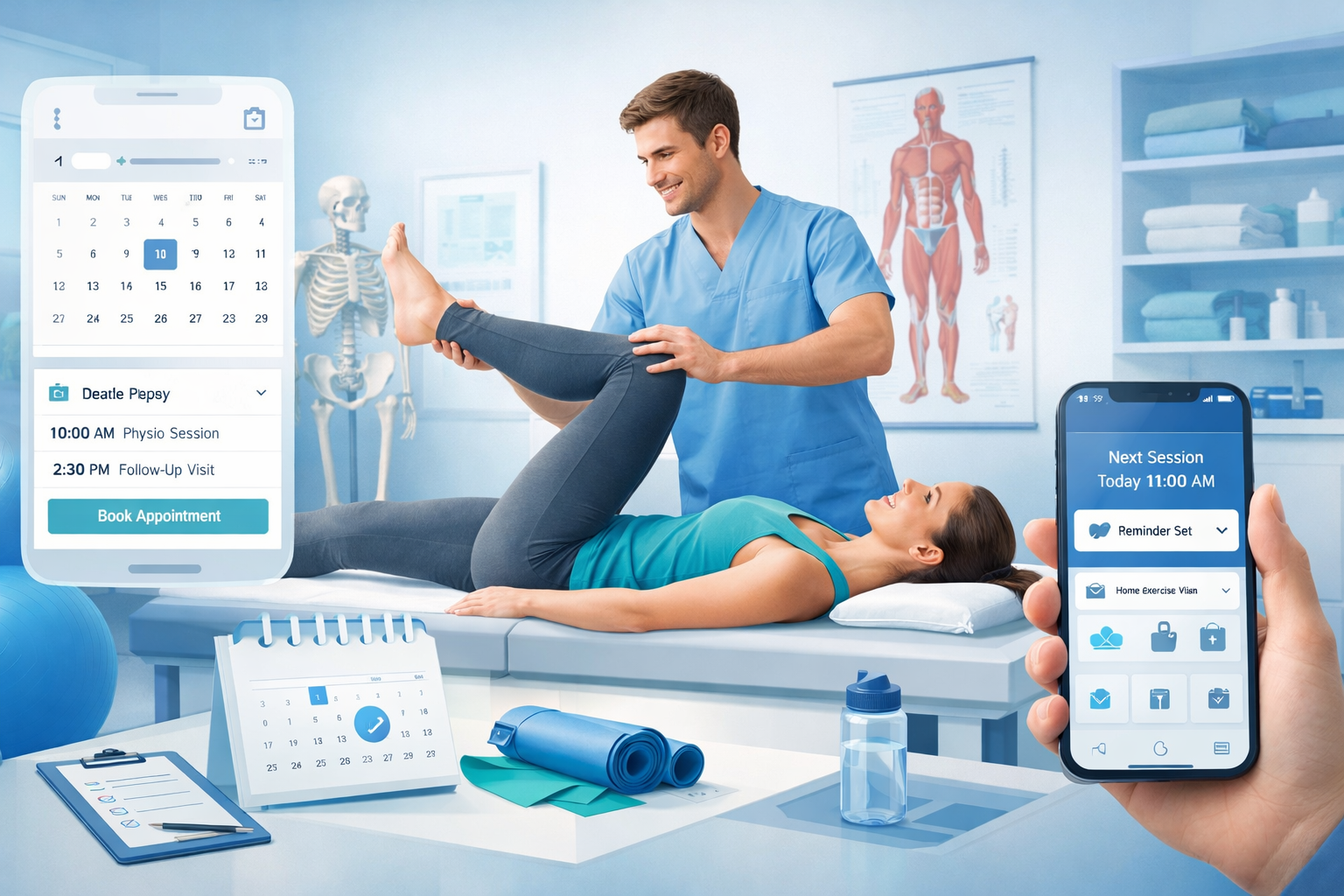
Learn how a physiotherapy mobile app can increase bookings, reduce drop-off, and improve repeat visits with better reminders.
Inside this article
- Short answer
- The real problem: why clinics lose bookings on mobile
- Where mobile websites fall short
- What changes when a clinic has a mobile app
- Why this matters more for physiotherapy
- Website vs mobile app: practical comparison
- When should a physiotherapy clinic consider an app?
- Good news: you do not need to rebuild everything
- What to look for in a launch partner
- How apps increase repeat visits in practice
- FAQ
- Final thought
Short answer
A mobile app helps physiotherapy clinics increase appointment bookings and repeat visits by making it faster to book, easier to return, and harder to forget.
Patients can open the clinic from their home screen, book in seconds, and receive reminders that bring them back for follow-up sessions.
The real problem: why clinics lose bookings on mobile
Most physiotherapy clinics already have a website. The issue is often not visibility. It is conversion.
A common patient journey looks like this:
- they search for the clinic
- they open the site on mobile
- booking feels slow or distracting
- they postpone the decision
- they never come back
Physiotherapy has an extra challenge: treatment usually requires consistency. If patients miss sessions, outcomes drop and so does revenue.
Where mobile websites fall short
A mobile-friendly website is still useful, but it has clear limits.
No home-screen presence
A website disappears as soon as the patient closes the browser.
That makes the clinic easy to forget.
No direct re-engagement channel
Without an app, the clinic often depends on email, SMS, or the patient remembering to come back.
Booking friction remains
Even good websites can still have:
- forms that feel slow on mobile
- redirects between steps
- login friction
- too many taps before confirmation
Too much competition for attention
In a mobile browser, the clinic competes with many other open tabs and distractions.
This is not only a traffic problem. It is a convenience and retention problem.
What changes when a clinic has a mobile app
A mobile app removes friction and helps build habit.
Faster appointment booking
With an app:
- patients open the clinic in one tap
- saved details reduce form filling
- booking feels immediate instead of annoying
That leads to more completed bookings and fewer drop-offs.
Home screen means constant visibility
The app icon stays where patients can see it regularly.
That means:
- the clinic stays top of mind during recovery
- patients do not need to search again
- returning feels easier and more natural
This small shift can have a big effect on repeat visits.
Push notifications bring patients back
Physiotherapy depends heavily on follow-ups.
An app can support that with:
- session reminders
- treatment-plan follow-ups
- “time for your next visit” reminders
- updates about clinic offers or availability
Compared with email or SMS, push notifications are often faster, cleaner, and easier to notice.
Why this matters more for physiotherapy
Physiotherapy is not a one-time service.
Patients usually need:
- multiple sessions
- progress over time
- consistent attendance
- motivation to stay engaged
Without reminders and easy access, many patients drop off too early.
An app helps clinics:
- keep patients engaged between sessions
- improve treatment-plan completion
- support long-term patient relationships
Website vs mobile app: practical comparison
| Factor | Mobile Website | Mobile App |
|---|---|---|
| Booking speed | Medium | Fast |
| Return visits | Lower | Higher |
| Visibility | Requires search | Always visible |
| Reminders | Limited | Strong |
| Habit formation | Weak | Strong |
A website helps attract traffic.
An app helps retain and convert that traffic over time.
When should a physiotherapy clinic consider an app?
A clinic should seriously consider an app if:
- it gets steady traffic but low mobile conversion
- patients do not return consistently
- repeat sessions are a key part of the business
- it wants more direct bookings without intermediaries
If any of these sound familiar, an app is not just a nice extra. It is a practical next step.
Good news: you do not need to rebuild everything
Many clinics assume an app means starting from zero.
That is no longer true.
Many can:
- turn the existing website into an app
- keep the current booking system
- launch much faster
- avoid the cost of full custom development
This is one of the biggest reasons web-to-app models are attractive.
What to look for in a launch partner
Not all solutions are equal.
A good partner should provide:
- a smooth mobile booking experience
- push notification support
- App Store and Google Play publishing help
- the ability to update content without rebuilding the app
- a clean and professional interface
The goal is to simplify the experience, not add complexity.
How apps increase repeat visits in practice
A typical app-driven patient journey may look like this:
- The patient books the first appointment in the app.
- They receive a reminder before the session.
- They get a follow-up suggestion after the visit.
- They book the next session in seconds.
That loop creates:
- stronger habit
- better treatment consistency
- higher lifetime value per patient
FAQ
Do patients actually download clinic apps?
Yes, if the value is clear. Easy booking and useful reminders give people a reason to keep the app.
Will this replace the clinic website?
No. The website still helps attract traffic. The app helps retain and convert that traffic.
Is this only useful for large clinics?
No. Smaller clinics often benefit a lot because they rely heavily on repeat visits.
Is it expensive?
Web-to-app solutions are usually much more affordable than building a fully custom app from scratch.
How long does it take to launch?
With the right setup, clinics can often launch far faster than expected.
Final thought
Physiotherapy clinics do not only need more patients.
They need patients to come back.
A mobile app helps solve both sides of the problem by making booking easier and returning more natural.
If you already have a website, you are closer than you think.
Turn it into a mobile app and start increasing bookings and repeat visits with https://webvify.app