

Mobile App for Wineries: Keep Customers Coming Back Between Visits
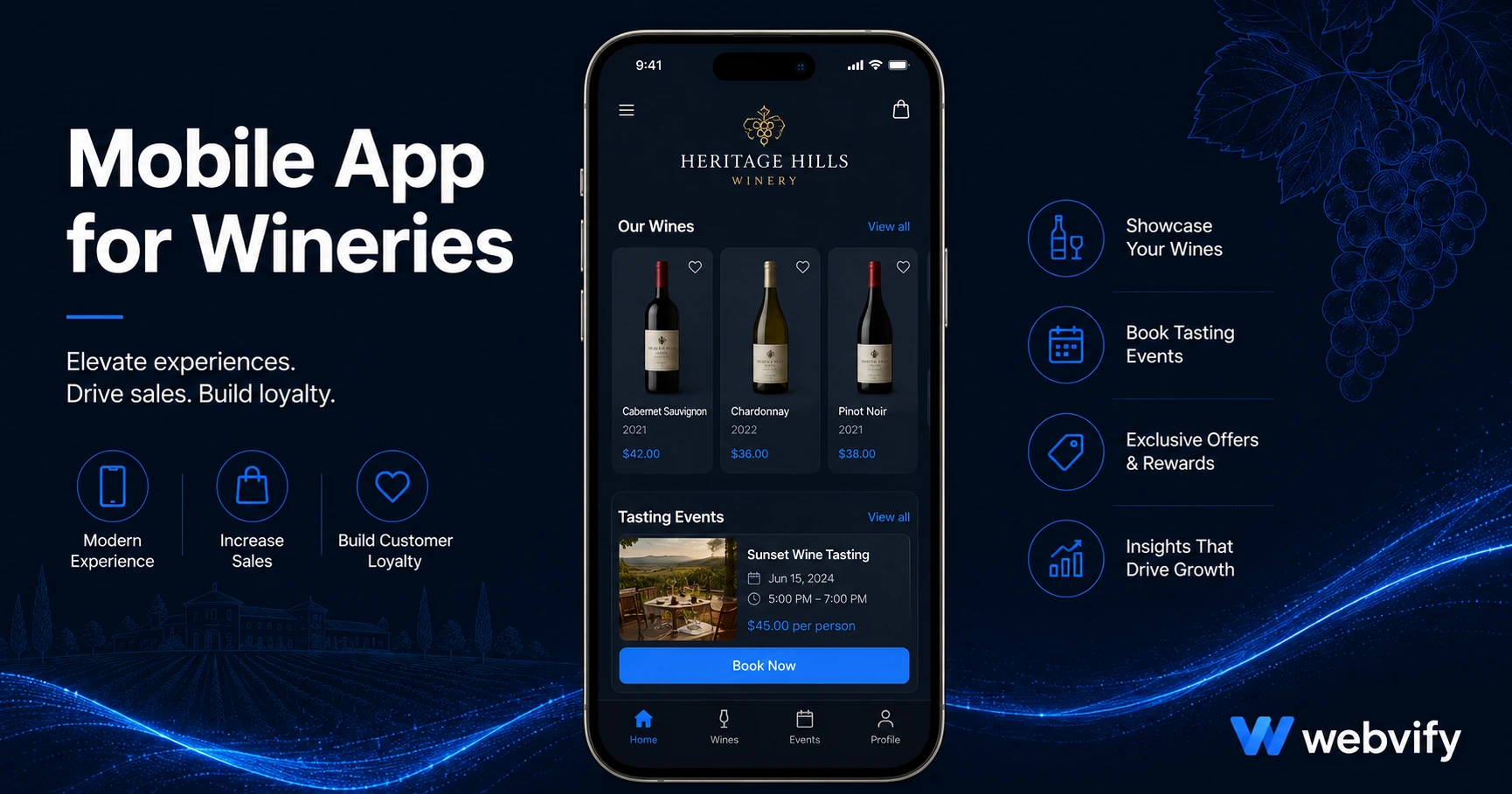
Most winery visitors never return — not because of bad wine but because there's no channel to keep them connected. Here's how a mobile app for wineries changes that.
Inside this article
Wine club members spend three times more than first-time tasting room visitors — yet most wineries rely on email newsletters that reach fewer than 1 in 4 of their list. A mobile app for wineries changes where the conversation happens.
Why Winery Customers Drift After Every Visit
Even the most memorable tasting experience fades once visitors return to their routine. The average winery guest visits 1–3 times per year. Between those visits, the only touchpoint most wineries have is an email newsletter — wine brand open rates average 18–22%.
That leaves 78% of your list silently disconnected from the conversation. Not because they didn't enjoy the experience, but because no channel stays in their pocket the way a branded app does. When your winery is invisible during those 60–300 days between visits, a competitor with better visibility wins the next bottle sale.
What a Mobile App for Wineries Actually Does
A mobile app for a winery is not an ordering portal you build from scratch. It wraps your existing website — your tasting menu, events calendar, wine notes, and online store — into a branded iOS and Android app that lives on your customers' home screens.
The shift that matters: customers who install your app can receive push notifications directly on their lock screen. Push notification open rates for small businesses run at 60–90%, compared to 18–22% for wine brand email. You stop waiting for someone to open their inbox and start appearing on the screen they check dozens of times per day.
If you want a full breakdown of how push and email compare across different buying cycles, this comparison covers both channels in detail →.
The Three Push Campaigns That Drive Repeat Winery Visits
Without a push channel, timing a winery campaign means guessing when someone happens to check email. With an app, you can reach customers exactly when they're most likely to visit or buy.
New vintage release alert. When a new vintage drops, send a push notification 2–3 weeks before public release to app users. The exclusivity framing — "app members hear about it first" — creates a genuine reason to keep the app installed and read every notification you send.
Seasonal event window. Harvest dinners, summer tasting events, and wine festivals fill faster when promoted directly to people who already visited once. A push sent 7–10 days before the event with a direct booking link consistently outperforms an email blast by response rate.
60-day dormant reactivation. Customers who visited but haven't purchased in 60 days receive a re-engagement push. A simple message — "We've added three new labels since your last visit" — with a direct link to your store brings back browsers who went quiet without feeling like a sales pitch.
These three campaigns cover the gaps in the typical winery buying cycle without requiring a marketing coordinator to run them manually each week.
The Direct-to-Consumer Advantage of a Winery Mobile App
The highest-margin sales channel for most wineries is direct-to-consumer — no distributor cut, no retail markup, full price. A mobile app strengthens this channel in two concrete ways.
First, home screen presence keeps your winery top of mind when someone decides to order wine online. The reflex to Google a competitor disappears when your app is already on their phone next to their banking app.
Second, push notifications let you drive sales on your schedule rather than waiting for organic traffic. A Sunday afternoon push — "Order by Thursday for weekend delivery" — reaches customers in a low-distraction moment and converts at rates email campaigns can't match.
Services like Webvify handle this end-to-end: they wrap your existing winery website into a fully branded app and submit it to both the App Store and Google Play under your business name. Your online store, events page, and wine club portal come through exactly as they appear on your website — no rebuilding required, no new content system to manage.
How to Get a Mobile App for Your Winery on the App Store
App Store submission sounds technical, but the compliance path for a winery app is straightforward.
You'll need an Apple Developer account ($99/year) and a Google Play Developer account ($25 one-time). The main compliance consideration for alcohol-related content is ensuring your website includes an age verification gate — a simple date-of-birth check on your homepage satisfies both Apple and Google's content rating requirements.
The submission itself — building the binary file, completing the content rating questionnaire, managing review rounds — is where most winery owners get stuck. You don't need to learn Xcode or Android Studio to get through it. A managed service handles the technical packaging and submission, typically delivering a live app within 5–10 business days after your developer accounts are set up.
For a broader look at how converting an existing website into an app works and what the real benefits are, this guide covers the full picture →.
FAQ
How much does a mobile app for a winery cost?
A custom native app built from scratch can run $50,000–$150,000. A WebView app — which wraps your existing winery website — typically costs a few hundred to a few thousand dollars depending on the service, plus $99/year for the Apple Developer account and $25 one-time for Google Play. Ongoing costs are significantly lower than maintaining a separate app codebase alongside your website.
Do I need to rebuild my winery website to launch an app?
No. A WebView app uses your existing website as the content layer. Your wine menu, event calendar, online store, and wine club pages all appear in the app exactly as they do on your website. When you update your website, the app updates automatically — there is no separate system to maintain.
Can I sell wine directly through the winery app?
Yes, provided your website already has an online store. The app wraps your existing checkout flow, so customers can browse, select, and purchase through the same experience you have already built. For wineries with wine club subscriptions, Apple's guidelines require routing new subscription sign-ups through your website rather than completing the transaction inside the app — but single-bottle purchases and existing member orders work without restrictions.
Your tasting room experience does not have to end at the car park. A branded mobile app keeps your winery visible during the months between visits — with push notifications that land on the lock screen instead of the junk folder. Get your winery app live with Webvify →