

How to Get a Mobile App for Your Travel Agency (Without Hiring a Developer)
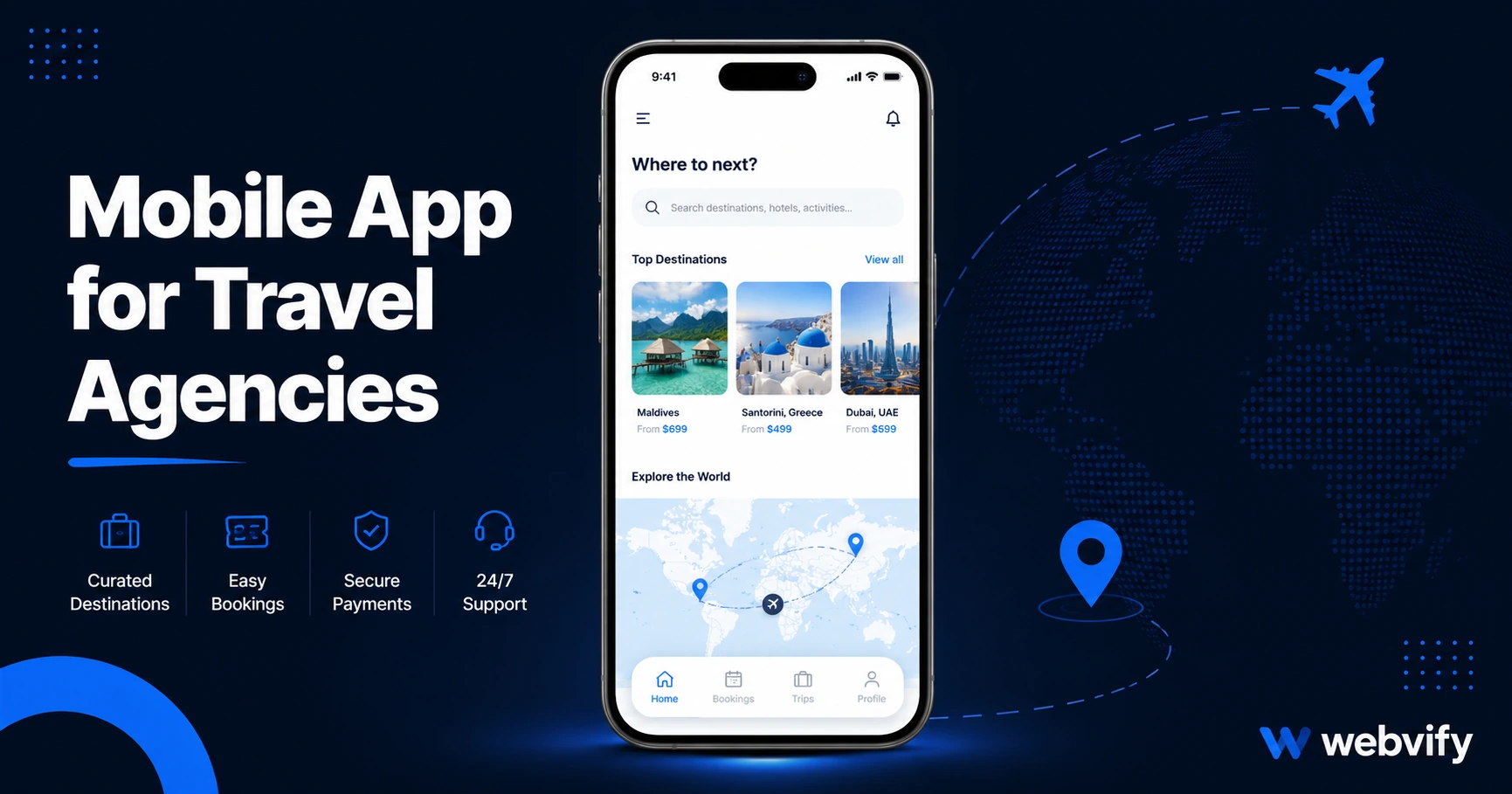
A mobile app keeps your travel agency visible between bookings. Here's what it does, what it costs, and how to get one live without a developer.
Inside this article
Most travel agency clients book once a year — and for the other 364 days, you're invisible. A mobile app changes that.
The average traveler spends months dreaming before they act. During that window, they're searching for inspiration, reading reviews, and watching deals. The agencies that show up on their phone's home screen during that stretch have a massive advantage over the ones sitting forgotten in an email inbox.
The Retention Gap That Costs Travel Agencies Clients
Travel is not a weekly habit. A family might book a big vacation once a year. A couple takes a honeymoon trip and then goes quiet for years. A business traveler books frequently but through whoever their company uses.
For agencies that handle leisure travel, the gap between bookings can run 12 to 18 months. That's a long stretch with no touchpoint — no way to remind a past client that you exist, no way to alert them when the perfect deal appears, no way to stay visible while competitors are advertising on every platform.
Email has the same problem. Travel industry email open rates average around 20–25%. Most promotional messages never get seen. And browser-based notifications on iOS are still limited and easy to dismiss.
The clients you worked hard to earn drift away — not because you did anything wrong, but because nothing kept the connection alive between bookings.
What a Mobile App for Travel Agencies Actually Does
A travel agency app solves the visibility problem with tools that email and social media cannot match.
Push notifications with real open rates. Push notifications reach the lock screen directly and see open rates of 60–90% — three to four times what email achieves. When a flash sale opens on flights to Greece, you can alert every client who's ever asked about Europe before the deal expires. When a cruise line drops a limited-time rate, you can be the first person your clients hear from.
Home screen presence that builds habit. Your branded app sitting on a client's home screen works passively, even when you're not actively messaging them. When wanderlust strikes — when they see a travel video, when a friend mentions a trip, when the school holiday calendar goes up — your app is two taps away instead of buried in an email search.
Itinerary and trip update alerts. For clients with an upcoming booking, push alerts for check-in reminders, flight changes, hotel confirmations, and local tips turn your app into a service tool, not just a marketing channel. Clients who use your app during a trip come back for the next one.
Deal alert campaigns. You can segment notifications by interest (beach destinations, city breaks, adventure travel) and send targeted deal alerts to the right clients at the right time. Done well, these campaigns generate bookings without a single outbound call.
If your business involves appointment-style consultations or bookings, this guide covers the mobile app approach for appointment-based businesses →.
Why Travel Agencies Don't Need to Build an App From Scratch
The phrase "mobile app" used to mean hiring a developer, spending $30,000–$100,000, and waiting six months. That was true for fully native apps built from scratch with custom code.
But most travel agencies already have a functional website — one with their booking forms, destination pages, consultation forms, and contact details. A WebView app packages that existing website into a branded iOS and Android app and submits it to the App Store and Google Play under your name.
Your clients don't interact with the code underneath. They download your app, see your logo on launch, browse your destinations, and book through the same forms you already have. Push notification capability is added on top. The website stays your source of truth — you update it once, and the app reflects it automatically.
Services like Webvify handle this end-to-end: the app build, the App Store submission under your developer account, and the admin panel to manage push notifications after launch. No developer needed on your side.
For a broader look at what converting a site to an app actually delivers, this breakdown of the business benefits is worth a read →.
What to Look for in a Travel Agency App Service
Not all app services work the same way. A few things matter specifically for travel agencies:
Done-for-you App Store submission. Submitting to the Apple App Store requires an Apple Developer account ($99/year), compliance review against Apple's guidelines, and a correct binary file. Many app tools hand you an app file and stop there — the submission is still your problem. Look for a service that handles submission entirely and lists the app under your own developer account, not theirs.
Admin panel for push notifications. You need to be able to send push notifications yourself without calling a developer every time a deal comes up. A built-in notification dashboard is the practical requirement, not a nice-to-have.
Your brand, not theirs. The app should launch with your logo, your colors, and your name — not the app builder's branding. Clients should never know what tool was used underneath.
Booking flow compatibility. Travel agency websites often use third-party booking tools, embedded calendars, or consultation forms. Make sure the service you choose tests these flows inside the app to confirm they work before submission.
The Push Notification Sequences That Drive Bookings
The agencies getting the most out of travel apps are not just sending one-off deal blasts. They're using structured sequences:
The seasonal opener goes out 8–10 weeks before a major travel window — before summer, before Christmas holidays, before spring break. It asks one simple question: "Are you planning to travel this [season]? We'd love to help." It starts conversations before the booking rush.
The deal alert goes to clients who've expressed interest in a destination or travel type. It's short, specific, and time-sensitive: "Egypt tour departing June 12 — just two spots left at the early-bird rate. Tap to see details." The urgency is real, and the audience is warm.
The post-trip check-in goes out 30–45 days after a client returns from a trip. It thanks them, shares a photo prompt or review ask, and mentions one new destination that fits their travel profile. This keeps the relationship active when they're still in travel mode mentally.
None of these require a developer once the app is live. They're sent from a dashboard, the same way you'd send an email.
Frequently Asked Questions
How much does a mobile app for a travel agency cost?
The cost depends on the approach. A custom native app built from scratch runs $30,000–$100,000 or more. A WebView app — which packages your existing website — typically costs a fraction of that, often a one-time fee covering the build and App Store submission, with an ongoing maintenance fee of $50–$200 per month. The ongoing fee covers push notification infrastructure, updates, and App Store compliance as Apple and Google policies change.
Do I need to know how to code to manage a travel agency app?
No. Once the app is submitted and live, the day-to-day management — sending push notifications, checking download stats, updating content — is handled through a simple admin panel. Your website content updates automatically inside the app whenever you update your site. The technical side (App Store compliance, binary updates, OS compatibility) is managed by the app service.
Will Apple approve a travel agency app on the App Store?
Yes. Travel agency apps — and WebView apps in general — are approved on the App Store daily. Apple's key guideline for WebView apps is Guideline 4.2 (Minimum Functionality): the app must provide genuine value beyond what a mobile website offers. Push notifications, branded experience, and offline-accessible content all satisfy this requirement. A good app service will know these guidelines and build compliance in from the start.
Your travel clients have the budget and the intention to book again. The only thing missing is a reason to remember you when they're ready. A mobile app gives you the home screen presence and direct communication channel to stay visible across the entire travel planning cycle — not just the moment of booking.
Ready to get your travel agency app live? Webvify converts your existing website into a fully branded iOS and Android app — and handles the entire App Store submission for you. Start here →