

Mobile App for Sports Clubs: Keep Members Playing All Season
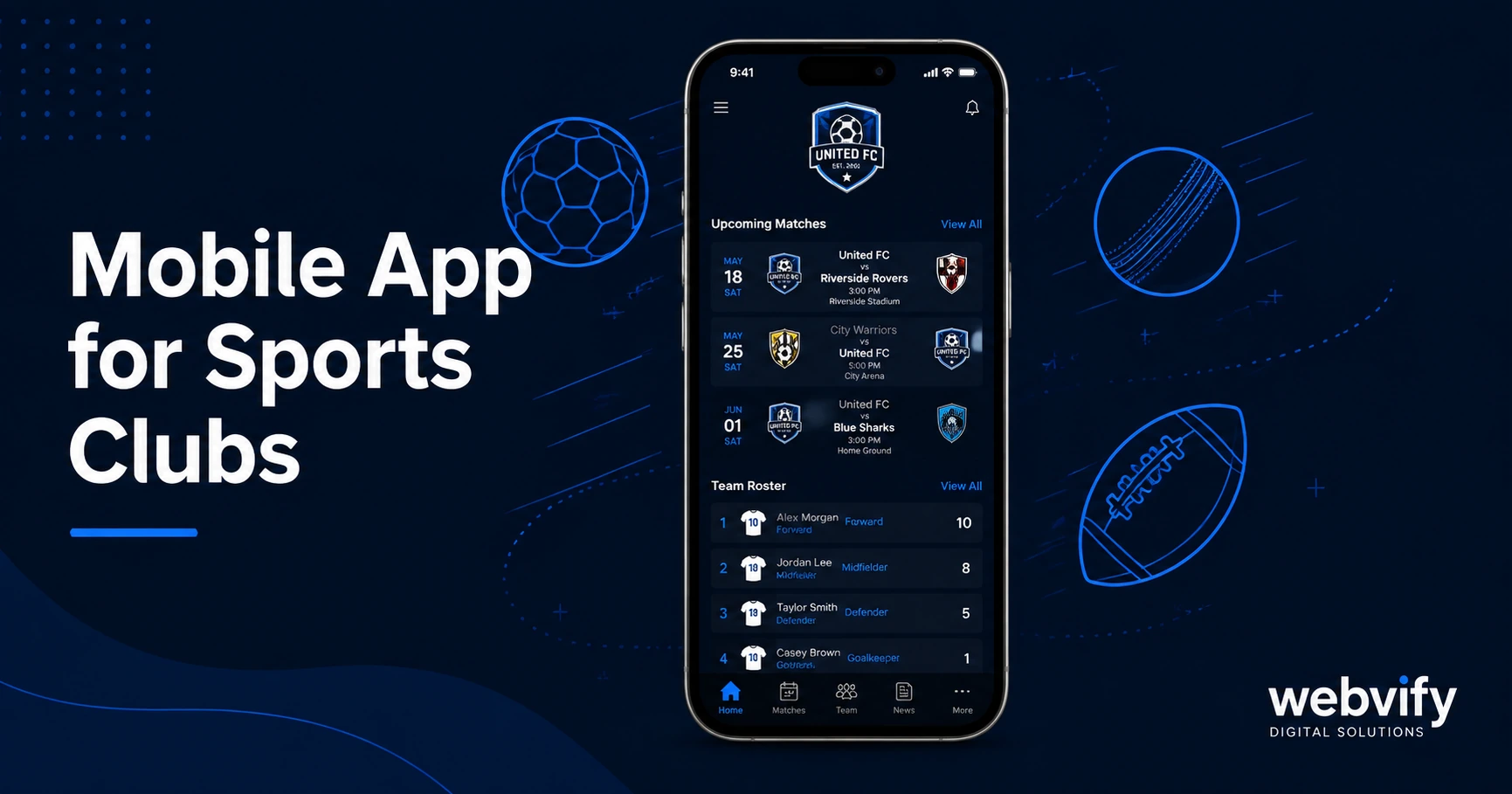
Community sports clubs lose members to WhatsApp noise and off-season silence. A mobile app with push notifications keeps members engaged and renewals on time.
Inside this article
- Why Your Fixture Notices Keep Getting Missed
- Why Community Sports Clubs Lose Members Between Seasons
- The Push Notification Advantage for a Sports Club App
- Three Mobile App Campaigns That Drive Attendance and Renewals
- What a Mobile App for Your Sports Club Actually Looks Like
- How to Get a Mobile App for Your Sports Club Without a Developer
- Frequently Asked Questions
Why Your Fixture Notices Keep Getting Missed
The average community sports club WhatsApp group has 200+ unread messages by Sunday morning. Your match announcement is in there somewhere. A mobile app for sports clubs puts that same message directly on every member's lock screen — where it actually gets read.
Community clubs — football, cricket, rugby, basketball — run on goodwill and volunteer effort. Members drift not because they've lost interest in the sport but because the club goes quiet between fixtures, training blocks end without a clear next step, and annual membership renewal emails land in the promotions tab. Push notifications solve all three problems at once.
Why Community Sports Clubs Lose Members Between Seasons
Most clubs see the same pattern: strong attendance in March, a drop-off by August, and 20–30% of members who simply don't renew the following January. They didn't have a bad experience. They just lost the habit.
The off-season silence is the problem. When training ends in May and nothing reaches members until August, six months of brand-building evaporates. There's no reminder that the club exists, that pre-season starts soon, or that the membership window is closing.
Facebook posts reach roughly 5% of page followers organically. WhatsApp group messages get lost in daily noise. Email open rates for voluntary community organisations sit around 20–25%. None of these channels are reliable enough to maintain connection across a long quiet period.
Push notifications from a branded app reach 60–90% of users who have them enabled. That's not a marginal improvement — it's a different order of magnitude.
The Push Notification Advantage for a Sports Club App
A mobile app for sports clubs doesn't replace your website. It wraps your existing site into a downloadable app on the App Store and Google Play, then adds a direct communication channel to every member who installs it.
The value is in three specific capabilities.
Lock screen delivery. A push notification appears on the phone screen even when the app is closed. Your training reminder for Wednesday's session lands Monday morning. Your match day reminder lands the evening before. Members who would have missed a Facebook post or scrolled past a WhatsApp message see it immediately.
Opt-in segmentation. Unlike WhatsApp (everyone or no one), a mobile app lets you send to all members, first team only, junior section only, or volunteers. You stop flooding the group with messages that only apply to 30% of recipients.
Home screen presence. When a member considers rejoining after a summer break, your club logo is already on their home screen. That visibility changes the decision.
Three Mobile App Campaigns That Drive Attendance and Renewals
The clubs that get the most value from a mobile app build three recurring push campaigns — and then run them every season without rebuilding from scratch.
The training reminder sequence. Send a push notification 48 hours before each training session. Keep it short: date, time, location. Attendance consistency improves when members get a prompt rather than relying on memory. Clubs that add a same-day reminder (sent at 8am on training day) see even stronger turnout.
The match day notification. Send two notifications: one 24 hours before kickoff with the venue and kick-off time, and one two hours before as a "see you there" reminder. For away fixtures, include a link to directions. Members who were undecided commit when they receive a direct prompt.
The membership renewal sequence. This is the highest-ROI campaign most clubs never run. Set three notifications: Day -45 (renewal opens, discounted rate available), Day -14 (one week left for early renewal), Day -3 (last chance before renewal price increases). Clubs that run this sequence see 30–40% fewer members lost to January drop-off — not because the club got better, but because the reminder arrived at the right moment.
Services like Webvify handle the app build and both App Store and Google Play submission without requiring a developer. You manage push campaigns from a simple admin panel after launch.
What a Mobile App for Your Sports Club Actually Looks Like
You don't need to rebuild your club website or create new content. A WebView app wraps your existing website — whether it's a standalone WordPress site, a Pitchero page, or a simple Wix setup — inside a native app shell. Members see your site inside the app, with the same content, booking links, and match reports they already access on a browser.
The app gets submitted under your club's name and listed as a standalone app on the App Store and Google Play. Members download it and see your crest on their home screen — not a generic sports platform app.
The push notification layer sits on top. You send through a dashboard; members receive on their lock screens.
For comparison, this is the same approach used by other community-facing organisations: tennis clubs that need to stay visible through winter and gymnastics studios that lose students during summer break. The retention problem and the solution are structurally identical.
How to Get a Mobile App for Your Sports Club Without a Developer
The barrier most club committees hit isn't budget — it's the assumption that building an app means hiring a developer. It doesn't.
A WebView app uses your existing website as the content layer. You don't write code. You don't rebuild anything. The app builder wraps what already exists and handles App Store and Google Play submission on your behalf.
The main thing to check before starting is whether your club website loads correctly on a mobile browser. If it does, it's ready to become an app. Most club websites pass this test without any changes.
Apple and Google review apps before approving them. First-time submissions from non-technical users often get rejected for missing compliance details — a privacy policy URL, a content rating, the correct developer account setup. Done-for-you services handle this step, which is where most DIY attempts stall.
Frequently Asked Questions
How much does a mobile app for a sports club cost?
Done-for-you WebView app services typically charge a one-time build fee of $500–$2,000 and a monthly admin panel fee of $30–$100. This covers App Store and Google Play listing, push notification access, and post-launch updates. Custom native development for a sports club app starts at $20,000 and requires ongoing developer maintenance. For most community clubs, a WebView app is the only financially viable option.
Can a small club with fewer than 100 members afford a mobile app?
Yes. A club with 80 members who each pay £40 annual membership generates £3,200 per year. Recovering 15–20 renewal laps using a push reminder campaign covers the cost of the app in the first month. The economics work at much smaller scale than most club treasurers expect.
Do I need to rebuild the club website to get a mobile app?
No. A WebView app wraps your existing website inside a native app shell. If your club has a working website — on any platform — that's all you need. The app builder handles packaging and submission. You keep managing your website exactly as you do now.
Ready to get your club's app on the App Store and Google Play? Webvify handles the build, submission, and admin panel — no developer needed.