

Mobile App for Speech Therapists: Keep Patients on Track Between Sessions
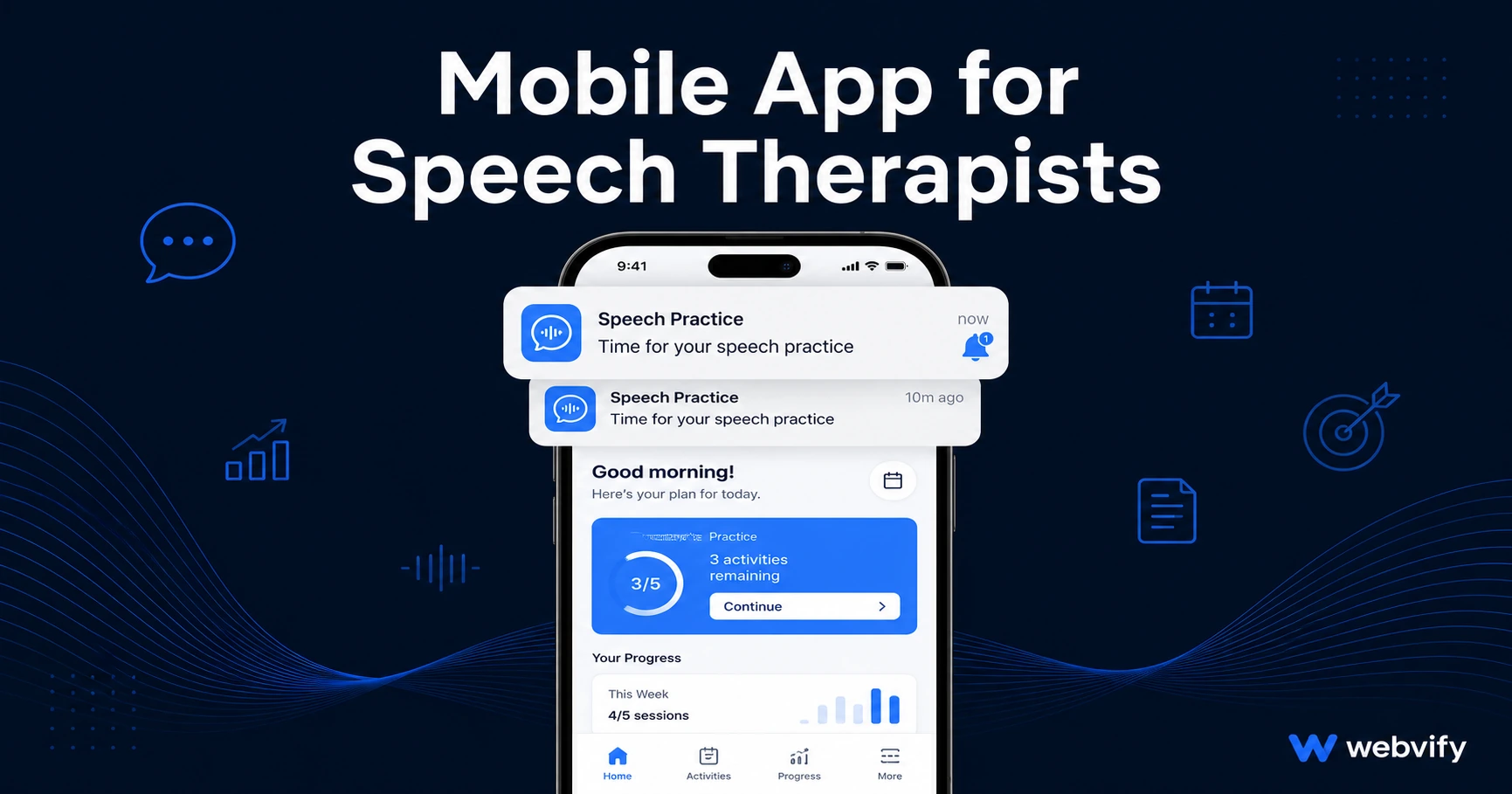
Speech therapy progress depends on daily home practice. A mobile app keeps patients on track between sessions, reduces dropout, and grows your practice.
Inside this article
- Why Speech Therapy Patients Drop Off Between Sessions
- The Home Practice Compliance Problem
- How App Store Presence Builds Trust Before the First Appointment
- The Retention Gap: Long-Term Patients Who Go Quiet
- What a Speech Therapy Mobile App Actually Contains
- App Store Compliance for Healthcare Appointments
- FAQ
Around 70% of speech therapy progress depends on what happens between sessions — at home, during the week, without you in the room. Most patients leave with the best intentions. Most forget to practice by day three.
The gap isn't motivation. It's visibility. A mobile app for speech therapists puts your practice on patients' home screens every single day — and gives you a direct line to their lock screens when practice reminders matter most.
Why Speech Therapy Patients Drop Off Between Sessions
The most common reason patients leave a speech therapy practice isn't dissatisfaction with their therapist. It's the silence between appointments.
For an adult working on fluency or articulation, a week between sessions feels like a long time. For a parent managing a child's home exercises, a day without a nudge becomes two, then five. The routine slips. Progress stalls. By the next appointment, the home program hasn't been touched in days — and neither the patient nor the parent fully understands why things have slowed down.
This is a communication problem, not a motivation problem. The right touchpoint at the right moment is enough to keep a patient on track. Push notifications through a branded mobile app give you that touchpoint — without requiring patients to check email, remember a portal login, or notice a text in a full inbox.
Push notifications average 60–90% open rates. Healthcare email averages 20–25%. The difference isn't the message — it's the delivery channel.
The Home Practice Compliance Problem
Speech therapy is unusual among healthcare disciplines: the outcome depends heavily on what happens outside the clinic. Home exercise programs (HEPs) — articulation drills, fluency techniques, language activities, stuttering modification strategies — are central to almost every patient's plan. But compliance rates drop significantly without consistent prompting.
A mobile app lets you schedule automated push campaigns that support the home program:
Day-2 practice nudge: "Quick reminder: 10 minutes of today's exercises makes a real difference." Sent automatically two days after each session while the content is still fresh.
Mid-week check-in: "Halfway through the week — how's the home practice going? You're doing great." A simple message that maintains the sense of accountability without requiring any manual effort from your side.
Session prep reminder: "Your appointment is tomorrow. Have your practice log ready — it helps us make the most of your time." Reduces no-shows and arrives as a prepared patient.
These messages go out automatically once configured. You write them once per program type and schedule them based on appointment timing or treatment stage.
If your practice uses an online booking system, the appointment booking mobile app guide covers how push notifications integrate with the booking and rebooking workflow across appointment-based practices.
How App Store Presence Builds Trust Before the First Appointment
Many new patients — or parents choosing a practice for their child — are evaluating two or three options before committing. App Store presence is a credibility signal most speech therapy practices don't use.
When a parent searches and finds one practice with a branded app in the App Store alongside a website, and another practice with only a website, the app creates an immediate perception of professionalism and scale. It signals investment in the patient relationship beyond the clinic walls.
You don't need a custom-built app with video libraries and in-app exercise trackers. A WebView app — which wraps your existing website and adds push notification capability — is enough to appear on the App Store and Google Play under your own practice name.
Services like Webvify handle this end-to-end: they build the WebView wrapper from your existing website and manage the full App Store and Google Play submission under your developer accounts. You don't touch Xcode, navigate Apple's review process, or set up a Google Play Console account from scratch.
The Retention Gap: Long-Term Patients Who Go Quiet
For practices working with adults — post-stroke aphasia recovery, adults managing stuttering, voice disorder patients — therapy relationships extend over months or years but are often interrupted by plateaus, life changes, or cost concerns.
A mobile app keeps the practice visible and accessible during those gaps. Three push sequences address the retention challenge directly:
30-day re-engagement nudge: When a patient hasn't booked in 30 days, send a light check-in: "It's been a month — how are things going with the techniques? We have availability this week if you'd like to come in." This alone recaptures patients who intended to book but hadn't gotten around to it.
3-month progress review prompt: "You've been working on [goal area] for three months. Would you like to schedule a progress review?" Frames the appointment as a service to the patient rather than a revenue request.
6-month maintenance reminder: For patients who completed a program, a 6-month check-in normalizes returning for a maintenance block — especially relevant for fluency, articulation, and voice work where regression is common without ongoing reinforcement.
For practices managing similar home-program compliance challenges, the physical therapist mobile app guide covers the home exercise retention mechanic in detail.
What a Speech Therapy Mobile App Actually Contains
A practical app for a speech therapy practice doesn't need to be built from scratch. The core elements that drive value are:
Push notifications — the primary tool for home practice compliance, rebooking nudges, and retention campaigns. Configured once per program type, sent automatically based on scheduling triggers.
Your existing website — appointment booking, patient intake forms, service pages, blog content, and contact information all work exactly as they do on the web. Nothing is rebuilt or duplicated.
App Store and Google Play listing — your practice name and icon appear in both stores, creating a searchable presence and a credibility signal at the consideration stage.
Admin panel — send targeted notifications to all patients, to parents specifically, or to patients by program type, without developer help.
App Store Compliance for Healthcare Appointments
If your website handles appointment booking with payment through platforms like Jane App, SimplePractice, or Cliniko, Apple's in-app purchase rules apply differently to physical services than to digital goods.
Apple's Guideline 3.1.1 requires that purchases of digital content go through Apple's payment system. Healthcare appointments — because they are physical in-person services — are generally exempt from this rule. Your booking and payment flow should work exactly as it does on the web.
The key is confirming that your specific booking setup is handled correctly during the submission review. A managed submission service handles this review process on your behalf and addresses any compliance questions before they become rejection notices.
FAQ
How much does a mobile app cost for a speech therapy practice?
Custom native app development typically costs $25,000–$150,000 and takes 6–12 months. A WebView app — which wraps your existing website and publishes it to the App Store and Google Play — costs significantly less and launches in days, not months. Managed services like Webvify include build, submission, and an admin panel as part of the service.
Do I need to rebuild my practice website to get a mobile app?
No. A WebView app uses your existing website as the app's interface. Your booking system, patient portal, and all website content stay exactly as they are. The app adds push notification capability and an App Store and Google Play listing on top of what you already have.
Will push notifications work for parents of child speech therapy patients?
Yes — the parent installs the app on their phone, and push notifications are addressed to the parent. A reminder like "Time for today's 10-minute speech practice" goes directly to the parent's lock screen, which is exactly how parent-managed home programs work in clinical practice.
Ready to get your speech therapy practice on the App Store without hiring a developer? Webvify handles everything — from building your app to App Store and Google Play submission — so you can focus on your patients.