

Mobile App for Pool Service Companies: Win More Repeat Jobs and Stop Losing Customers to Silence
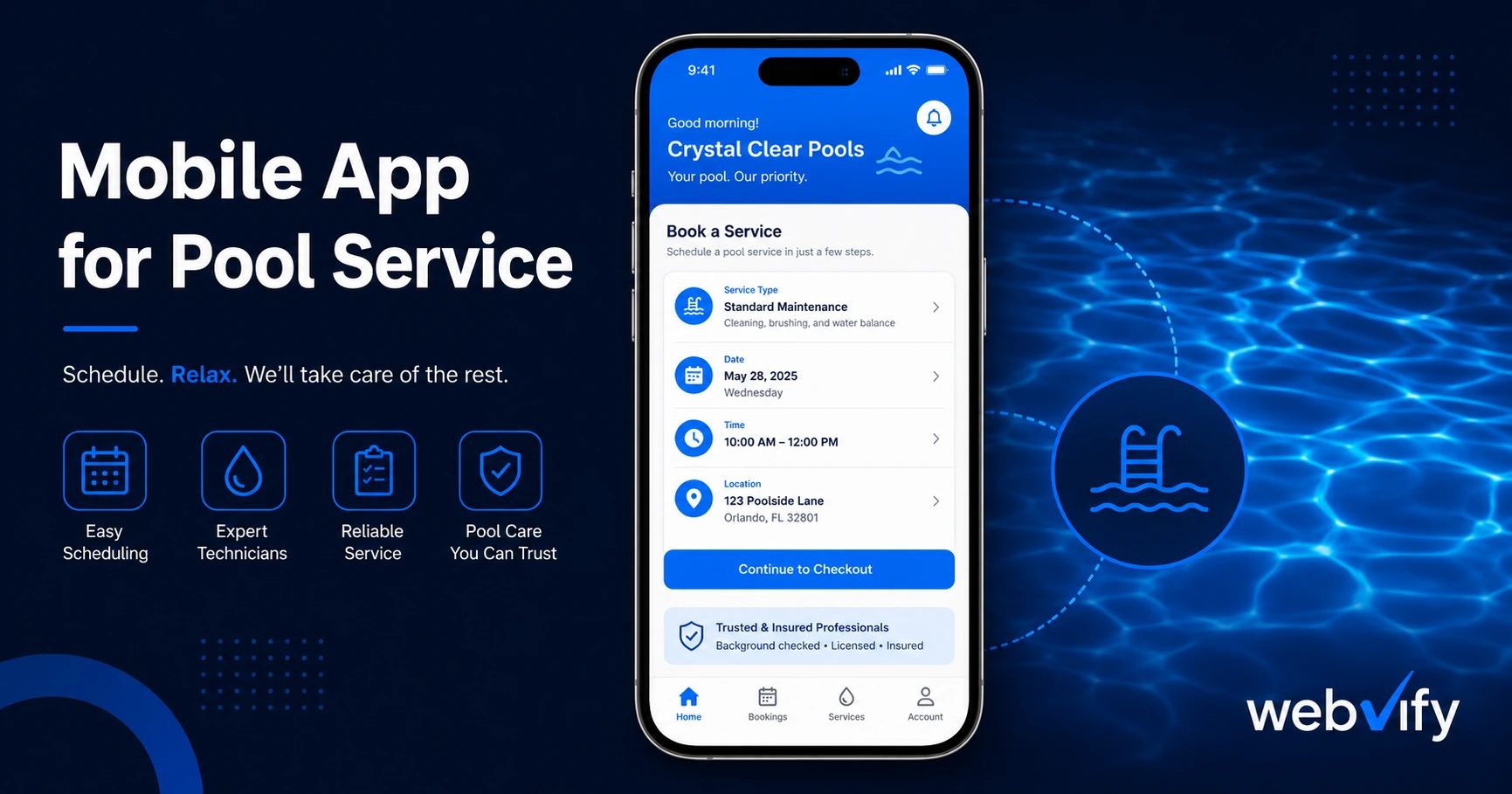
Pool service companies lose repeat customers to silence between visits. A mobile app with push notifications changes that. Here's how to get one without a developer.
Inside this article
- Why Pool Service Companies Lose Repeat Customers (It's Not the Service)
- What a Mobile App for Pool Service Companies Actually Does
- Three Push Notification Campaigns That Work for Pool Services
- How to Get Your Pool Service App on the App Store (Without a Developer)
- What to Look for in a Mobile App Service for Pool Companies
- FAQ
- Get Your Pool Service App Live This Season
Pool service customers don't leave because you did a bad job. They leave because when spring arrives and it's time to open the pool, they can't find your number — and someone else is already running ads in their neighborhood.
The gap between service visits is where pool companies lose customers. A visit in September, then silence until April. Seven months with no touchpoint, no reminder, no reason to stay loyal. By the time the homeowner needs you again, you're competing with every competitor who sent a postcard or showed up in Google search.
A mobile app for pool service companies closes that gap. Not by rebuilding your business — by putting a direct line to your customers on their home screen and giving you the ability to reach them before competitors do.
Why Pool Service Companies Lose Repeat Customers (It's Not the Service)
The pool service industry runs on recurring revenue: weekly cleaning, seasonal openings and closings, chemical treatments, equipment maintenance. Most of your customers are satisfied. They're not actively shopping around. But satisfaction doesn't create loyalty — consistent visibility does.
The problem is the contact window. When a homeowner's pool turns green or the pump starts making a noise, they don't search their contacts. They Google "pool service near me." If your company isn't in that search result, a competitor is. The customer you served for three years just booked someone else.
This is the retention gap. It's not about service quality. It's about who stays top of mind between jobs.
Email marketing helps, but open rates for home services hover around 20–25%. Most messages get ignored. SMS feels intrusive. Social media algorithms bury business posts.
Push notifications from a branded mobile app are different. They land directly on the lock screen — no inbox to filter through, no algorithm to beat. Open rates consistently reach 60–90% when the message is timely and relevant. For a pool service company, timely and relevant is easy: spring opening season, weekly service reminders, equipment check alerts. You know exactly when your customers need to hear from you.
What a Mobile App for Pool Service Companies Actually Does
A mobile app for your pool service business isn't a complex software project. It doesn't require a developer or months of build time. The simplest and most cost-effective approach is a WebView app — your existing website, packaged as a branded app and published to the App Store and Google Play under your business name.
Your customers download it once. From then on, you have a direct push notification channel to every customer who installed the app. Your logo sits on their home screen alongside apps they open every day.
The core value props are straightforward:
Home screen presence. When a homeowner opens their phone and sees your app, your brand is top of mind before they've typed anything into Google. That passive visibility compounds over time.
Push notifications. You control the message and the timing. A notification at the right moment — spring opening reminder, post-storm debris alert, equipment service due — brings customers back without them having to remember you exist.
Credibility signal. Having a dedicated app in the App Store signals that you're an established business. For a trade where technicians have access to private property, that trust signal matters more than most business owners realize.
Three Push Notification Campaigns That Work for Pool Services
The pool service calendar is predictable. Seasonal patterns mean you can plan campaigns months in advance and automate the send.
Spring opening campaign (March–April): This is your highest-ROI window. Pool owners are thinking about opening season, and whoever reaches them first gets the booking. A push sent in mid-March — "Ready to open your pool? Book your spring opening now before the rush" — captures demand at the moment intent is highest. Send it 10–14 days before your local pool season typically starts.
Post-storm check campaign (any time): After a major rain or wind event, pool owners are worried about debris, chemical balance, and equipment. A same-day or next-day push — "Big storm last night? We're running post-storm pool checks this week" — positions you as proactive and generates service calls you wouldn't have otherwise received. This is the campaign type that generates the most direct revenue per send.
Annual service renewal (September–October): Closing season is your second booking window. A push sent in early September — "Time to close your pool? Schedule your seasonal closing before our calendar fills" — creates urgency and locks in customers before they look elsewhere. Pair it with an offer for customers who book within 48 hours.
A similar approach works well for HVAC and pest control companies, where the seasonal demand pattern is equally predictable — you can see how HVAC companies use the same framework here.
How to Get Your Pool Service App on the App Store (Without a Developer)
The App Store submission process intimidates most small business owners. Apple and Google have review processes, technical requirements, and developer accounts to set up. But none of this requires a mobile developer if you use a WebView-based approach.
The process looks like this: a service wraps your existing website into a native app shell, adds push notification support, and handles the App Store and Google Play submission on your behalf. Your app is published under your own developer account — which means you own it, not the platform.
Apple's App Store review typically takes 24–48 hours for first submissions. Google Play is usually faster. Once approved, your app is live and searchable in both stores.
The one compliance nuance to know: if your website includes any in-app purchase flows for digital content (subscriptions, digital memberships), Apple requires those to route through their payment system. For most pool service companies, this isn't relevant — you're selling a physical service, not digital content. The submission process is clean.
Services like Webvify handle this end-to-end — the app build, submission, and post-launch admin panel — so you're not navigating Apple's developer portal yourself. You can get an app live in days, not months.
What to Look for in a Mobile App Service for Pool Companies
Not every app platform is built for service businesses. A few things to confirm before choosing:
Does it wrap your existing website? If a platform requires you to rebuild your content inside their system, you're creating a second website to maintain. Look for a service that converts your existing site — you keep your booking system, your pricing pages, and your reviews exactly as they are.
Does it handle App Store submission? Many "app builders" provide you with an app file and leave submission to you. Apple's developer portal and review guidelines are not straightforward. Look for a service that submits on your behalf and manages the review process.
Do you own the developer accounts? Your app should be published under your own Apple Developer and Google Play accounts. If the service publishes under their own accounts, you lose the app if you leave them.
Is there an admin panel for push notifications? You need to send campaigns without calling someone. Look for a dashboard where you can schedule and send push notifications yourself after the app is live.
For pest control companies using the same retention framework, this breakdown on what to look for applies equally.
FAQ
How much does a mobile app for a pool service company cost?
A custom native app can cost $20,000–$80,000 to build and requires ongoing developer maintenance. A WebView app using your existing website — the approach most pool service companies use — costs significantly less. Services like Webvify typically price in the range of a few hundred dollars per month with the app build, submission, and admin panel included.
Do I need a developer to submit my pool service app to the App Store?
No. If you use a managed WebView app service, the provider handles the App Store and Google Play submission process on your behalf. You set up developer accounts (Apple charges $99/year, Google charges a one-time $25 fee), and the service manages the technical submission. You don't touch Xcode or Android Studio.
How many push notifications should I send per month?
For a pool service company, two to four per month is the right range. More than that risks customers muting or deleting the app. Fewer means you're underusing your most direct marketing channel. Focus on high-relevance timing: seasonal campaigns, post-event alerts, and rebooking windows. One well-timed notification beats five generic ones.
Get Your Pool Service App Live This Season
Customers don't stay loyal because they remember your service. They stay loyal because you stay visible during the silence between visits. A branded mobile app puts your business on their home screen and gives you a direct line to reach them before the competition does.
Get started at webvify.app — the app build, App Store submission, and push notification dashboard are handled for you.