

Mobile App for Physical Therapists: Keep Patients on Track and Coming Back
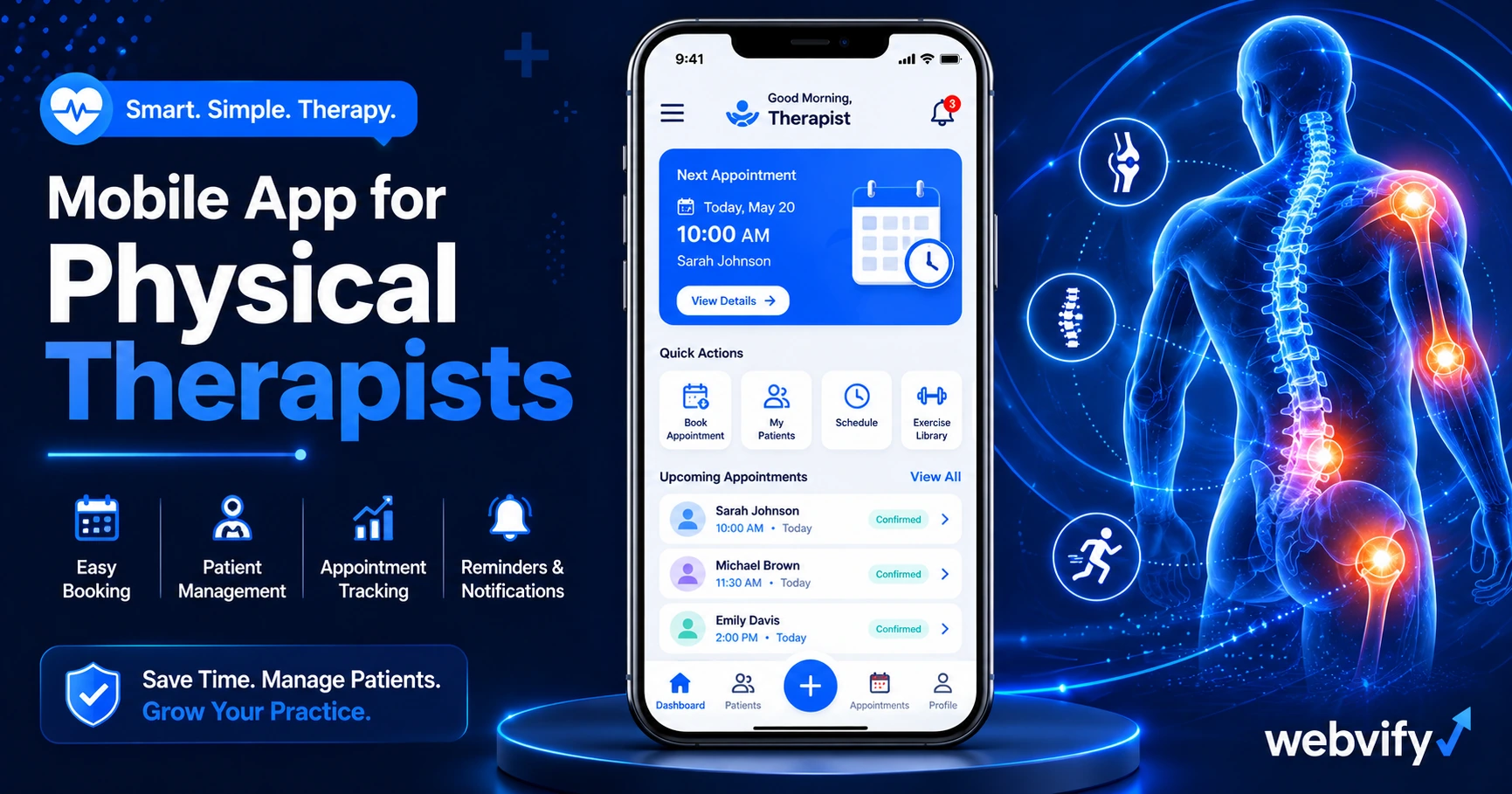
A mobile app for physical therapists solves the silent dropout problem. Here's how push notifications, home screen presence, and App Store credibility keep patients engaged.
Inside this article
Physical therapy has a dropout problem that most clinics don't talk about. Studies show that nearly 70% of patients don't complete their prescribed course of treatment — not because the therapy isn't working, but because life gets in the way and nothing pulls them back.
A mobile app for physical therapists changes that equation. When your practice lives on a patient's home screen and you can reach them directly between sessions, dropout rates fall and re-injury rebounds rise for the right reasons — because patients come back before things get worse, not after.
Why PT Patients Drop Off (And What Stops It)
The gap between sessions is where dropout happens. A patient leaves feeling progress, then skips one appointment, then two. Their pain fades just enough to feel optional. By the time they remember your clinic, they've either recovered partially or gone to a competitor.
Email doesn't fix this. Open rates for healthcare emails average 20–25%. Push notifications from a mobile app reach the lock screen at 60–90% open rates — a gap no email campaign can bridge.
Home screen presence also matters in a way that's easy to underestimate. When your clinic's icon sits between Instagram and Gmail, patients think of you passively every time they unlock their phone. That passive visibility is the difference between "I should reschedule" and "I'll do it later" for months.
The Three Push Campaigns Every PT Clinic Needs
Most physical therapy clinics, even those with booking software and a website, send zero proactive communication between sessions. A mobile app makes three high-value campaigns straightforward.
The Day-5 Rebooking Nudge. If a patient finishes a session on Monday and hasn't rebooked by Saturday, a single push notification — "Don't lose your progress — book your next session" — captures the window of motivation before daily life takes over. This alone reduces the gap-to-dropout pipeline.
The Home Exercise Compliance Reminder. Home exercise programs (HEPs) are a standard part of PT treatment, but compliance rates are poor without accountability. A push notification at 9 AM three days after a session ("Time for your at-home exercises — 10 minutes keeps your progress on track") acts as a low-friction accountability layer that email can't replicate.
The Re-injury Prevention Check-in. For patients who've completed a course of treatment, a push notification at 3 months ("How's your recovery holding up? We're here if you need a check-in") is the difference between a one-time patient and a long-term client. Re-injury is common — the clinic that stays visible is the one that gets the call.
App Store Credibility in a Trust-Sensitive Profession
Physical therapy is a profession where trust precedes everything else. Patients hand over their physical health, often in a vulnerable state, to practitioners they're meeting for the first time.
A branded app published on the App Store and Google Play under your clinic's name signals professionalism in a way a website alone cannot. When a patient's employer or insurance company asks them to choose a provider, the practice with an app in the App Store carries an implied validation that the digital-only practice doesn't.
This isn't a soft benefit. It's a real differentiator in markets where multiple PT clinics are competing for the same referral stream from orthopedic surgeons, sports medicine doctors, and primary care physicians.
If you're already thinking about how to get a mobile app built and submitted to both stores, this guide on converting your website to an Android app covers the Google Play side without assuming you have development experience.
What a PT Clinic App Looks Like in Practice
The most practical setup for a physical therapy clinic is a WebView app — your existing booking portal, patient communication system, or clinic website wrapped into a native mobile app shell. Patients get the same interface they already know, now with push notification capability and App Store discoverability.
No new patient portal. No rebuilding your scheduling system. No developer needed to update content.
Services like Webvify handle this end-to-end: converting your existing website into a branded app, managing the App Store and Google Play submission process, and giving you an admin panel to send push notifications without writing a line of code.
The result is a clinic app live on both stores in days — not the six-to-twelve month custom development timeline most clinics assume is their only option.
Handling the App Store Submission Process for a Mobile App for Physical Therapists
The technical side of App Store submission stops many clinic owners before they start. Apple's developer enrollment, privacy policy requirements, and screenshot specifications feel overwhelming if you've never been through the process.
The good news is that healthcare apps — including physical therapy booking and communication apps — are a well-established category on the App Store. Apple reviews these with specific healthcare guidelines (Guideline 5.1.3 covers health data), but a WebView clinic app that doesn't store health data beyond what's already on your existing booking platform is straightforward to approve.
Google Play has a similar review path, with the Data Safety form being the main addition. Both stores typically complete review in 24–48 hours for first submissions.
For a full walkthrough of what the App Store review process looks like for small businesses, see How to Submit Your App to the App Store Without a Developer.
FAQ
How much does a mobile app for a physical therapy clinic cost?
Custom-built PT apps can run $25,000–$100,000+, with ongoing maintenance adding to the cost. WebView-based apps that convert your existing website are significantly more affordable — typically a few hundred dollars for setup plus a monthly fee, with the App Store submission included. The total cost is a fraction of custom development and doesn't require a dedicated mobile team to maintain.
Do I need to rebuild my booking system to add a mobile app for physical therapists?
No. A WebView app wraps your existing website or booking platform into a native app shell. If your clinic already uses Jane App, Cliniko, or a custom booking portal, that system continues to work inside the app exactly as it does on the web. Patients book, fill intake forms, and communicate through the same interface — they just do it from an app icon on their home screen.
Will push notifications work for physical therapy appointment reminders?
Yes. Push notifications are one of the most effective patient communication tools for PT clinics. You can send session reminders, home exercise compliance nudges, and re-engagement messages directly to a patient's lock screen. Open rates are 60–90%, compared to 20–25% for healthcare email. Patients must opt in when they download the app, and you manage all notifications from an admin panel without technical help.
Physical therapy dropout is a solvable problem. The three-push-campaign approach — rebooking nudge, HEP reminder, and re-injury check-in — addresses the silence gap that drives most attrition.
If you want your clinic on the App Store and Google Play without rebuilding your booking system or hiring a developer, Webvify handles everything end-to-end — build, submission, and the admin panel to manage it after launch.