

Mobile App for Pet Sitters: Stop Losing Clients to Silence
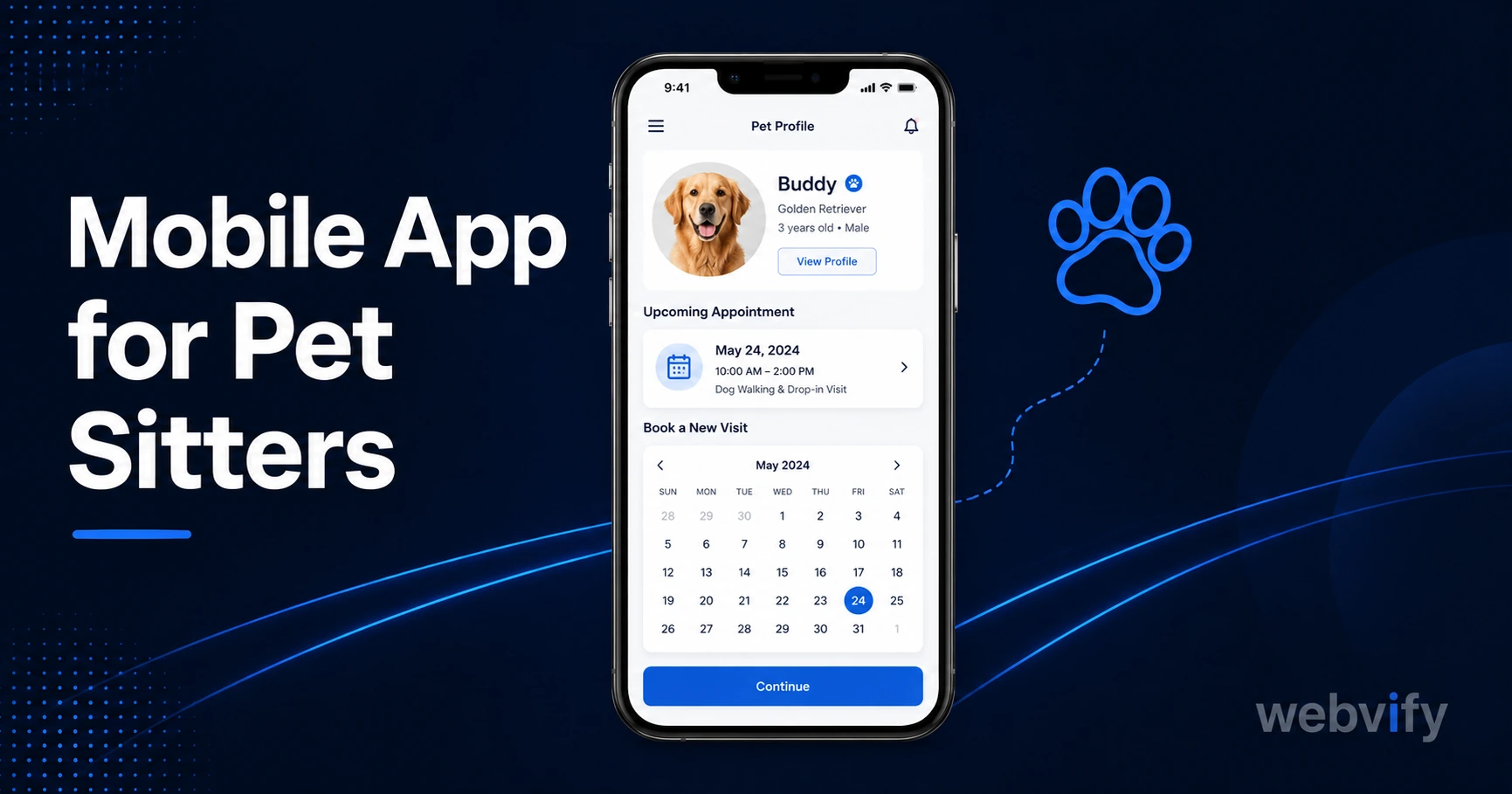
Pet sitting clients love you — then go quiet. A mobile app for pet sitters fixes the rebooking gap with push notifications and home screen presence. No developer needed.
Inside this article
- Mobile App for Pet Sitters: Stop Losing Clients to Silence
- Why Pet Sitting Clients Go Quiet (It's Not About the Service)
- What a Mobile App for Pet Sitters Actually Does
- Push Notification Campaigns That Drive Rebookings
- How to Get a Pet Sitter App Without Building From Scratch
- What to Look for When Choosing a Pet Sitter App Service
- FAQ
Mobile App for Pet Sitters: Stop Losing Clients to Silence
Your best clients rave about you. Then two months pass, and they never rebook. They didn't find a better sitter — they just forgot, got busy, or found someone on Rover the next time their phone was already open.
That's the pet sitting retention gap. And a mobile app for pet sitters is the most direct way to close it.
Why Pet Sitting Clients Go Quiet (It's Not About the Service)
Most pet sitters assume a client who doesn't rebook had a bad experience. The data tells a different story.
Pet sitting is an episodic service. Clients book when they travel, when they need a dog walker for a busy week, or when the regular family member who handles the dog isn't available. In between those moments, there's no ongoing reason for the client to think about you — unless something puts you in front of them.
Email newsletters feel impersonal. Social media posts disappear into the feed. And a business card in a drawer does nothing.
What changes the dynamic is home screen presence. When your branded app sits on a client's phone next to their banking app and their coffee shop's loyalty app, you're part of their daily visual environment. You're not competing for attention in an inbox — you're already there.
What a Mobile App for Pet Sitters Actually Does
A pet sitter mobile app built on your existing website gives you three things that no other tool delivers together:
Push notifications at 60–90% open rates. Compare that to email's 20–28% open rate in the pet services industry. When a client gets a push notification on their lock screen — "Heading out this weekend? We have availability Friday–Sunday" — they see it. They can tap it immediately and go straight to your booking page.
Your brand on their home screen. App icons build subconscious familiarity. When a client's sister mentions she needs a dog sitter, the first thing that comes to mind is the app they already have installed.
App Store credibility. Trust matters a lot in pet sitting — clients are handing you access to their home and the care of their animals. Being listed on the App Store with your business name and consistent branding signals legitimacy in a way a website link alone does not. (Dog walkers face a similar dynamic — this guide on mobile apps for dog walkers covers the trust angle in more detail.)
Push Notification Campaigns That Drive Rebookings
The power of a mobile app for pet sitters is in the campaigns you can run after launch. Here are three that work:
The 45-day rebooking nudge. Send a push 45 days after a client's last booking: "Hi! It's been a while — are you planning any trips this summer? We'd love to look after [pet name] again." Keep it personal. Keep it short. Include a direct link to your booking page.
The seasonal availability alert. Before major holidays — Thanksgiving, Christmas, spring break — send a push to all clients: "Holiday availability is filling up fast. Book now to lock in your spot." Pet owners travel seasonally and appreciate the reminder. Without it, they often book a stranger on a last-minute app.
The slow-week slot filler. When you have open slots mid-week, a push notification reaches your existing client list in real time. "We have two dog-walking slots open Thursday and Friday this week" turns a quiet day into a booked one.
Pet groomers run the same campaigns with great results — if you offer grooming as part of your services, this post on mobile apps for pet grooming businesses has additional campaign templates worth reviewing.
How to Get a Pet Sitter App Without Building From Scratch
The barrier most pet sitters hit is the assumption that a mobile app requires a developer, months of build time, and a large budget. That assumption comes from custom native development, which does cost $30,000–$150,000.
A WebView app takes your existing pet sitting website and wraps it in a native app shell that gets submitted to the App Store and Google Play. Your website content, booking system, and contact forms all work exactly as they do in a browser — but they're delivered through a branded app with an icon, push notification capability, and an App Store listing under your business name.
Services like Webvify handle the entire process end-to-end: building the app, submitting it to both stores, and giving you an admin panel to manage push notifications yourself after launch. You don't touch Xcode or the Apple Developer portal.
The cost difference makes WebView wrapping the practical choice for a pet sitting business. The result — an App Store app with push notifications under your brand — is functionally identical for your clients.
What to Look for When Choosing a Pet Sitter App Service
Not every app builder works the same way. Before choosing one, ask these questions:
Does it wrap your existing website or require you to rebuild content? Rebuilding is slow, creates a second system to maintain, and is usually unnecessary. If you already have a booking site, you should be able to convert it directly.
Who handles App Store submission? Apple's review process has specific compliance requirements that trip up first-time submitters. Some platforms give you the app file and leave the submission to you. Others handle it end-to-end. For most small business owners, end-to-end submission is the right choice.
Do you own the developer accounts? Your app should be published under your own Apple Developer and Google Play accounts — not the platform's. If you ever switch services, your App Store listing and reviews go with you.
Is there an admin panel for push notifications? The app launch is step one. Being able to send push campaigns yourself — without going back to a developer — is what makes the investment worthwhile long-term.
FAQ
How much does a mobile app for a pet sitting business cost?
A WebView-based pet sitter app costs a fraction of custom development. Custom native apps run $30,000–$150,000 with ongoing maintenance costs. WebView app services typically charge a one-time or annual fee in the range of a few hundred to a few thousand dollars, including App Store submission. The Apple Developer account ($99/year) and Google Play account ($25 one-time) are separate fees paid directly to Apple and Google.
Do pet sitting clients actually download business apps?
Yes — when there's a clear benefit. An app that sends rebooking reminders, shows real-time availability, or provides updates on their pet's care gives clients a reason to keep it installed. The home screen presence and push notifications are what drive long-term retention, not the app itself.
How long does it take to get a pet sitter app on the App Store?
Apple's review process typically takes 24–48 hours for straightforward submissions. The setup — building the app, configuring the Apple Developer account, and preparing the submission — usually takes a few days. With an end-to-end service that handles the technical steps, most pet sitting businesses have their app live within one to two weeks of starting.
Pet sitting clients don't leave because of bad service. They leave because nothing kept them connected. A mobile app puts your brand on their home screen, lets you reach them directly when they're planning their next trip, and gives you the same App Store presence that clients associate with businesses they trust.
Get started with Webvify and have your pet sitting app live on the App Store and Google Play within days — no developer, no code, no complexity.