

Mobile App for Pest Control: Win More Repeat Jobs and Stop Losing Customers to Silence
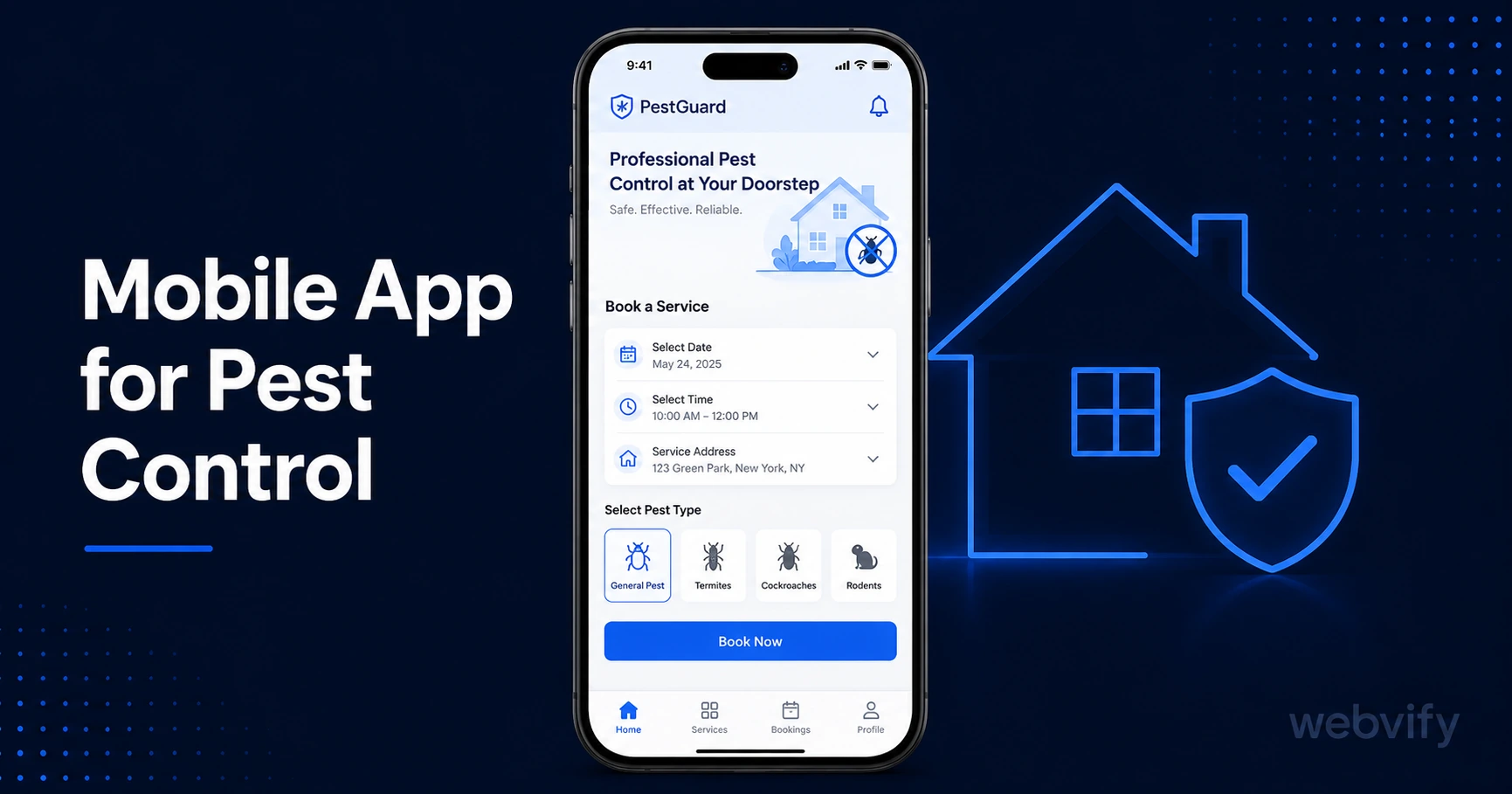
Pest control customers forget you exist between treatments. A branded mobile app keeps you on their home screen with push notifications that bring them back.
Inside this article
- Mobile App for Pest Control: Win More Repeat Jobs and Stop Losing Customers to Silence
- Why Pest Control Businesses Lose Repeat Customers
- The Three Push Campaigns That Drive Repeat Revenue for Pest Control
- How a Branded App Builds Trust in a Trust-Sensitive Trade
- What Your App Actually Does Day-to-Day
- App Store Compliance: One Thing to Know Before Launching
- FAQ
Mobile App for Pest Control: Win More Repeat Jobs and Stop Losing Customers to Silence
Pest control customers call you in a panic, you solve the problem — then you disappear from their lives for the next 12 months. When the ants come back, they Google "pest control near me" instead of searching for your number.
That invisibility gap is where pest control businesses lose repeat customers. A branded mobile app on their home screen, combined with push notifications, fixes it without changing anything about how you run your business.
Why Pest Control Businesses Lose Repeat Customers
The average pest control treatment cycle is 3 to 12 months depending on the pest and the service level. That is a long gap between touchpoints.
Your customers are not disloyal. They simply do not think about pest control until a problem appears. By then, they reach for whatever is closest — which is almost never your phone number from a job 10 months ago.
Email newsletters reach 20–28% of recipients. Push notifications from a branded mobile app reach 60–90% of users and land on the lock screen directly. That difference is what turns a forgotten vendor into the business that always comes to mind.
The Three Push Campaigns That Drive Repeat Revenue for Pest Control
Push notifications are most effective when they are timed to the pest cycle, not sent randomly. Three campaigns cover the majority of repeat revenue opportunities:
1. Seasonal pre-treatment reminder. Send in late February or early March before ant season begins. Something like: "Spring is coming — book your ant prevention treatment before infestations start." This intercepts the problem before it escalates and positions your business as proactive rather than reactive.
2. Quarterly service renewal nudge. For customers on quarterly or bi-annual plans, send a push 10 days before their service window opens. A simple "Your next scheduled treatment is coming up — tap to confirm your appointment" reduces no-shows and keeps the service cycle intact.
3. Dormant customer reactivation. Send to customers who have not booked in 12 or more months. A "We haven't seen you in a while — is everything still under control at home?" message is low pressure and high relevance. Many customers genuinely forgot and welcome the reminder.
Platforms like Webvify let you send these campaigns directly from your app's admin panel without developer help. You write the message, pick the timing, and send — that is the whole process.
How a Branded App Builds Trust in a Trust-Sensitive Trade
Pest control technicians enter homes. Customers hand over access to their property, their kitchen, and their family's living space. That requires a level of trust that most generic service directories cannot establish.
An app listed under your business name on the App Store and Google Play changes how customers perceive you. It signals permanence and professionalism in a way that a phone number and a website alone do not.
For pest control companies competing against regional chains and franchise networks, an app-store presence is a credibility equalizer. Many franchises have apps because they understand this signal. An independently owned pest control business with its own branded app sits in the same tier — from the customer's perspective.
What Your App Actually Does Day-to-Day
A pest control mobile app built on your existing website does not require a new software system. It wraps what you already have — your booking page, service menu, customer portal, or contact form — into a native-feeling app published under your business name.
After launch, your customers can:
- Book or request treatments directly from the app
- Receive push notifications for seasonal reminders and service renewals
- Access service reports or treatment records if your system supports them
- Contact your team in one tap
You manage everything through a simple admin panel. Updating your service menu, sending a push campaign, or checking app analytics does not require touching code.
If you are already using a platform like ServiceTitan, Jobber, or HouseCall Pro, the app wraps your existing customer portal. No rebuilding, no data migration.
App Store Compliance: One Thing to Know Before Launching
Apple and Google each have a rule about payment flows inside apps. If your pest control app links to a booking page where customers pay online, Apple's Guideline 3.1.1 requires that in-app purchases for services go through Apple's payment system — or that the payment flow is completed in an external browser rather than inside the app.
The simplest fix is to open payment and booking confirmation pages in the external browser instead of within the app's WebView. This is how most service businesses handle it, and it passes App Store review consistently.
A done-for-you service handles this configuration before submission so you do not encounter a rejection after waiting for Apple's review. If you are exploring app builders for your pest control business, ask explicitly how they handle payment flow compliance — it is the detail most self-service tools leave to the user to figure out.
For more detail on the submission process, see the App Store submission guide for small businesses.
FAQ
How much does a mobile app for a pest control company cost?
Done-for-you web-to-app services that convert your existing website typically range from a flat one-time build fee to a monthly subscription, usually far below the $15,000–$50,000 cost of custom native development. Webvify publishes pricing at webvify.app. The main cost factors are App Store developer account fees ($99/year for Apple, $25 one-time for Google Play) and the service fee for building and submitting the app.
Do I need a developer to submit a pest control app to the App Store?
No. App Store submission does not require coding skills — it requires navigating Apple's App Store Connect portal, preparing screenshots, completing compliance forms, and packaging the app correctly. A done-for-you service like Webvify handles all of that end-to-end, including resubmission if Apple requests changes.
Will the app work if I update my website?
Yes. A WebView app pulls content directly from your website every time a customer opens it. When you update your service menu, pricing page, or booking system, the change appears in the app automatically with no additional steps. You manage one source of truth — your website — and the app reflects it.
Ready to stop losing pest control customers to the silence between jobs? Build a branded mobile app that keeps your business on their home screen year-round. Visit webvify.app to see how it works.