

Mobile App for Fence Contractors: Win More Repeat Jobs and Stop Losing Customers to Silence
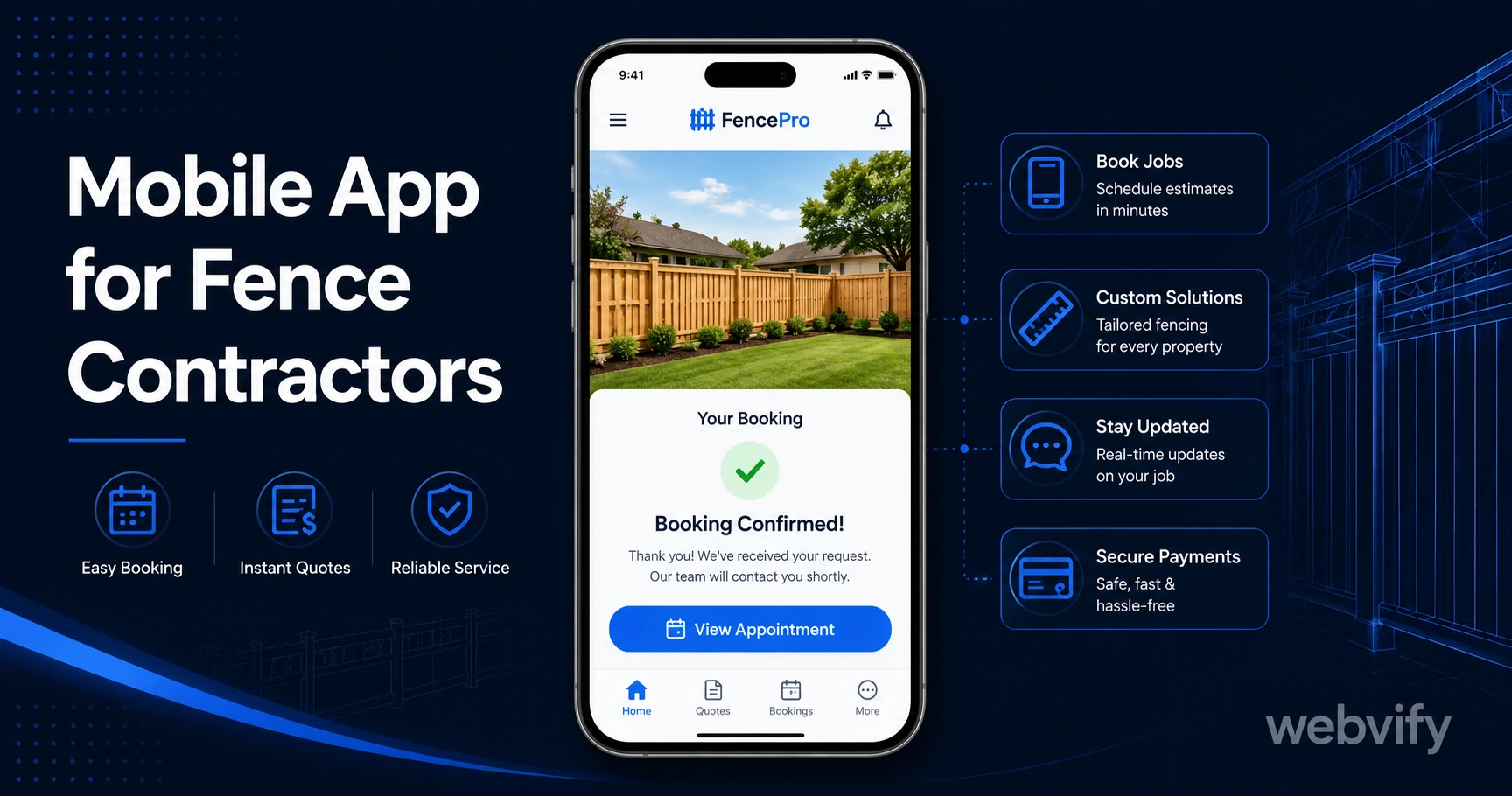
Fence contractors lose repeat jobs during the long silence between installs. Here's how a mobile app keeps customers coming back — no developer needed.
Inside this article
- Mobile App for Fence Contractors: Win More Repeat Jobs and Stop Losing Customers to Silence
- Why Fence Contractors Lose Customers Without Trying
- What a Mobile App for Fence Contractors Actually Does
- The Three Push Campaigns That Generate Repeat Revenue
- How Fence Contractors Get a Mobile App Without a Developer
- What to Set Up on Day One
- FAQ
Mobile App for Fence Contractors: Win More Repeat Jobs and Stop Losing Customers to Silence
A fence installation takes two to three days. The next job from that same customer might not come for five to ten years — and when it does, they'll Google "fence contractor near me" and pick whoever shows up first.
That gap is where fence businesses bleed repeat revenue. A mobile app with push notifications closes it.
Why Fence Contractors Lose Customers Without Trying
The problem isn't the quality of the work. Most homeowners who hire a fence contractor are happy with the job. The problem is that nothing connects them to your business after the install is done.
No reminder before the five-year refinishing window. No alert when storm damage makes a repair urgent. No message when you're running a spring fencing promo. You're invisible — and when the need arises, they search rather than remember.
This is called the retention gap, and it's not unique to fencing. Roofers, painters, and flooring contractors face the same problem: long repeat cycles and no maintained touchpoint. The difference is that trades with a branded mobile app stay on the customer's home screen — everywhere else is a Google search away.
What a Mobile App for Fence Contractors Actually Does
A mobile app for your fence contracting business isn't a scheduling tool or a CRM. It's a direct notification channel that sits on your customer's phone, permanently.
Here's what that makes possible:
Push notifications with 60–90% open rates. Email averages 20–28% for home services. Push notifications arrive on the lock screen and get opened. A single message — "Spring is a great time to stain your fence before the summer heat sets in" — can generate several callbacks from customers who already know and trust your work.
Home screen presence. Every time a customer picks up their phone, your brand is visible. No algorithm, no inbox competition. When their neighbor asks for a fence contractor referral, your app icon is already there.
App Store credibility. A published app on the App Store and Google Play signals a professional, established business. In a trade where customers are handing over access to their property, that signal matters more than most fence contractors realize.
The Three Push Campaigns That Generate Repeat Revenue
The fence business has specific seasonal and lifecycle windows where the customer need is highest. These three campaigns target them directly:
Spring Staining and Refinishing Window (February–April). Wood and composite fences need treatment every two to three years. Most customers don't track that timeline — but you can. A February push notification ("Time to prep your fence for summer — reply to book a staining visit") reaches customers before they start thinking about it, and before your competitors do.
Post-Storm Damage Check (within 48 hours of a significant weather event). Wind and storm damage is the highest-urgency trigger in fencing. Customers who experience it need a contractor immediately. If your app can push a message within 48 hours of a major storm — "Did the storm affect your fence? We're taking calls this week for inspections" — you're capturing high-intent demand before the homeowner even starts searching.
5-Year Replacement Reminder. Pressure-treated wood fencing has a lifespan of 10–15 years, but the 5-year mark is when maintenance conversations naturally arise. If you record install dates at job completion, you can push a reminder around the five-year anniversary: "Your fence was installed five years ago — want us to swing by and check the posts and panels?" This is the kind of proactive service that turns a one-time customer into a lifelong one.
How Fence Contractors Get a Mobile App Without a Developer
Most fence business owners assume building a mobile app means hiring a developer, writing code, and spending $20,000 or more. That was true five years ago. It isn't now.
Services like Webvify convert your existing website into a fully branded mobile app — no code, no rebuild, no separate system to maintain. Your site becomes the app. Push notifications, home screen presence, and App Store listings are included.
The process looks like this: you provide your website URL, Webvify builds a WebView app around it, handles the App Store and Google Play submission under your business name, and gives you an admin panel to send push notifications from any device. The whole thing typically takes days, not months.
If you already have a website — even a basic one — you have everything you need to launch a mobile app.
What to Set Up on Day One
When your app goes live, these are the three things worth setting up immediately:
Welcome notification. Every customer who installs the app gets a welcome push on Day 3: "Thanks for downloading the [Your Business] app — tap here to book your next service." First impressions set the habit.
Install capture at job completion. Add a QR code to your invoice or completion form that links directly to your app's App Store listing. The customer is happiest right after a good job — that's the best moment to ask for the install.
Notification schedule for the year. Block out your five key push dates: February spring opener, storm response template (ready to deploy), summer check-in, autumn prep reminder, and December holiday appreciation message. Scheduling these in advance means they actually go out.
FAQ
How much does a mobile app for a fence contractor cost?
A custom-built native app costs $20,000–$100,000+ to develop and requires ongoing developer fees. A WebView wrapper service like Webvify is significantly more affordable — typically a flat fee plus an optional monthly plan — and covers App Store submission and an admin panel for push notifications. The gap between the two options makes custom development impractical for most small fence businesses.
Do fence contractors need a developer to get a mobile app?
No. WebView app services convert your existing website into a mobile app without writing any code. The provider handles the technical build and App Store submission process. You manage push notifications and customer communications through an admin panel, no developer required.
Can push notifications actually bring back fence customers who went silent?
Yes. Push notifications have a 60–90% open rate compared to 20–28% for home services email. Customers who installed your app years ago and haven't booked a job since can be reactivated with a single well-timed message — a spring maintenance reminder, a storm check-in, or a direct re-engagement offer. The message lands on the lock screen, not buried in an inbox.
Most fence customers don't leave — they just forget. A branded mobile app with push notifications makes sure they don't have to remember. You stay visible, you stay first in line, and when the next fence job comes up — their own or a referral — your name is already there.
Ready to launch your fence contracting app? Start at webvify.app →