

Mobile App for Escape Rooms: Keep Players Coming Back for More
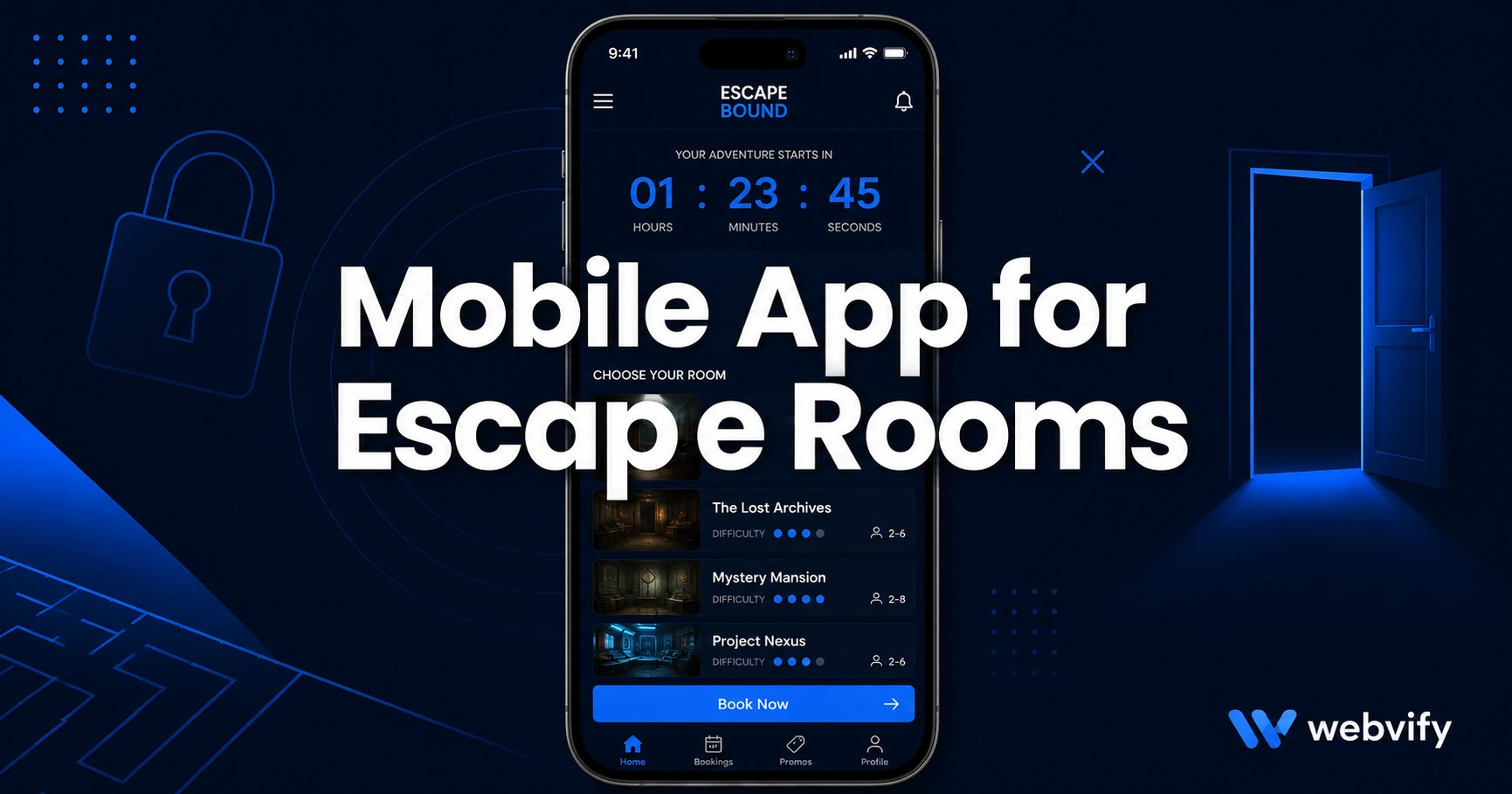
Escape room players love the experience — then forget you exist. A branded mobile app with push notifications fixes that. Here's how it works and what it costs.
Inside this article
- Mobile App for Escape Rooms: Keep Players Coming Back for More
- Why Escape Room Customers Stop Coming Back
- The Three Push Notification Campaigns That Fill Your Rooms
- How a Mobile App Helps You Win Corporate Team-Building
- What to Look for in an Escape Room App Solution
- How Much Does a Mobile App for an Escape Room Cost?
- Frequently Asked Questions
Mobile App for Escape Rooms: Keep Players Coming Back for More
Escape room players have one of the highest satisfaction rates of any entertainment business — and one of the lowest rebooking rates. They loved every minute of it. Then they went home, and you never heard from them again.
The problem isn't the experience. The problem is silence. Once customers leave your venue, you have no reliable way to reach them until they happen to think of you — which could be never, or could be right after they've already booked with a competitor across town.
A branded mobile app changes that. It puts your escape room on their home screen and gives you a direct line to their lock screen through push notifications. This guide covers how escape room owners are using mobile apps to fill rooms during slow weeks, launch new rooms to an already-engaged audience, and win the corporate team-building market before rivals do.
Why Escape Room Customers Stop Coming Back
The average escape room player visits once every 6–18 months. Some come back sooner if they have a great group. Many don't come back at all — not because the experience was bad, but because your venue isn't visible between visits.
Think about the customer journey after checkout: they go home, get back into their routine, and your business exists only in their memory. There's no natural trigger to rebook. Email newsletters have 20–30% open rates, and most escape room businesses don't have the time or volume to run email campaigns consistently. Social media posts reach a fraction of your followers.
Push notifications through a branded mobile app reach 60–90% of recipients directly on the lock screen. That's the difference between hoping a customer remembers you and making sure they do.
The Three Push Notification Campaigns That Fill Your Rooms
The most effective push notification strategy for escape rooms uses three targeted campaigns tied to specific moments in the customer lifecycle.
1. The 45-Day Rebooking Nudge
Send this 45 days after a customer's last visit: "You escaped in 58 minutes. Think you can beat your own record? New team slots just opened — book your rematch."
This works because it's personal (it references their experience), time-specific (new slots), and competitive (the rematch framing). Groups that conquered one room are highly motivated to tackle another.
2. The New Room Launch Alert
When you open a new room, push notifications to your entire app user base instantly. Instead of posting on Instagram and hoping your followers see it, you reach every customer who's ever played at your venue — directly, on their phone.
"New room just launched: The Heist. 12% escape rate. Are you brave enough? Book before it sells out."
This is the campaign escape rooms can't run without a dedicated app. Email lists are incomplete. Social reach is unreliable. A push notification to your app users is the closest thing to a guaranteed announcement.
3. The Slow-Week Slot Filler
Monday through Thursday mornings are typically your lowest-occupancy windows. A same-day push to app users on Sunday evening — "Tomorrow only: 20% off 10am–2pm slots. Two rooms available. Perfect for a team lunch break." — can turn empty rooms into revenue without running paid ads.
If you're running a corporate team-building program, this campaign is especially valuable. Decision-makers often book last-minute when they realize their next team meeting needs an activity.
How a Mobile App Helps You Win Corporate Team-Building
Corporate bookings are the highest-value segment for most escape rooms — larger groups, higher average spend, and a strong likelihood of repeat business if the experience is managed well. The problem is winning corporate clients before they book with a competitor or choose a different activity entirely.
A branded app on the App Store sends a credibility signal that a website alone doesn't. When a corporate event coordinator is evaluating venues, an App Store presence communicates professionalism. They're handing their company's team event to you — trust matters.
Once the booking is made, push notifications keep you top of mind. A pre-event reminder two days before the booking. A post-event follow-up at Day 30 with a referral prompt. A seasonal outreach at the start of each quarter when companies plan their next team day.
Services like Webvify convert your existing escape room website into a fully branded iOS and Android app — including App Store submission under your own developer account — without requiring any mobile development work on your end. If your booking system already lives on your website, it comes with you into the app.
For a real-world comparison of how this works for similar entertainment businesses, see Mobile App for Bowling Alleys or Mobile App for Golf Courses — the retention mechanics are nearly identical.
What to Look for in an Escape Room App Solution
Not all mobile app services work the same way. Here's what to evaluate before committing.
Does it wrap your existing website, or require a rebuild?
The simplest and most cost-effective approach wraps your current website into a native app shell. Your booking system, your room descriptions, your branding — all of it transfers. You don't maintain two separate systems. When you update your website, the app updates automatically.
Solutions that require you to rebuild your content inside a separate platform create ongoing maintenance overhead and risk drift between your website and app.
Who handles App Store submission?
Getting an app onto the Apple App Store and Google Play involves developer accounts, compliance review, binary packaging, and Apple review — a process that takes 48–72 hours even when done correctly, and can result in rejection if compliance details are missed. Look for a service that handles submission end-to-end, including managing rejections.
Is there an admin panel after launch?
Once your app is live, you'll want to send push notifications, update content, and track downloads without calling a developer. A built-in admin panel covers this.
How Much Does a Mobile App for an Escape Room Cost?
Custom native app development starts at $50,000 and commonly reaches $150,000 or more — with ongoing maintenance costs on top. For most escape room operators, this is not a viable option.
WebView-based app services convert your existing website into a fully branded app at a fraction of that cost. Webvify is a done-for-you service that handles building, compliance, App Store submission, and the admin panel under your own branding — designed specifically for businesses that already have a working website and want App Store presence without hiring a mobile developer.
Frequently Asked Questions
How long does it take to get an escape room app approved on the App Store?
Apple's review process typically takes 24–72 hours once a compliant binary is submitted. The submission preparation — developer account setup, metadata, compliance review — takes additional time. With a done-for-you service, the total timeline from start to live app is usually 5–10 business days.
Do I need to rebuild my escape room website to get a mobile app?
No. A WebView-based app wraps your existing website into a native app shell. Your booking system, room pages, pricing, and branding transfer automatically. When you update your website, the app reflects those changes — you don't manage two separate systems.
Will Apple approve an escape room app on the App Store?
Yes. Apple approves WebView apps daily, including for entertainment venues, restaurants, and service businesses. The key is compliance with Apple Guideline 4.2 (the app must offer clear, functional content — which an escape room booking site easily meets) and proper handling of any in-app payment flows. A qualified submission service will flag any compliance issues before submitting.
Ready to stop losing players to the silence between visits? Webvify converts your escape room website into a fully branded iOS and Android app — including push notifications, App Store submission, and an admin panel — without any mobile development work on your end.