

Mobile App for Cycling Studios: Keep Riders Booked and Coming Back All Season
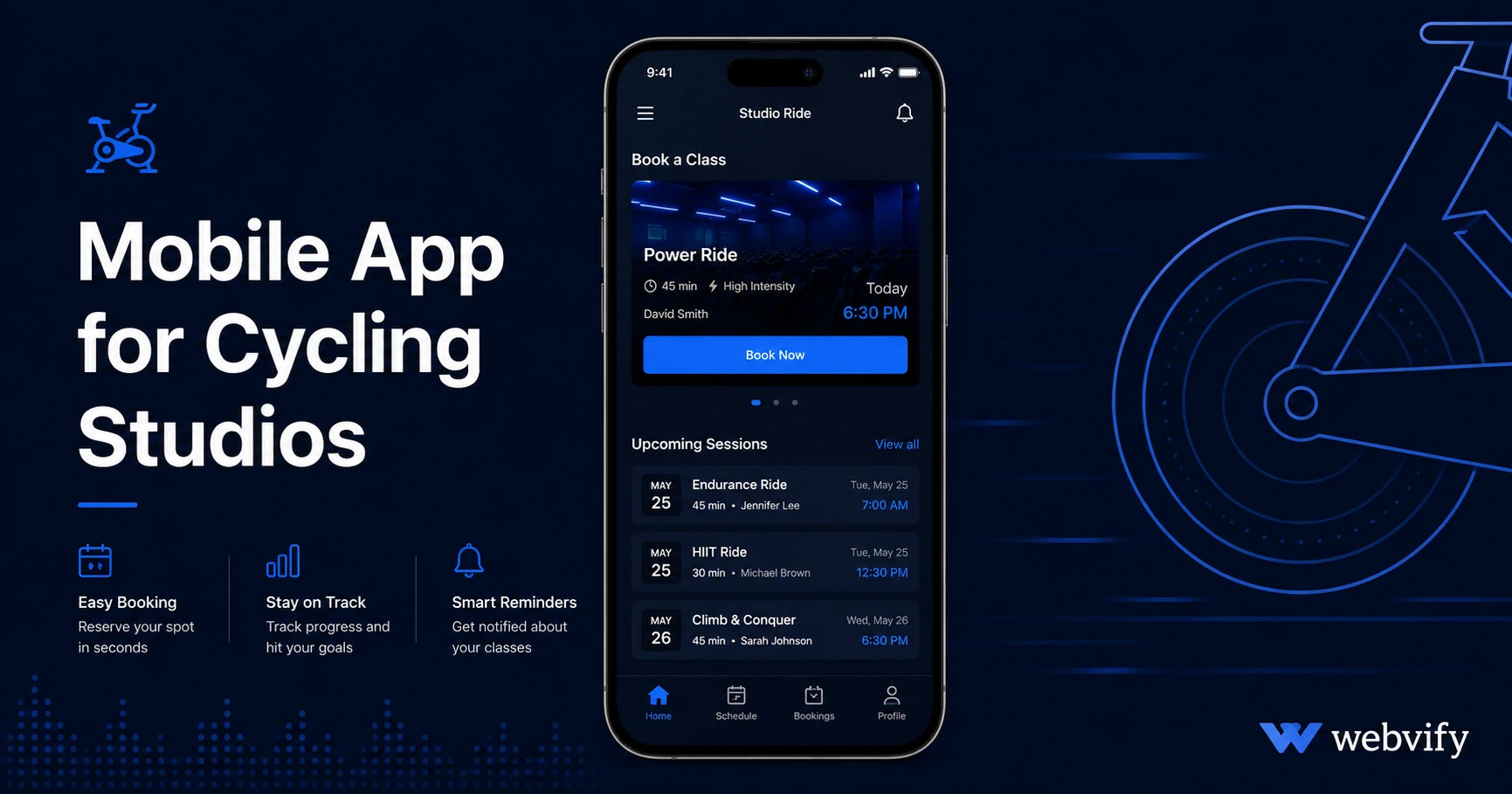
A mobile app for your cycling studio keeps riders booked, fills empty spots, and cuts seasonal dropout. Here's how to get one without hiring a developer.
Inside this article
Empty bikes cost money. Most cycling studios run at 70–80% capacity not because demand is low, but because riders book once and drift away before their next visit.
A mobile app for your cycling studio changes that dynamic. Push notifications reach riders before they fall out of the habit, open spots fill faster, and your brand sits on their home screen instead of getting buried in an inbox.
Why Cycling Studios Lose Riders Between Sessions
Indoor cycling is high-commitment — which makes the gap between sessions dangerous. A rider who misses two weeks often doesn't come back at all. They don't cancel because they're unhappy. They cancel because nothing reminded them to book.
Email campaigns average 20–30% open rates in the fitness industry. A push notification from your branded app reaches the lock screen, where open rates run between 60–90%. That difference — between a message seen and a message ignored — is where rider retention is won or lost.
A mobile app for your cycling studio puts your booking button one tap away, your class schedule one swipe down, and your weekly spot-filler alerts directly in front of riders before they forget you exist.
The Three Push Campaigns That Drive the Most Revenue
A mobile app for cycling studios is most effective when you run structured push campaigns tied to your class calendar. Three sequences deliver the highest return:
The 10-Day Rebooking Nudge. A rider finishes a Saturday class. They feel great. On day 10, they get a push: "Back on the bike this week? Spots still open Saturday at 7am." This catches them before the habit breaks. No email necessary.
The Spot-Filler Alert. A popular Tuesday 6pm class has four open spots with 48 hours to go. A push goes to your waitlist and lapsed riders: "4 spots just opened — Tuesday 6pm." Classes that used to run at 75% capacity regularly sell out with this single tactic.
The Seasonal Re-Engagement Push. January brings a surge. February brings drop-off. In April, when summer motivation dips, a push from your app — "Summer legs start now. Book your first session back at 20% off" — recovers riders who've been quiet for 60 days. Most email campaigns don't reach this segment at the right time. Push does.
Services like Webvify convert your existing cycling studio website into a branded app on the App Store and Google Play — including submission — without you needing to write a single line of code.
What to Look for in a Mobile App Solution for Your Cycling Studio
Not every app builder is designed for a studio that already has a working website and booking system. Here's what matters:
It should wrap your existing site. Rebuilding your booking flow, schedule, and pricing inside a new platform means running two systems in parallel. A solution that converts your current website into an app means your website update is an app update — no double entry.
Push notifications must be included. This is the core retention mechanism. If the solution doesn't offer push notification management, the app won't do much beyond giving you an App Store listing.
App Store and Google Play submission should be handled for you. Apple's review process involves developer accounts, compliance guidelines, and binary uploads that take weeks to learn and days to execute. Most cycling studio owners don't have that time. Look for a done-for-you service where submission is part of the package.
You should keep your developer accounts. Your app should be published under your own Apple Developer account and Google Play account — not the tool's. This matters for portability, credibility, and ownership.
If you're already running on a platform like Mindbody or a WordPress-based booking system, you can learn from how similar fitness studios have handled this conversion — the yoga studio guide covers the same setup questions and App Store compliance details specific to class-based businesses.
Handling Apple's Guidelines for Fitness Booking Apps
Cycling studios that sell class packages, memberships, or gift cards need to know about Apple Guideline 3.1.1. Apple requires a 30% cut on any digital purchase completed through the iOS app using native payment flows.
The fix is simple: redirect purchase flows to an external browser. When a rider taps "Buy 10-Class Pack" in your app, it opens your website in Safari. The transaction happens there, outside Apple's payment system. The rider returns to the app to check their remaining classes. This is the same pattern used by Mindbody, ClassPass, and every major fitness platform.
Your class schedule display, push notifications, and session check-ins are completely unaffected.
Getting Your Cycling Studio App on the App Store
The process is shorter than most studio owners expect:
Step 1 — Set up developer accounts. Apple Developer costs $99/year. Google Play is a one-time $25 fee. Both accounts are registered in your studio's name.
Step 2 — Build the app. A WebView wrapper converts your existing cycling studio website into a native app. Your booking system, schedule, class descriptions, and instructor bios come through automatically.
Step 3 — Submit to both stores. Apple's review typically takes 24–48 hours for fitness apps. Google Play is usually approved within 24 hours. The submission checklist includes app screenshots, a privacy policy URL, and content rating answers.
Step 4 — Set up push notification campaigns. Once live, schedule your first 10-day rebooking nudge, configure your spot-filler alert logic, and set up your seasonal re-engagement campaign template.
Step 5 — Promote the app to existing riders. Email your list with a QR code. Add a banner to your studio entrance. Include a download prompt in your booking confirmation emails. Most cycling studios reach 100+ active app users within the first month from existing members alone.
For a broader look at how converting your website drives retention and App Store discoverability, the benefits of converting your website to a mobile app covers the core business case across all types of service businesses.
FAQ
How much does a mobile app for a cycling studio cost?
Done-for-you WebView app services that include App Store and Google Play submission typically run between $1,500 and $3,500 as a one-time fee, plus monthly hosting from $49–$149. Developer accounts add $99/year (Apple) and $25 once (Google). This is significantly less than the $20,000–$80,000 range for a custom-built native app.
Do I need a developer account to get my cycling studio app on the App Store?
Yes, but you don't need a developer to set it up. Apple's Developer Program ($99/year) and Google Play Console ($25 one-time) are both registered directly in your name. A done-for-you service handles the submission process using your accounts, so ownership stays with your studio.
Can I use push notifications to fill empty class spots?
Yes — this is one of the highest-ROI uses of a cycling studio app. You can segment notifications by rider tier (members vs. drop-in), send spot-available alerts to your waitlist, and schedule re-engagement campaigns for riders who haven't booked in 14 or 30 days. Most push notification dashboards included with app services let you do this without any code.
Ready to fill more bikes and stop losing riders to the silence? Webvify converts your cycling studio website into a branded app on the App Store and Google Play — without a developer, without rebuilding your booking system, and without months of waiting.