

Mobile App for Car Dealerships: Win More Repeat Service Calls and Keep Customers for Life
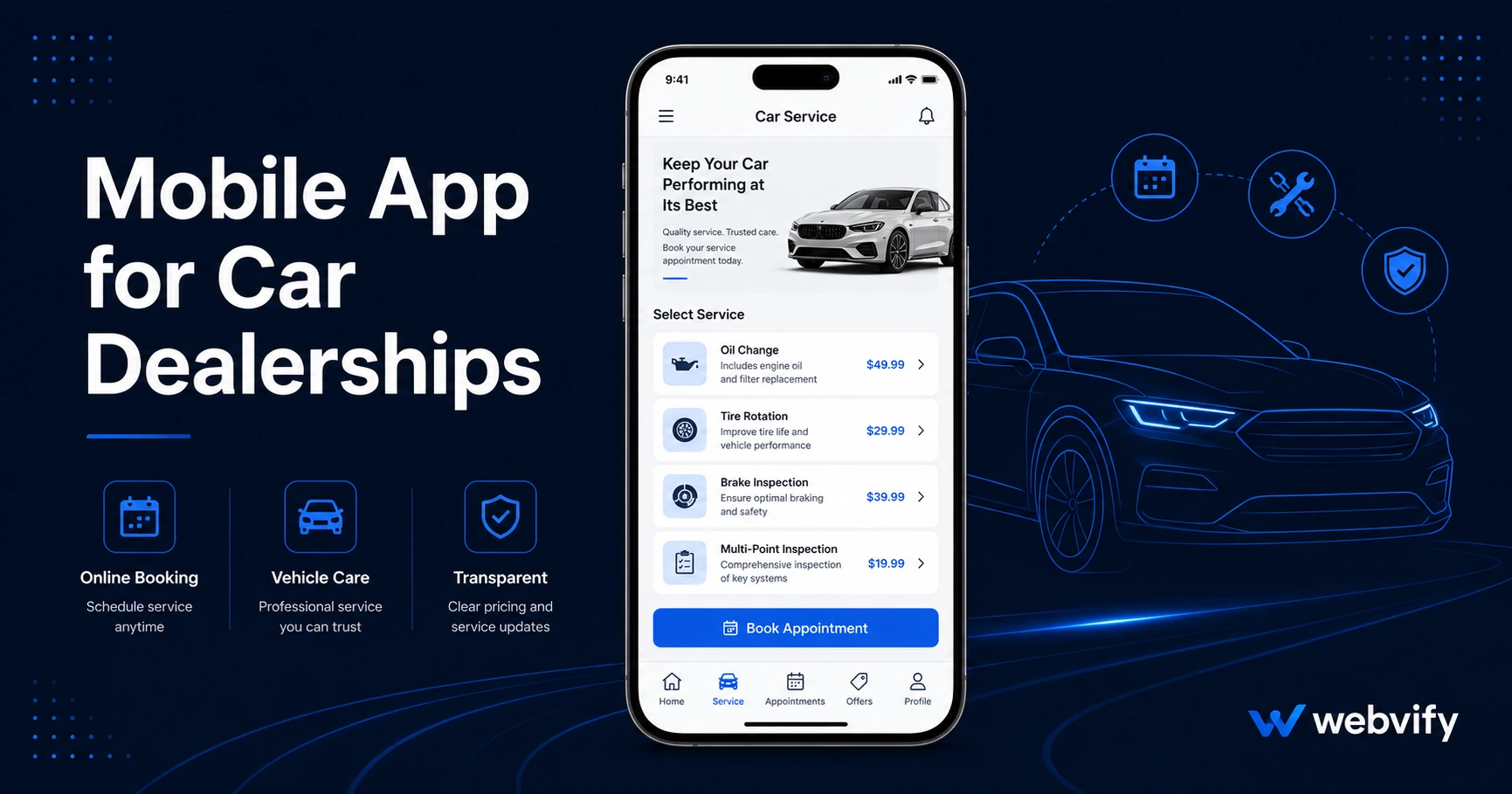
A mobile app keeps your car dealership on customers' home screens between visits — service reminders, seasonal campaigns, and inventory alerts via push notifications.
Inside this article
- Why Car Dealerships Lose Customers Between Visits
- The Service Department Is the Real Retention Engine
- Three Push Notification Campaigns Every Car Dealership Should Run
- A Branded App Puts Your Dealership on the Home Screen
- What a Dealership App Actually Includes
- App Store Submission: What Dealerships Need to Know
- FAQ
Why Car Dealerships Lose Customers Between Visits
Most car dealerships spend thousands to bring a customer through the door once. After the sale, a couple of automated emails go out — then silence. The customer drives off and doesn't hear from the dealer again until a recall notice arrives or a service coupon lands in the spam folder six months later.
The average car buyer returns to purchase again every 3–5 years. Between purchases, they need oil changes, tire rotations, brake inspections, and seasonal services — all of which could go to your service department, or to the shop down the road that happened to be more visible. Without a consistent touchpoint, the dealership has no control over which one they choose.
The Service Department Is the Real Retention Engine
Vehicle sales are unpredictable. A customer may not buy again for years. But service appointments run on a predictable schedule — every 5,000 to 7,500 miles or every six months, depending on the vehicle.
Dealerships that hold onto their service customers hold onto their sales customers too. Customers who use a dealership's service department are significantly more likely to purchase their next vehicle from the same brand and location. The challenge is staying top of mind during the long gaps between visits — and email alone is not enough.
Push notifications from a branded mobile app reach the lock screen at 60–90% open rates, compared to 20–25% for email. That's the difference between a service reminder that gets seen and acted on, and one that gets archived.
Three Push Notification Campaigns Every Car Dealership Should Run
A mobile app for car dealerships doesn't need a complex CRM setup to drive results. Three campaigns cover most of the retention value:
6-Month Service Nudge (Day 150 after last visit) Send a push notification 150 days after the customer's last service appointment. Keep it specific: "Your [Make] is due for an oil change — book your service slot at [Dealership] →". Most customers don't track their own service interval. Doing it for them builds trust and fills your schedule.
Seasonal Readiness Campaign (September and March) Tires, battery checks, brake inspections — these services spike at seasonal transitions. A September push notification ("Winter is coming — get your [Make] winter-ready before the rush") fills service slots before competitors do. The same logic applies in March for spring readiness checks.
Finance End-of-Term Alert (60 Days Before Term End) Customers on a 36, 48, or 60-month finance agreement are your warmest sales leads when the term approaches its end. A targeted push notification ("Your finance agreement ends in 60 days — we have new arrivals ready") reaches them at the exact moment they are already thinking about their next vehicle.
None of these campaigns require a dedicated marketing team. If your dealership has a website — and every dealership does — a branded app makes these campaigns possible with a single push notification.
A Branded App Puts Your Dealership on the Home Screen
Car buyers choose brands they trust. A branded mobile app on a customer's home screen reinforces that trust in a way a website never can.
When a customer searches for a service shop on their phone, your app is already there — on the home screen, before they open a browser. They are not comparing you against five shops in the Google Maps results. They tap your icon and book directly.
This is the core value of a mobile app for car dealerships: it converts a one-time buyer into an ongoing relationship. Services like Webvify handle the full process end-to-end — converting your existing dealership website into a branded iOS and Android app without rebuilding your site or hiring a mobile developer. The app is submitted under your dealership's name on the App Store and Google Play.
What a Dealership App Actually Includes
A dealership app doesn't need to be complex. The most effective dealer apps focus on three things:
Service booking. Your existing service booking page works inside the app as-is. Customers book the same way they do on the website — no separate system to maintain, no duplicate content to manage.
Inventory browsing. Customers browsing your current stock is a natural entry point for sales conversations. A push notification for a new arrival matching a customer's previous model is a low-pressure, high-relevance touchpoint.
Push notification opt-in. This is the retention mechanism everything else depends on. Every customer who downloads the app becomes reachable via direct push notification — no email open rates, no social media algorithm standing between you and your customer.
For a broader look at how this works across business types, the benefits of converting a website to a mobile app are consistent: the website already exists; the app makes it reachable from the home screen with direct notification capability.
App Store Submission: What Dealerships Need to Know
Most dealership managers assume an App Store app requires a developer team and months of project work. In practice, a WebView app — which wraps your existing website — is the fastest path to the App Store for a dealership.
Apple reviews WebView dealership apps under its standard guidelines. Because dealerships sell physical goods and services (vehicles, parts, service labor) rather than digital subscriptions, the Apple in-app purchase rules that affect software and content businesses do not apply. The review process typically takes 24–48 hours once the submission is complete.
The practical barrier is packaging the app into the correct format, setting up developer accounts ($99/year for Apple, $25 one-time for Google), and navigating the submission checklist. An end-to-end service removes that bottleneck — the dealership doesn't touch Xcode or the Google Play Console.
FAQ
How much does a mobile app cost for a car dealership?
A custom-built native app can run $30,000–$100,000 upfront with ongoing developer costs for updates. A WebView wrapper using your existing website costs a fraction of that — your current site is the app content, so there is no rebuild. The main costs are the App Store developer accounts ($99/year for Apple, $25 one-time for Google) and the conversion service.
Can a dealership app replace the dealership website?
No — and it shouldn't. The website handles search engine discovery and first-time visitors. The app handles repeat customers: service reminders, inventory alerts, and direct booking. They serve different roles and work best together. The app should never try to replace the website as a first-touch channel.
How do customers find and download a dealership app?
The fastest installs come from your existing customer base: a link in your service follow-up email, in-dealership QR codes on waiting room screens, and a banner on your dealership website. Over time, the app also builds organic App Store visibility through ratings and reviews. Most dealerships see the majority of early installs from current service customers.
Your dealership website already exists. A branded mobile app puts it on your customers' home screens — and gives you a direct notification channel to every customer who downloads it. Webvify handles the full conversion and App Store submission process end-to-end, so you don't need a developer or a months-long project.