

Mobile App for Batting Cages: Keep Batters Coming Back All Season
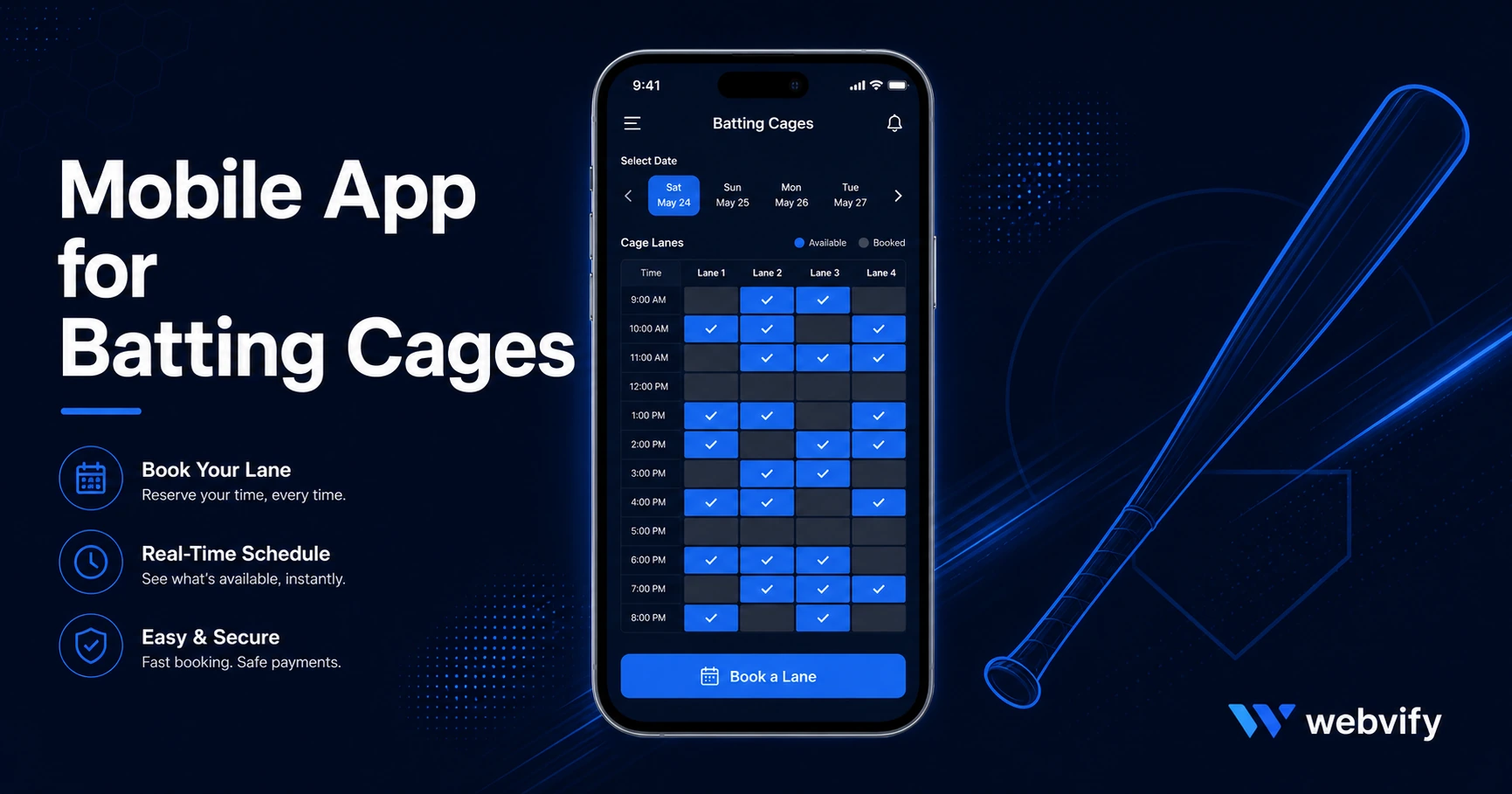
Batting cage customers forget you exist between visits. Here's how a mobile app keeps them booked, brings them back, and grows your season revenue.
Inside this article
Most batting cage customers leave satisfied after their session — and then you never hear from them again. Not because they had a bad time. Because nothing reminded them to come back.
That silence is the real revenue problem for batting cage businesses. A mobile app fixes it.
Why Batting Cage Customers Drift Away
Batting cage visits are often event-driven. A player books a lane before tryouts, a birthday party group comes for an afternoon, or a youth team warms up before the season opener. After that trigger event passes, the habit breaks.
Without a direct communication channel, your business is competing with everything else on your customer's phone — competitor ads, unread email newsletters, and Google results that could surface any nearby facility. The window to rebook a satisfied customer is short.
Push notifications sent through a mobile app see open rates of 60–90%, compared to 20–25% for email in the sports and recreation space. Most batting cage businesses are fighting for attention using only email and social media. A mobile app changes that equation entirely.
How a Mobile App for Batting Cages Changes Retention
A branded mobile app puts your facility on the customer's home screen — not buried in an inbox or lost in a social feed. When a player wants to book a lane, your app is the first place they look.
Two mechanisms drive the most value:
Push notifications reach your customers' lock screens directly. You control the timing, the audience, and the message. A 45-day follow-up after their last visit, a spring season opener, a same-day slow-lane special — these sends cost nothing and reliably pull customers back.
Home screen presence signals credibility. A published app in the App Store tells birthday party organizers, corporate groups, and youth league coaches that you run a serious facility. For group bookings where trust is part of the decision, that signal closes sales that a website alone would not.
Services like Webvify convert your existing website into a fully published App Store and Google Play app — without rebuilding your booking system or writing any code. Your current booking flow stays in place; the app wraps around it and adds push notifications on top.
Three Push Notification Campaigns Every Batting Cage Should Run
1. Spring Season Opener (February–March)
This is your highest-ROI send of the year. Before travel team tryouts, before little league registration opens, before high school baseball season begins — push to every customer who has gone quiet since October. A short "Spring training starts now — book your lane" message with your availability link pulls back a meaningful share of your dormant base before competitors grab their attention.
2. Slow-Week Slot Filler
Weekday lanes run at 60–70% capacity at most facilities. A same-day push — "3 lanes open tonight, book before 6pm" — fills otherwise empty time. This campaign pays for itself after two or three sends. The key is timing: send between 3pm and 5pm on slow weekdays when players are finishing school or work and deciding what to do that evening.
3. 45-Day Rebooking Nudge
Send this automatically 45 days after a customer's last recorded visit. Keep the message short: "It's been a while since your last session. Your swing doesn't wait — neither should you." Players in an active practice routine respond well. Players who fell off respond even better.
For group bookings and birthday parties, a seasonal push in the October–November window — announcing new party packages before holiday planning kicks in — generates forward bookings during a period that otherwise goes quiet. You can read more about post-launch growth strategies in this guide to increasing app downloads.
What Else a Mobile App Gives Your Batting Cage
App Store discovery. Local players searching the App Store for sports facility apps find you — when most batting cage competitors have no App Store presence at all. Early movers capture this organic channel for free.
First-party data. Every app install is a customer you can reach directly without depending on social algorithms or email deliverability. If Facebook changes its reach rules tomorrow, your app audience is unaffected.
Operational credibility. A published app under your facility's name signals permanence and professionalism to school programs, youth leagues, and corporate team-building groups evaluating where to bring their people.
For context on why the mobile usage gap matters more in 2026 than it did three years ago, this breakdown of mobile app statistics covers the key numbers small businesses need to know.
What to Look for in a Mobile App for Your Batting Cage
Three things matter most when evaluating a platform:
It works with your existing booking system. You don't want to rebuild how customers book — you want an app that wraps around your current site, whether that's a WordPress booking plugin, a Calendly link, or a purpose-built sports scheduling tool.
Push notifications are included. Some platforms charge extra for push, or cap how many notifications you can send per month. Confirm push is fully included before committing.
App Store submission is handled for you. Setting up an Apple Developer account, packaging the binary correctly, and navigating the review process is a real friction point for non-technical business owners. A service that handles end-to-end submission — including Google Play — removes weeks of back-and-forth from your timeline.
Frequently Asked Questions
How much does a mobile app for a batting cage cost?
Most no-code app services charge between $500 and $2,000 for the initial build and App Store submission, with an optional monthly retainer for updates. Custom native development runs $50,000–$200,000 and takes six to twelve months — unnecessary for a local facility. A WebView wrapper that publishes your existing website as an app is the practical choice for most batting cage businesses.
Do I need to rebuild my booking system to get an app?
No. A WebView app wraps your existing website — including your online booking page — inside a native mobile container. Whatever booking software you use today continues working exactly as-is. The app adds push notifications and home screen presence on top of your current setup.
How long does it take to get a batting cage app live on the App Store?
Apple's review typically takes 24–48 hours once the app is submitted correctly. The preparation — developer account setup, building the binary, writing metadata — accounts for most of the timeline. With a service that handles end-to-end submission, most apps go live within 5–10 business days of project start.
Ready to put your batting cage on the App Store and start re-engaging customers who have gone quiet? Webvify handles the build, submission, and setup — get started today.