

Mobile App for Auto Body Shops: Win More Repeat Jobs and Stop Losing Customers to Silence
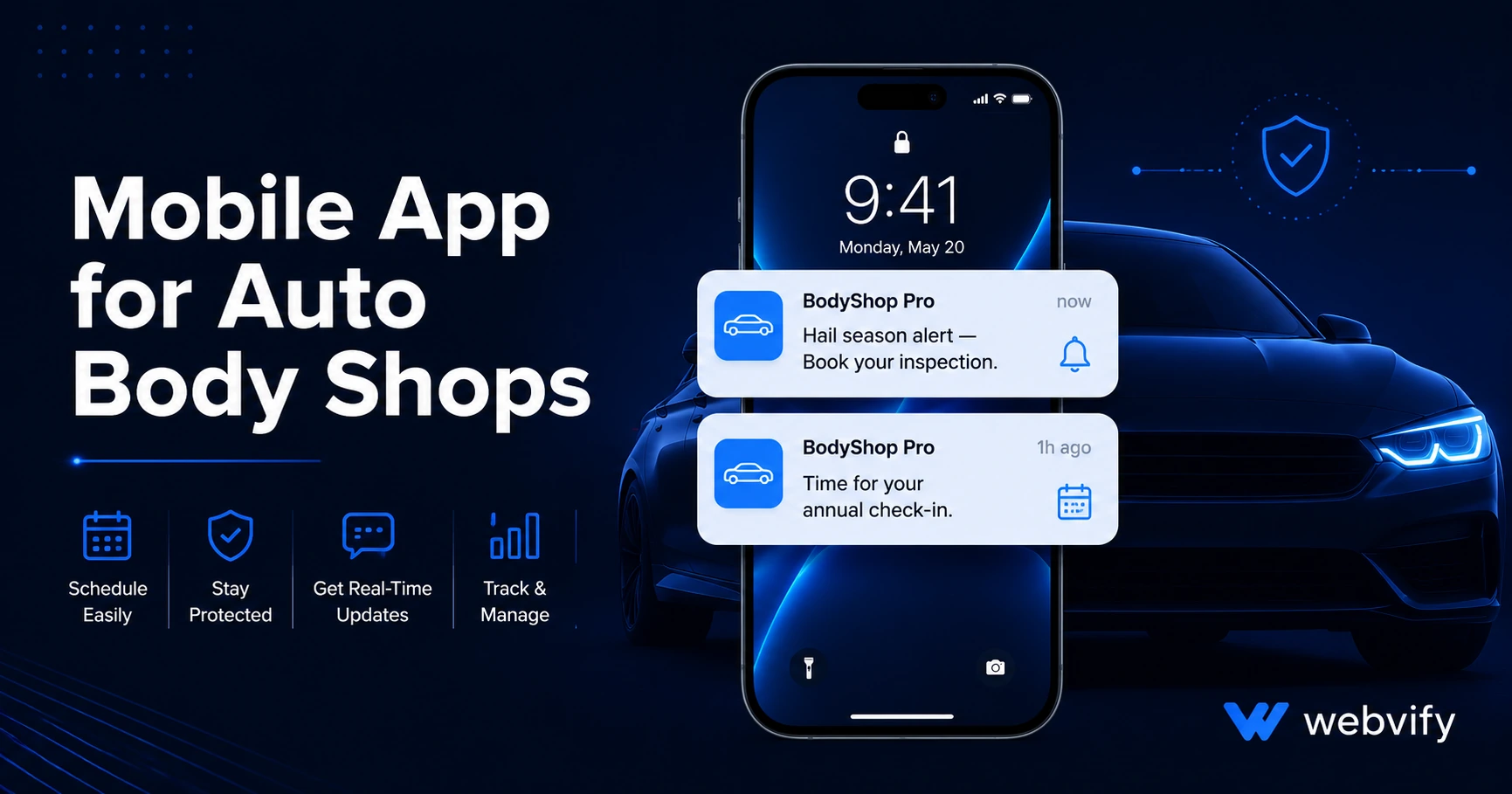
Auto body shop customers forget you exist between accidents. A mobile app keeps you top of mind with push notifications and wins more repeat jobs.
Inside this article
Auto body shop customers don't leave because of bad work. They leave because you go completely silent after the job is done — and the next time they need a repair, they search Google instead of looking for your number.
The average gap between auto body visits is 18 to 36 months. That's nearly three years during which a satisfied customer can forget you exist, try a competitor, and never come back. A mobile app for your auto body shop closes that gap with push notifications that land directly on your customers' lock screens — no algorithm, no inbox, no hoping they remember your name.
Why Auto Body Shops Lose Customers They Already Earned
You do the job right. The customer drives away happy. And then nothing happens for two years.
That silence is where repeat business dies. Your customer isn't unhappy — they're just not thinking about you. When spring hail hits their car or a fender bender happens, they pull out their phone and search for the nearest shop. Unless you're already on their home screen, you're invisible at exactly the moment they need you most.
Email newsletters don't solve this. Auto body shops that send emails average around 18 to 22 percent open rates, and that's if customers even stayed subscribed. Push notifications through a branded mobile app reach the lock screen directly, with open rates between 60 and 90 percent. That's the difference between a message that gets seen and one that gets buried.
The Three Push Campaigns That Win Repeat Business
A mobile app for auto body shops isn't about building loyalty programs or fancy interfaces. It's about the right message at the right moment. Here are the three push campaigns that drive real revenue:
Seasonal damage alert (April–June and November–December). Hail season, spring storms, and winter road salt all create predictable damage windows. A push notification in early April — "Hail season is here. Book your free damage inspection before the backlog builds" — reaches every customer who installed your app before they've even noticed a problem. The same works in November for rust prevention and winter prep. You're not selling hard; you're being useful at the exact moment weather makes cars need attention.
Post-repair referral window (Day 14–21 after job completion). This is your highest-ROI push campaign. Customers are most likely to recommend you in the two to three weeks after a job is done, when the experience is fresh and they're still pleased. A push notification on Day 18 — "Glad your car is looking great. Know anyone who needs body work? Share our contact and we'll take care of them" — turns a satisfied customer into a referral source while the goodwill is still live.
Twelve-month dormant reactivation. After 12 months of silence, send a check-in push: "It's been a year since we last saw your vehicle. If anything needs attention — paint chips, scratches, or a seasonal check-up — we're here." Most customers receive this and think, "Actually, there is that scratch on the door." You don't need them to have had an accident to bring them back in.
Mobile App for Auto Body Shops: The App Store Credibility Advantage
Trust is everything in auto body repair. Customers are handing you a $20,000 to $60,000 vehicle and expecting it back looking new. That's a high-stakes transaction, and they notice every signal that tells them you're legitimate.
A branded app on the App Store and Google Play sends that signal. It's the difference between a business that operates out of a mobile website and a business that feels like a professional operation. For car dealership service departments, the same credibility dynamic applies — you can read more about how trust signals work in automotive businesses in our mobile app for car dealerships guide.
Services like Webvify handle the full app setup end-to-end — from converting your existing website into a branded mobile app to submitting it to the App Store and Google Play under your own business name. You don't need a developer or any technical experience.
What to Look for in an Auto Body Shop Mobile App
Not every app solution works the same way. Here's what matters for an auto body shop specifically:
Push notifications included. This is the core feature. Without push, an app is just a glorified business card. Make sure your app can send notifications without requiring a separate third-party service or developer setup.
Works with your existing website. Most auto body shops already have a website with their booking form, photo gallery, and contact information. You don't want to rebuild all of that inside a new app platform. A web-to-app approach — which wraps your existing site into a native app — means your website and app stay in sync automatically.
Submitted under your business name. The App Store listing should appear as your shop name, not the name of a platform you're paying monthly. Customers searching your business on the App Store should find you, not a generic tool listing.
No developer required for ongoing changes. When you update your website, the app should reflect those changes automatically. You shouldn't need to call a developer every time you change a price or add a new service.
For home services businesses with similar trust dynamics, the approach translates well — see how contractors use the same push notification model in the mobile app for contractors guide.
How to Get Your Auto Body Shop App Live
The process is simpler than most shop owners expect. A web-to-app service like Webvify takes your existing website and converts it into a fully branded iOS and Android app. The submission to the App Store and Google Play is handled for you — you don't touch Xcode or navigate Apple's developer portal.
Once live, you set up your three push campaigns — the seasonal alert, the post-repair referral nudge, and the 12-month reactivation — and they run automatically based on the schedule you define. After that, the app works in the background while you focus on the shop floor.
Most auto body shops that add a mobile app see the biggest return from the seasonal damage alerts. A single spring hail campaign sent to 500 customers can fill two weeks of appointments.
Frequently Asked Questions
How much does a mobile app for an auto body shop cost?
The cost depends on whether you're building from scratch or converting your existing website. Custom native apps cost $50,000 to $200,000 or more. Web-to-app services that convert your existing website typically cost a few hundred to a few thousand dollars — a fraction of the price — while still getting your app published on the App Store and Google Play under your business name.
Do I need a developer to submit my auto body shop app to the App Store?
No. Web-to-app services like Webvify handle the full App Store and Google Play submission process for you. You don't need to learn Xcode, set up Apple Developer accounts, or deal with the review process. You provide the website URL and business details; they handle the rest.
What push notifications work best for auto body shops?
The three highest-performing push campaigns for auto body shops are seasonal damage alerts (spring hail/storm season and winter prep), a post-repair referral nudge sent 14 to 21 days after job completion, and a 12-month dormant reactivation for customers who haven't been in over a year. These campaigns work because they're timed to natural windows when customers are already thinking about their vehicle.
Ready to stop losing repeat customers to silence? Visit webvify.app to see how we convert your existing website into a branded mobile app — published on the App Store and Google Play — without any development work on your end.