

Mobile App for Art Studios: Keep Students Enrolled and Coming Back
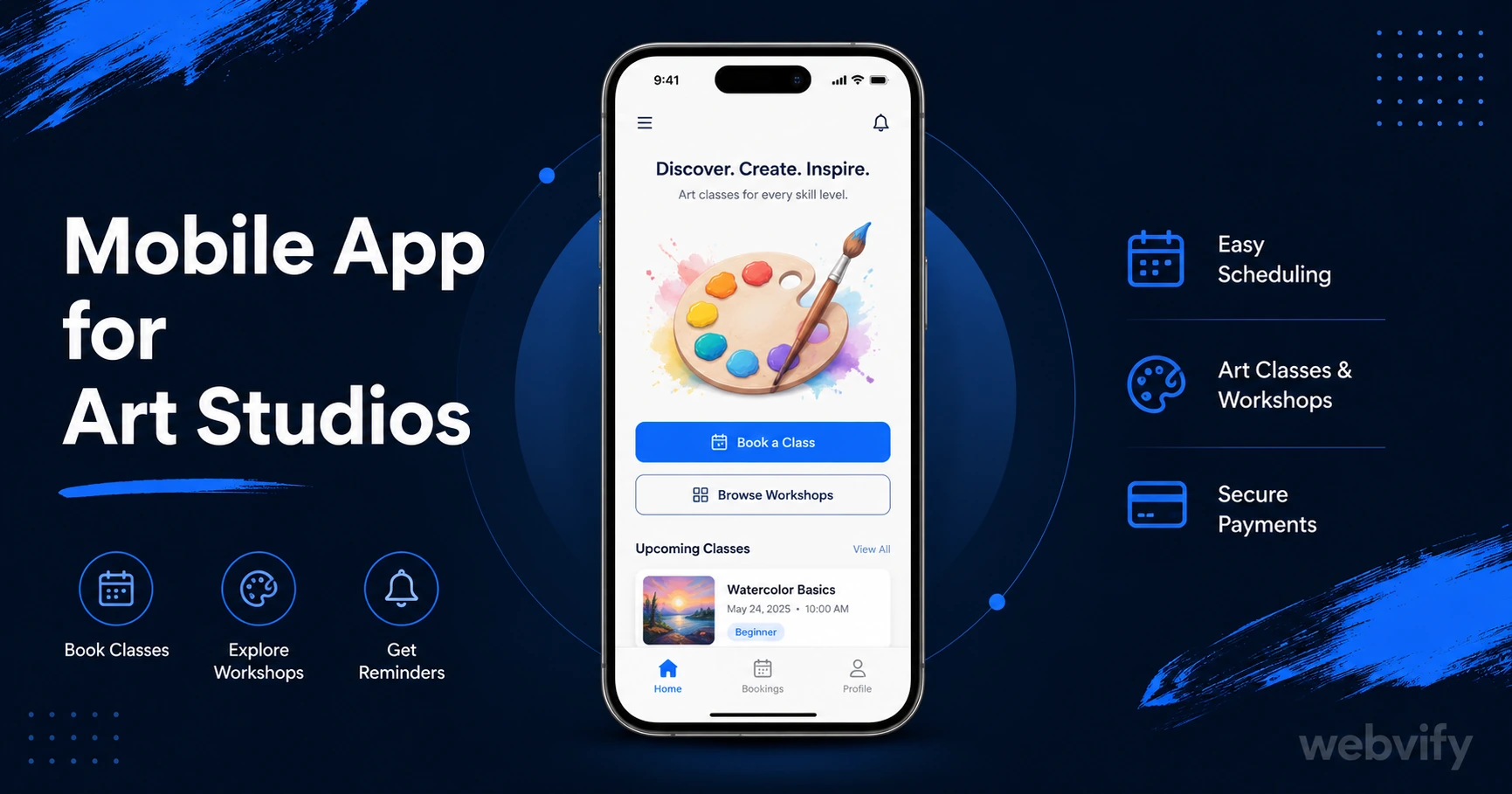
Art studio students drift away after every semester break. A mobile app with push notifications keeps them enrolled and coming back. Here's how it works.
Inside this article
Mobile App for Art Studios: Keep Students Enrolled and Coming Back
Summer arrives and your art studio empties. Students finish a term, disappear for a few weeks, and a third of them never re-enroll — not because your classes weren't good, but because nothing reminded them to come back.
A mobile app solves that gap. This guide covers why art studios lose students between sessions, how a branded mobile app for art studios keeps them engaged, and what it takes to get one live without hiring a developer.
Why Art Studios Lose Students Between Terms
Art class attendance is inherently seasonal. Students take a 6-week watercolors course, feel proud of what they made, then drift into summer routines. When autumn enrollment opens, they've forgotten to sign up. Someone else fills the spot.
The problem isn't loyalty — most students genuinely enjoyed the experience. The problem is visibility. You're not in their daily line of sight.
Email newsletters hit a 20–28% open rate on a good day. Instagram reaches fewer than 10% of your followers organically. Neither channel intercepts a student reliably in the week before registration opens.
Push notifications from a branded app reach the lock screen directly. Open rates consistently run between 60–90% — three to four times higher than email. When you send a "Summer Intensive registration opens Monday" notification, it lands whether or not they check their inbox.
The Three Campaigns That Drive Re-Enrollment
Most art studios need only three core notification sequences to see a meaningful jump in retention:
1. Post-term re-enrollment nudge (Day 14) Send this 14 days after a student's last class ends. At two weeks, the course is still fresh but the new term isn't yet fully planned. A single push notification — "Your next watercolors session starts August 4. Spots are filling fast." — triggers re-enrollment before inertia sets in.
2. Seasonal opener (late August / early January) These are the two highest-intent enrollment windows for art studios. A push notification three weeks before each term starts, paired with a "bring a friend" message one week later, fills classes faster than any social media post.
3. Dormant student reactivation (90 days of silence) Students who haven't visited in three months are at real risk of churning permanently. A reactivation push — "We miss you at the studio. Here's what's new this term." — with a link to the schedule page costs nothing and routinely brings back 10–20% of dormant students.
For studios running workshops and one-off events alongside regular classes, push notifications also work as a slot-filler: "2 spots left in Saturday's clay wheel workshop." That kind of real-time urgency is impossible to replicate via email without looking like spam.
If you run music or movement classes alongside visual arts, the re-enrollment mechanics are nearly identical to what works for music schools.
What "Mobile App for Art Studios" Actually Means
You don't need a custom-built app. You need your existing website — class schedule, booking system, instructor bios, student gallery — wrapped into a native app and published on the App Store and Google Play under your studio's name.
This approach (called a WebView app) takes your existing web presence and packages it as an installable app. Students tap your icon on their home screen, browse the schedule, and book a class — all inside a branded experience that feels native without requiring you to rebuild anything.
Services like Webvify handle this end-to-end: they build the app from your website, set up push notification campaigns, and manage the entire App Store and Google Play submission process. You don't touch Xcode or the developer portal.
The result is your studio name on the App Store — not a generic listing inside someone else's platform.
App Store Credibility for Art Studios
Most local businesses your students also use — gyms, salons, coffee shops — don't have their own app. The App Store listing alone signals that your studio is serious about the long-term student relationship.
For art studios that attract parents enrolling children, that credibility matters more than it might seem. A parent comparing two studios of similar quality will often choose the one with an app. It signals organization, commitment to communication, and a more professional client experience.
Beyond credibility, App Store search is a free discovery channel. People searching "art classes near me" on iOS do sometimes browse the App Store. Having a listing puts you in front of prospects who've never heard of your studio.
The broader case for turning your website into a mobile app is covered in this guide to the benefits of converting your website — most of it applies directly to art studios.
What to Look for in an Art Studio App
Not every mobile app platform is suited to a studio. Here's what matters:
Push notification support on both iOS and Android. Some platforms only support push on Android. iOS push notifications require native app packaging — a WebView wrapper gives you this.
Booking system compatibility. Your existing booking tool (Acuity, Mindbody, ClassPass, or a custom calendar) must work inside the app. A WebView wrapper loads your site as-is, so compatibility is built in.
Your own developer accounts. The app should be published under your Apple Developer and Google Play accounts, not your vendor's. If the vendor stops operating, your app stays live.
No content rebuild. You shouldn't have to re-enter your class schedule, pricing, or instructor information in a separate system. One source of truth — your website — should power both the site and the app.
FAQ
How much does a mobile app for an art studio cost?
A custom-built app runs $25,000–$100,000+ and takes 6–12 months. A WebView-based app built from your existing website typically costs a small flat fee and can be live in days. The pricing gap is significant for a small or mid-size studio.
Do I need a developer to get my art studio on the App Store?
No. Managed services handle the entire process — building the app, submitting it to Apple and Google, and setting up the admin panel. You provide your website URL and branding; they do the technical work.
Can I send push notifications to students who booked through my booking system?
Yes. Push notifications go to anyone who installs the app, regardless of which booking system you use. You set up notification segments and campaigns through an admin panel — no coding required.
Your students liked your classes. A mobile app for your art studio makes sure they remember you when the next term opens — before they sign up for something else.