

Mobile App for Apartment Complexes: Keep Residents Engaged and Reduce Turnover
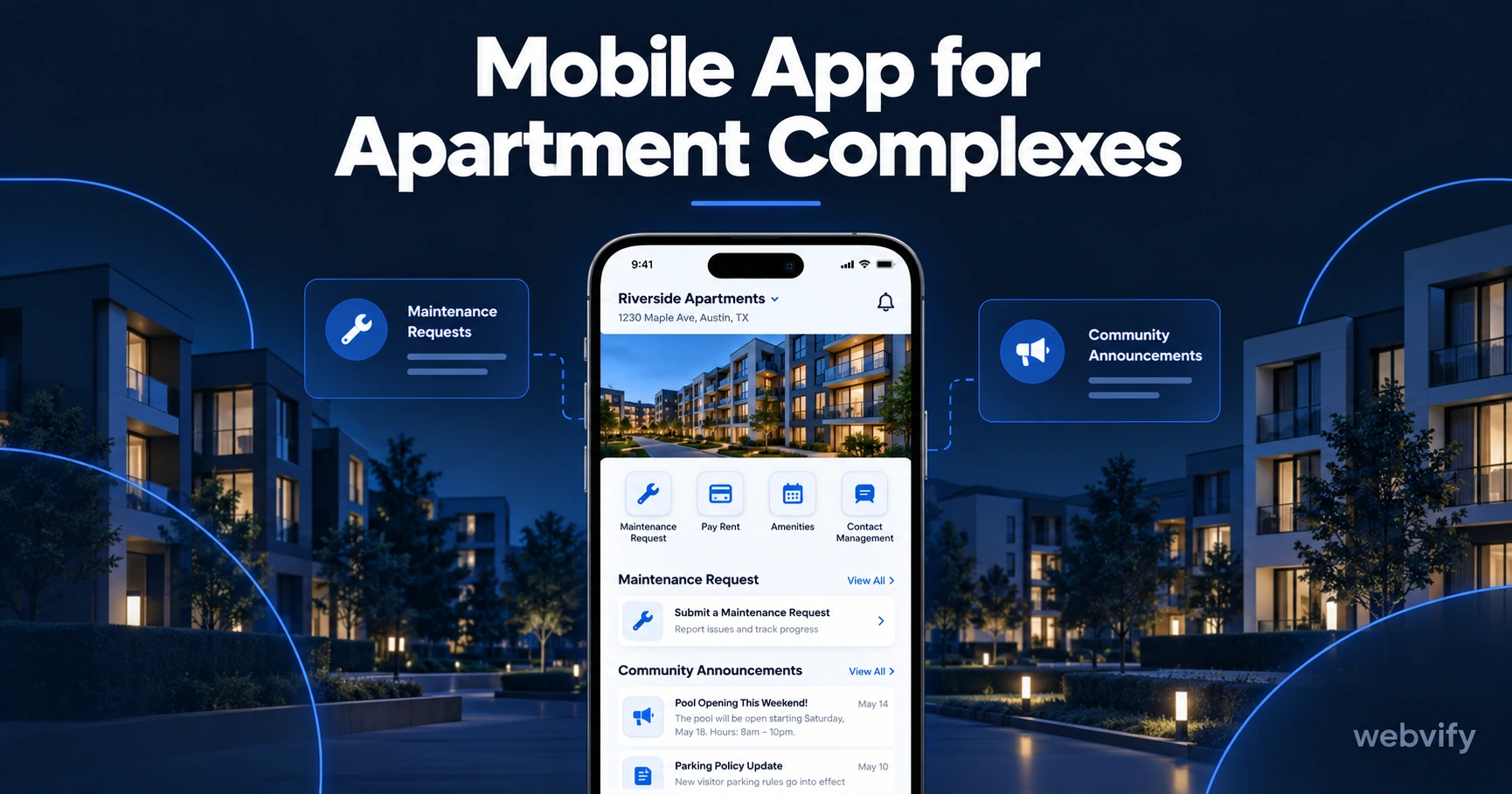
A mobile app for your apartment complex keeps residents engaged, cuts turnover, and replaces email chaos. Here's how it works and how to get one fast.
Inside this article
- Why Apartment Residents Drift Away (It's Not the Apartment)
- What a Mobile App for Apartment Complexes Actually Does
- The 3 Push Notification Campaigns Every Apartment Complex Should Run
- How to Set Up a Mobile App for Your Apartment Without Rebuilding Your Website
- What to Look for in a Mobile App for Apartment Complexes
- Frequently Asked Questions
Replacing one tenant costs a property $1,500 to $5,000 in vacancy, cleaning, and leasing fees. Most of that turnover doesn't happen because the apartment was bad — it happens because residents felt ignored.
A mobile app for your apartment complex puts your management team on every resident's home screen 365 days a year, not just on the first of the month when rent is due.
Why Apartment Residents Drift Away (It's Not the Apartment)
The average lease is 12 months. In a year, most residents hear from management twice: a lease renewal notice and a maintenance response. That's it.
Email open rates in property management average 18–22%. A notice sent the week before a lease renewal window is often too late — residents have already started browsing other listings.
The gap isn't between your complex and a competitor's. The gap is between rent day and the next meaningful touchpoint. Residents who feel engaged — who get timely maintenance updates, community event reminders, and the occasional seasonal offer — renew at higher rates. The data on push notifications tells the story clearly: push notifications achieve 60–90% open rates compared to 18–25% for email, even for property management audiences.
A mobile app with push notifications closes that gap without adding headcount.
What a Mobile App for Apartment Complexes Actually Does
A property management mobile app is not a custom-built resident portal. It's your existing website — the one with your floor plans, contact form, maintenance request system, and announcements — wrapped into a native app and published on the App Store and Google Play under your property's name.
When a resident installs it, they get:
- Your property information and contact details on their home screen
- Push notifications for community updates, maintenance windows, and lease reminders
- Direct access to whatever booking, payment, or request system you already have
- A permanent touchpoint that doesn't get buried in email
Management teams don't rebuild anything. The content already exists. The app makes it accessible and pushable.
The 3 Push Notification Campaigns Every Apartment Complex Should Run
Push notifications are only useful if you have something to say. Here are three campaigns that drive real retention value — not just noise.
Lease renewal opener (60 and 30 days out): Most residents decide to renew or start apartment hunting 45–60 days before their lease ends. A push notification at day 60 — before they've opened Zillow — keeps your property in the conversation. A day-30 follow-up with a renewal incentive (waived parking fee, one month at locked rate) closes the loop.
Maintenance follow-up at day 3: When a resident submits a maintenance request, the silence after submission is the primary frustration. A day-3 update push — even just "your request is scheduled for Friday" — turns a potential complaint into a trust signal. Residents who feel heard don't look elsewhere.
Seasonal community opener (March and September): These are the highest-turnover windows in residential property. A push in late February about upcoming community improvements, pool reopening, or new amenities gives residents a reason to stay curious about the property rather than curious about the market.
For a deeper look at how to structure these campaigns, this guide on mobile app user retention covers the tactical framework that applies across every small business — including property management.
How to Set Up a Mobile App for Your Apartment Without Rebuilding Your Website
The technical barrier is smaller than most property managers expect. Here's how it works:
You don't need a developer. Services that specialize in web-to-app conversion take your existing property website and convert it into a native mobile app — complete with push notification infrastructure and an admin panel to manage campaigns.
You don't need a new system. Your existing maintenance request form, lease portal, and contact page all work inside a WebView app exactly as they do in a browser. Residents book, pay, and communicate through the same tools you already have.
You handle the branding, not the code. The app goes live on the App Store and Google Play under your property's name and logo, not under a generic platform app. Residents see "Maple Grove Apartments" in their App Library — not a third-party app they don't recognize.
Services like Webvify handle the entire process end-to-end: converting your existing website, submitting to both app stores, and giving you an admin panel to send push notifications and manage content. Most properties are live within two weeks of starting.
What to Look for in a Mobile App for Apartment Complexes
Not all web-to-app services deliver the same result. Four things matter most for property management:
Push notification control. You need to send targeted messages without filing a ticket. Look for an admin panel that lets management send push campaigns directly — maintenance windows, lease reminders, community events — without relying on a developer each time.
App Store submission included. Apple and Google require a developer account and compliance review for every published app. Services that handle this for you ($99/year Apple Developer fee, $25 Google Play) remove the biggest barrier to getting live.
Your own developer accounts. The app should be published under your developer accounts, not the service provider's. If you ever switch services, you keep the app.
Ongoing compliance management. Apple and Google update their policies annually. API target levels, age verification, and billing guidelines change. A managed service that handles compliance updates is worth paying for compared to a self-serve tool that leaves policy risk to you.
Frequently Asked Questions
How much does a mobile app for an apartment complex cost?
A web-to-app conversion service that handles App Store submission and push notification infrastructure typically costs a one-time setup fee ranging from $500 to $2,000 depending on the provider, plus an annual maintenance fee. This is significantly lower than custom development, which starts at $25,000–$50,000 for a comparable resident-facing app. Services like Webvify publish managed pricing at webvify.app.
Do residents need to download the app for push notifications to work?
Yes — push notifications only reach residents who have downloaded and installed the app. The install prompt typically appears on your property website and in lease welcome communications. Properties that promote the app at move-in and during lease renewal see the highest adoption rates.
Can I use the app with my existing maintenance request or lease portal?
In most cases, yes. Web-to-app services wrap your existing website inside a native app, so any form, portal, or tool accessible via a browser — including third-party maintenance and lease platforms like AppFolio, Buildium, or Propertyware — continues to work inside the app without modification.
Your residents already have a full home screen of apps competing for their attention. A branded apartment app puts your property management team on that home screen before the lease renewal window — and keeps you there all year.
Get your apartment complex app launched in days with Webvify.