

Mobile App for Acupuncturists: Keep Patients Coming Back Between Sessions
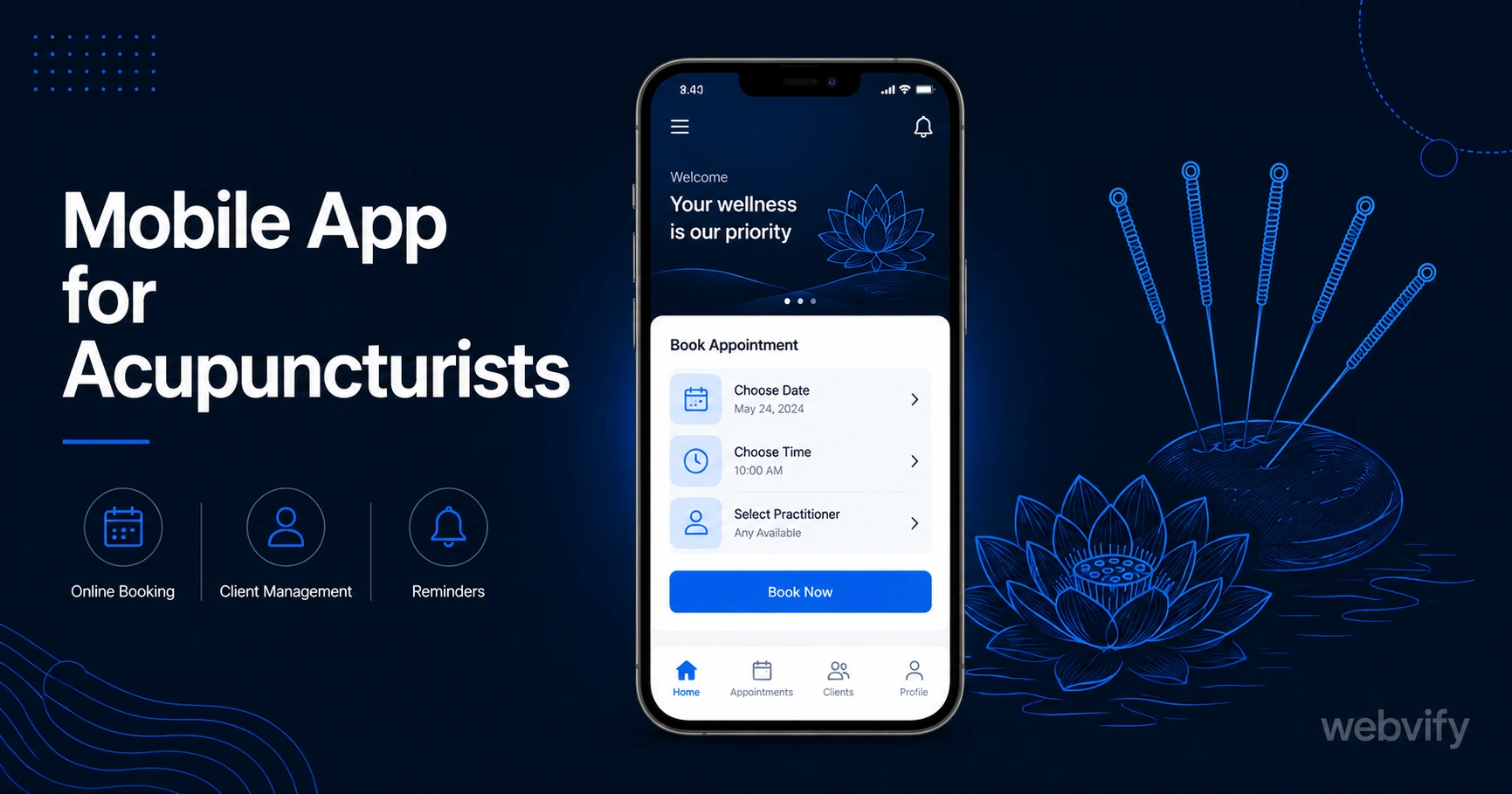
Most acupuncture patients stop after 3 sessions. A mobile app with push notifications changes that. Here's how to keep patients engaged and rebooking.
Inside this article
- Why Acupuncture Patients Stop Returning (And What Actually Fixes It)
- The Three Push Campaigns That Drive Repeat Bookings for Acupuncturists
- What a Mobile App Actually Looks Like for an Acupuncture Practice
- App Store Credibility: Why It Matters for Acupuncturists
- How to Get Your Acupuncture App on the App Store Without a Developer
- FAQ
Most acupuncture patients arrive motivated and leave feeling great — then quietly disappear after three sessions. The problem is rarely the treatment. It's the silence between appointments.
When a patient leaves your practice, they re-enter a world full of competing priorities. Emails get buried. Your number is saved under "Dr. Chen — Needles" and never touched again. Without something keeping you visible, the 3-to-4 week gap between sessions becomes the moment they drift away for good.
A branded mobile app on their home screen changes that dynamic entirely.
Why Acupuncture Patients Stop Returning (And What Actually Fixes It)
Acupuncture is a cumulative therapy. Most conditions — chronic pain, anxiety, insomnia, fertility support — require 6 to 12 sessions for meaningful results. But the average new patient books only 3.
The reason isn't dissatisfaction. It's that the patient feels "good enough" and loses urgency. Life gets busy. They mean to rebook but forget. Then two months pass and starting again feels awkward.
Push notifications solve this. The same patient who ignored your email will read a home screen notification. Push notification open rates run 60 to 90 percent, compared to 20 to 25 percent for wellness emails. The touchpoint reaches them before the drift becomes permanent.
The Three Push Campaigns That Drive Repeat Bookings for Acupuncturists
Getting a patient to rebook after their last session is the highest-leverage moment in your practice. Here are three campaigns that work specifically for acupuncture:
Day-21 rebooking nudge. Send this three weeks after their last appointment: "Your last session was 3 weeks ago — how are you feeling? We have openings this week if you're ready for your next visit." Short, warm, actionable. No discount required.
Treatment milestone reminder. If a patient completed their initial course (say, 6 sessions), send a 90-day check-in: "It's been 3 months since you finished your initial treatment plan. Many patients benefit from a maintenance session this time of year." This positions the return as clinical wisdom, not a sales push.
Seasonal wellness alert. Acupuncture demand spikes at seasonal transitions — late autumn for immune support, spring for allergies, January for stress and resolution-driven health goals. A well-timed push a week before the season shift ("Spring is when most patients see inflammation flare — we have openings in the next 2 weeks") lands at a moment of natural motivation.
What a Mobile App Actually Looks Like for an Acupuncture Practice
A mobile app for your practice doesn't replace your website — it wraps it. If you already have a booking system (Jane App, Cliniko, Mindbody, or a simple Calendly link), the app puts that booking page inside a native-feeling mobile interface available on the App Store and Google Play.
Patients tap your app icon, book an appointment, and you can send them push notifications directly to their lock screen. That's the full value loop: home screen presence, native booking experience, and direct communication channel that bypasses email entirely.
Services like Webvify handle this end-to-end — building the app from your existing website, submitting it to both stores, and giving you a simple admin panel to manage push notifications. No developer required.
For an overview of how appointment-based practices get the most from a mobile app, the appointment booking mobile app guide covers the retention mechanics in more detail.
App Store Credibility: Why It Matters for Acupuncturists
Acupuncture sits in a trust-sensitive space. New patients are often skeptical. They've heard varying opinions from friends and family. The decision to book that first appointment involves real hesitation.
An app listed on the App Store signals a level of legitimacy that a website alone doesn't convey. When a prospective patient Googles you and sees your practice has a 4.8-star app with 40 reviews, that visual cue of institutional seriousness closes hesitation faster than any testimonial section on your site.
Existing patients are more likely to refer when they can say "download our app" rather than "here's the website link." Referral friction drops significantly.
The same logic applies to health professionals generally — as explored in the mobile app for nutritionists post — where credibility and retention work together as a compound advantage.
How to Get Your Acupuncture App on the App Store Without a Developer
The most common objection is technical: "I don't know how to build or submit an app." This stops most acupuncturists from even investigating the option.
The actual process is simpler than it sounds. You don't need to write a line of code. A WebView app wraps your existing website — including your booking system — inside a native app shell. The result passes App Store and Google Play review because Apple and Google approve WebView apps daily. The barrier is the submission paperwork (Apple Developer Account, privacy policy, app screenshots), not technical development.
A managed service handles all of this for you. You provide the website URL. They build the app, handle submission, and you receive an app live on both stores within a week or two. After launch, push notifications are managed through a simple dashboard.
If you're curious about what the submission process involves, the how to submit your app to the App Store guide walks through each step.
FAQ
How much does a mobile app for an acupuncture practice cost?
A custom-built native app costs $30,000 to $150,000 and takes 6 to 12 months. A WebView app built from your existing website runs significantly less — typically a one-time build fee, often under $1,000, plus a small monthly admin fee. For most acupuncture practices, the cost is recovered within the first two or three rebookings the app generates.
Do I need my own developer account to publish the app?
Yes — Apple requires an Apple Developer Account ($99/year) and Google requires a Google Play Developer Account ($25 one-time). These are registered in your practice name so the app appears under your brand in both stores. A managed app service handles the setup and submission on your behalf, but the accounts belong to you.
Can patients book appointments directly through the app?
Yes. If your existing website has a booking system (Jane App, Mindbody, Cliniko, Calendly, or any web-based scheduler), patients can book through the app exactly as they would on your website. The app wraps your existing booking flow — nothing is rebuilt from scratch. Payment and scheduling logic stays exactly as it is.
Running a full patient roster is easier when patients don't drift away between sessions. A mobile app gives you a direct communication channel that email can't match, puts your practice on the home screen of every patient who downloads it, and adds App Store credibility that helps convert new inquiries.
Start building your acupuncture practice app at Webvify — no developer needed, submitted to both stores, live in under two weeks.