

How a Mobile App Helps Grocery Stores Increase Repeat Orders and Customer Retention
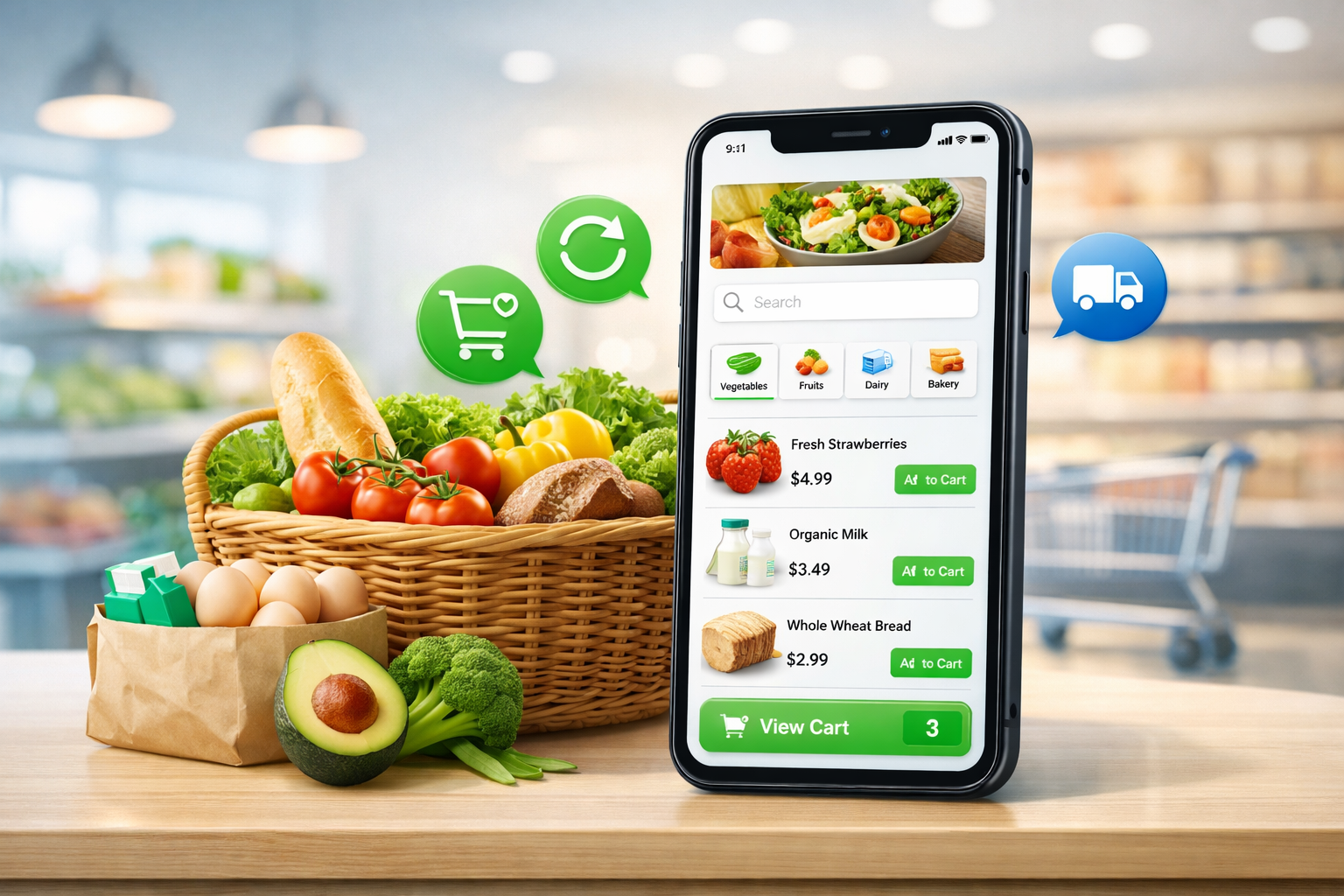
Learn how grocery stores can increase repeat orders and customer retention with a mobile app that makes reordering faster and keeps customers coming back.
Inside this article
- Short answer
- The real problem: grocery demand is frequent, but customer memory is weak
- Why mobile web is not enough
- Why mobile apps fit grocery behavior so well
- How apps increase repeat orders
- Practical examples for grocery businesses
- Website vs mobile app: the practical difference
- What launch-minded grocery brands should focus on
- What decision-makers should watch closely
- FAQ
- Final takeaway
Short answer
A mobile app helps grocery stores increase repeat orders and customer retention by making weekly shopping easier to repeat.
Customers can open the store from their home screen, reorder familiar items faster, and receive timely reminders that bring them back before they drift to another option.
For grocery brands, that matters because growth usually comes from habit, not one-time orders.
The real problem: grocery demand is frequent, but customer memory is weak
Most grocery businesses already have a website, online catalog, or delivery flow.
The problem is not always demand. It is repeat behavior.
A common pattern looks like this:
- a customer places one order
- the experience is acceptable but not memorable
- next week they search again
- they compare prices, tabs, or marketplace apps
- they order somewhere else
That creates a costly loop. The business keeps spending money to win back customers it already had.
In grocery, convenience often decides the second order more than brand preference does.
Why mobile web is not enough
A mobile-friendly website is still important. It helps customers find the store, browse products, and complete a purchase.
But it rarely builds a routine.
The store disappears when the browser closes
A website has no lasting presence on the customer’s phone.
Once the tab is gone, your brand is out of sight.
Reordering usually takes too many steps
Even a good mobile site may still require customers to:
- open a browser
- search for the store again
- log in
- rebuild part of the basket
- move through checkout from scratch
That friction is enough to reduce repeat orders.
Email and SMS are not always enough
Email often gets ignored. SMS can feel intrusive if overused.
For grocery stores, a faster and lighter re-engagement channel usually works better.
Why mobile apps fit grocery behavior so well
Grocery ordering is repetitive by nature.
Many customers buy the same categories every week:
- water and beverages
- dairy and eggs
- bread and bakery items
- snacks
- household essentials
- fruits and vegetables
That makes grocery one of the strongest cases for a mobile app.
An app does not need to teach a new behavior. It supports a behavior that already exists.
How apps increase repeat orders
One-tap access reduces drop-off
When the store lives on the home screen, the customer does not need to search, remember a URL, or reopen old tabs.
They tap once and continue shopping.
That sounds simple, but simple wins on mobile.
Reordering becomes much faster
The biggest advantage in grocery is not only first-time conversion. It is repeat conversion.
An app can make that easier with flows like:
- reorder last basket
- buy again from recent orders
- save favorites
- surface usual products first
This turns a slow shopping task into a short routine.
Push notifications bring the customer back at the right moment
Push notifications are especially useful in grocery because the buying cycle is frequent.
Examples include:
- "Your weekly essentials are ready to reorder"
- "Fresh bakery items are available today"
- "Your favorite products are back in stock"
- "Complete your order before tonight’s delivery window closes"
These messages are not just promotions. They help restart the shopping loop.
The app keeps the brand top of mind
In a crowded market, customers do not always choose the cheapest store. They often choose the easiest one to return to.
Home-screen visibility gives your store a real advantage there.
Practical examples for grocery businesses
Weekly family shopping
A family usually places a similar order every weekend.
With an app, they can:
- open the store instantly
- reorder the previous basket
- adjust a few items
- check out in under a minute
Without an app, they may start browsing again and get distracted.
Fresh inventory and seasonal demand
If your store receives fresh produce, bakery items, or limited seasonal products, timing matters.
An app helps you send a direct update when inventory is most relevant.
That creates faster action than waiting for customers to visit the website again on their own.
Local convenience and neighborhood stores
For local grocery and convenience brands, repeat frequency is often more valuable than average order size alone.
A mobile app helps build that local routine by making your store the easiest nearby option to reopen.
Website vs mobile app: the practical difference
| Factor | Mobile Website | Mobile App |
|---|---|---|
| Access speed | Requires browser visit | One tap from home screen |
| Reordering | More manual | Faster and easier |
| Customer recall | Easy to forget | Constant visibility |
| Re-engagement | Mostly email or SMS | Push notifications |
| Checkout experience | Good, but less sticky | Better for repeat use |
| Loyalty building | Limited | Stronger |
| Habit formation | Weak | Much stronger |
A website helps you get the order.
An app helps you get the next order.
What launch-minded grocery brands should focus on
Many businesses assume an app means rebuilding everything from zero.
That is usually the wrong starting point.
If the website, catalog, and checkout already work, the better question is:
How can we turn this into a faster repeat-order experience on mobile?
Keep the journey simple
The app should focus on the things that matter most:
- fast opening
- clean browsing
- simple reordering
- reliable checkout
- relevant notifications
Do not overload the experience
More features do not always mean more conversions.
In grocery, convenience beats complexity.
Give customers a clear reason to keep the app
Good reasons include:
- faster repeat shopping
- easier access to past orders
- app-only offers
- better delivery reminders
- stock and availability updates
If the value is clear, downloads make more sense.
What decision-makers should watch closely
If you run a grocery business, the real value of an app is not only downloads.
Watch for signals like:
- repeat order rate
- time between orders
- reorder completion speed
- retention after the first purchase
- direct channel growth over time
These are the numbers that show whether the app is becoming part of customer habit.
FAQ
Do grocery customers really download store apps?
Yes, especially when they already order more than once. Grocery is a repeat-use category, so convenience has a strong effect.
Is this only useful for large supermarket chains?
No. Smaller grocery stores and local food retailers can benefit a lot because repeat local demand is one of their biggest strengths.
Will an app replace the website?
No. The website still matters for discovery, search traffic, and first visits. The app improves retention and repeat purchasing.
Do we need a custom app from scratch?
Not always. If your website and ordering flow already work, a web-to-app approach can be much faster and more practical.
What is the biggest advantage of a grocery app?
It helps turn occasional buyers into repeat customers by making your store easier to return to every week.
Final takeaway
Grocery growth is not only about attracting more traffic.
It is about making the next order feel easy.
A mobile app helps grocery stores increase repeat orders, improve customer retention, and build a stronger direct relationship with shoppers who already prefer convenience over effort.
If your grocery business already has a website, the next step may be simpler than you think.
Webvify helps brands turn existing websites into mobile apps that are easier to reopen, easier to reorder from, and easier to grow with. Learn more at https://webvify.app