

The Future of Mobile Commerce: Why 2026 is the Year of WebView Apps
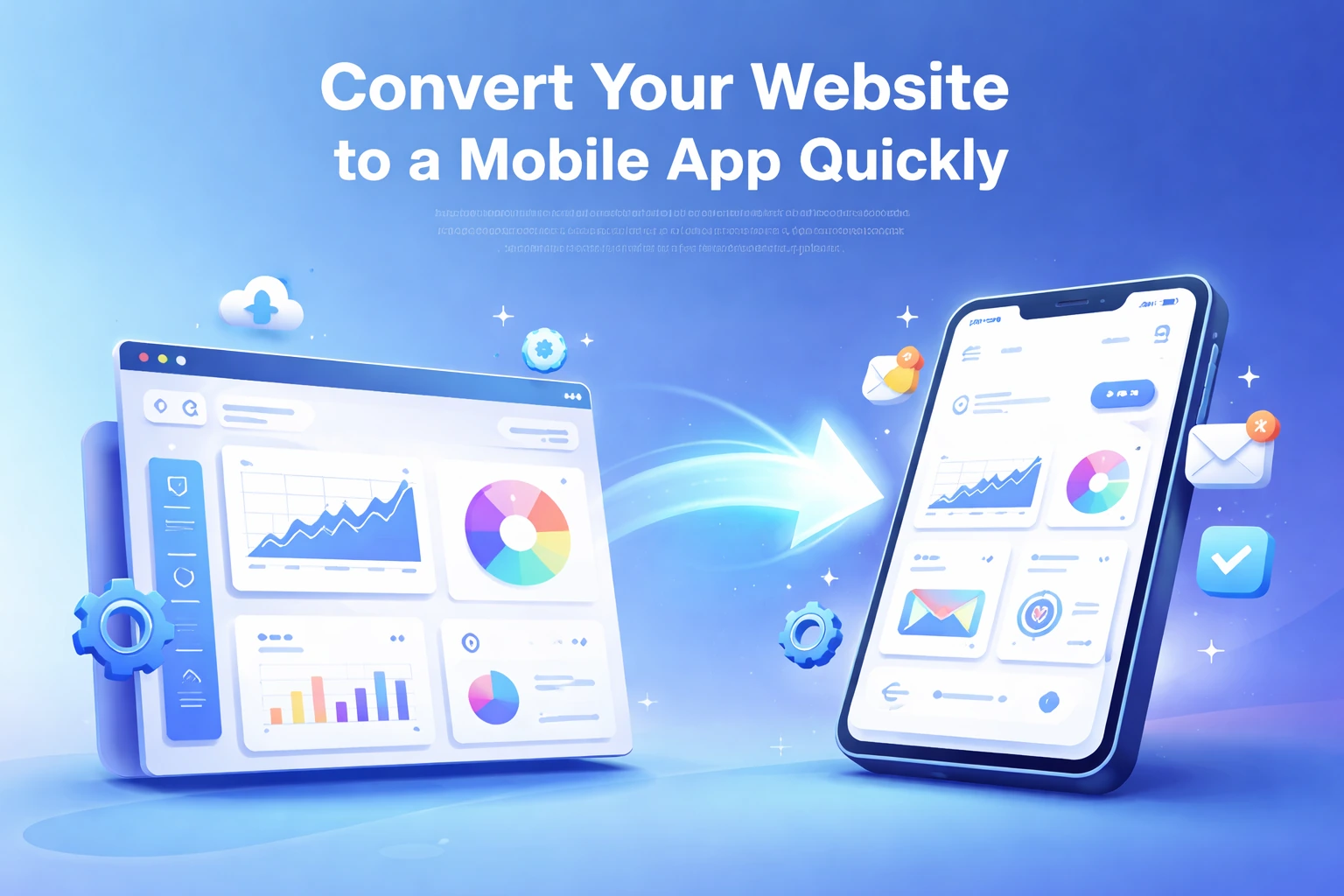
Discover why WebView apps are reshaping mobile commerce in 2026 with faster launches, lower costs, and stronger retention for ecommerce brands.
Inside this article
- The Shift from Mobile-First to App-First Commerce
- What Is Driving the Rise of WebView Apps?
- Performance: The Old Myth vs. 2026 Reality
- Retention: The Real Game Changer
- The Economics of WebView vs Native
- Who Should Adopt WebView Apps in 2026?
- Common Mistakes to Avoid
- The Competitive Advantage Window
- Why 2026 Is the Tipping Point
- Final Thoughts
- Start Building Smarter
The Shift from Mobile-First to App-First Commerce
For years, “mobile-first” was the standard. In 2026, that mindset is outdated.
Today’s winning ecommerce brands are app-first.
Why? Because user behavior has changed:
- Users spend significantly more time in apps than browsers
- Conversion rates are higher in apps
- Retention is dramatically stronger with direct engagement channels
But native app development is still expensive, slow, and resource-heavy.
This is where WebView apps take over.
They bridge the gap between web flexibility and app performance—without the traditional cost.
What Is Driving the Rise of WebView Apps?
1) Speed to Market Wins
Traditional native development cycles can take months.
WebView apps:
- Launch in days, not months
- Reuse your existing website
- Require minimal engineering overhead
For ecommerce, speed is revenue. The faster you ship, the faster you validate and scale.
2) Cost-Efficiency at Scale
Building separate iOS and Android apps is expensive:
- Development teams
- Ongoing maintenance
- Feature parity challenges
WebView apps eliminate most of this complexity:
- Single codebase (your website)
- Lower development cost
- Easier updates without resubmission cycles
For startups and growing brands, this is a massive competitive advantage.
3) Instant Iteration and Flexibility
In ecommerce, iteration speed matters more than perfection.
With WebView apps:
- Update UI/UX directly from your website
- Run experiments without app store delays
- Deploy fixes instantly
This creates a continuous optimization loop, essential for growth.
Performance: The Old Myth vs. 2026 Reality
WebView apps used to have a bad reputation:
- Slow loading
- Poor UX
- Limited native capabilities
That’s no longer true.
Modern WebView stacks offer:
- Near-native performance
- Hardware acceleration
- Optimized caching
- Smooth navigation patterns
Combined with a well-optimized website, the experience is indistinguishable from native apps for most users.
Retention: The Real Game Changer
Retention is where WebView apps dominate.
Push Notifications
Unlike websites, apps allow direct user communication:
- Abandoned cart reminders
- Flash sale alerts
- Personalized offers
Push notifications alone can increase retention and revenue significantly.
Home Screen Presence
Being on a user’s home screen:
- Increases brand recall
- Reduces friction to return
- Drives habitual usage
Faster Checkout = Higher Conversion
WebView apps enable:
- Persistent sessions
- Saved user data
- Reduced login friction
The result: higher conversion rates.
The Economics of WebView vs Native
Development Comparison
| Factor | Native Apps | WebView Apps |
|---|---|---|
| Development Time | 3–6 months | Days to weeks |
| Cost | High | Low |
| Maintenance | Complex | Simple |
| Updates | App store review | Instant via web |
| Team Requirements | Large | Minimal |
The conclusion is simple: WebView apps deliver 80–90% of the value at a fraction of the cost.
Who Should Adopt WebView Apps in 2026?
WebView apps are ideal for:
- Shopify and WooCommerce stores
- DTC brands scaling fast
- Startups validating mobile strategy
- Businesses prioritizing speed and ROI
If your business already has a functional website, you’re already halfway there.
Common Mistakes to Avoid
Treating It Like Just a Wrapper
A successful WebView app requires:
- Proper navigation patterns
- Loading optimization
- Native feature integration (push, deep links)
Ignoring UX Optimization
Bad UX kills retention.
Focus on:
- Fast load times
- Clean mobile UI
- Seamless transitions
Skipping Push Strategy
Push notifications are not optional—they’re core to ROI.
The Competitive Advantage Window
Right now, most ecommerce brands are still:
- Over-investing in native too early
- Underutilizing WebView potential
This creates a window.
Brands that move now:
- Launch faster
- Iterate quicker
- Capture mobile users earlier
By the time competitors catch up, you already have user data, retention loops, and revenue streams.
Why 2026 Is the Tipping Point
Three forces are converging:
- User behavior is app-dominant
- Technology has matured
- Cost pressure is increasing
WebView apps sit at the intersection of all three.
This isn’t a workaround anymore. It’s a strategy.
Final Thoughts
Mobile commerce is no longer about choosing between web and app.
It’s about executing both—efficiently.
WebView apps give you:
- Speed
- Cost advantage
- Strong retention channels
And in 2026, that combination is hard to beat.
Start Building Smarter
If you want to launch your ecommerce app without wasting months or budget on native development, Webvify gives you everything you need.
Turn your website into a high-performing mobile app—fast.