

How a Mobile App Helps Fitness Studios Increase Class Bookings and Member Retention
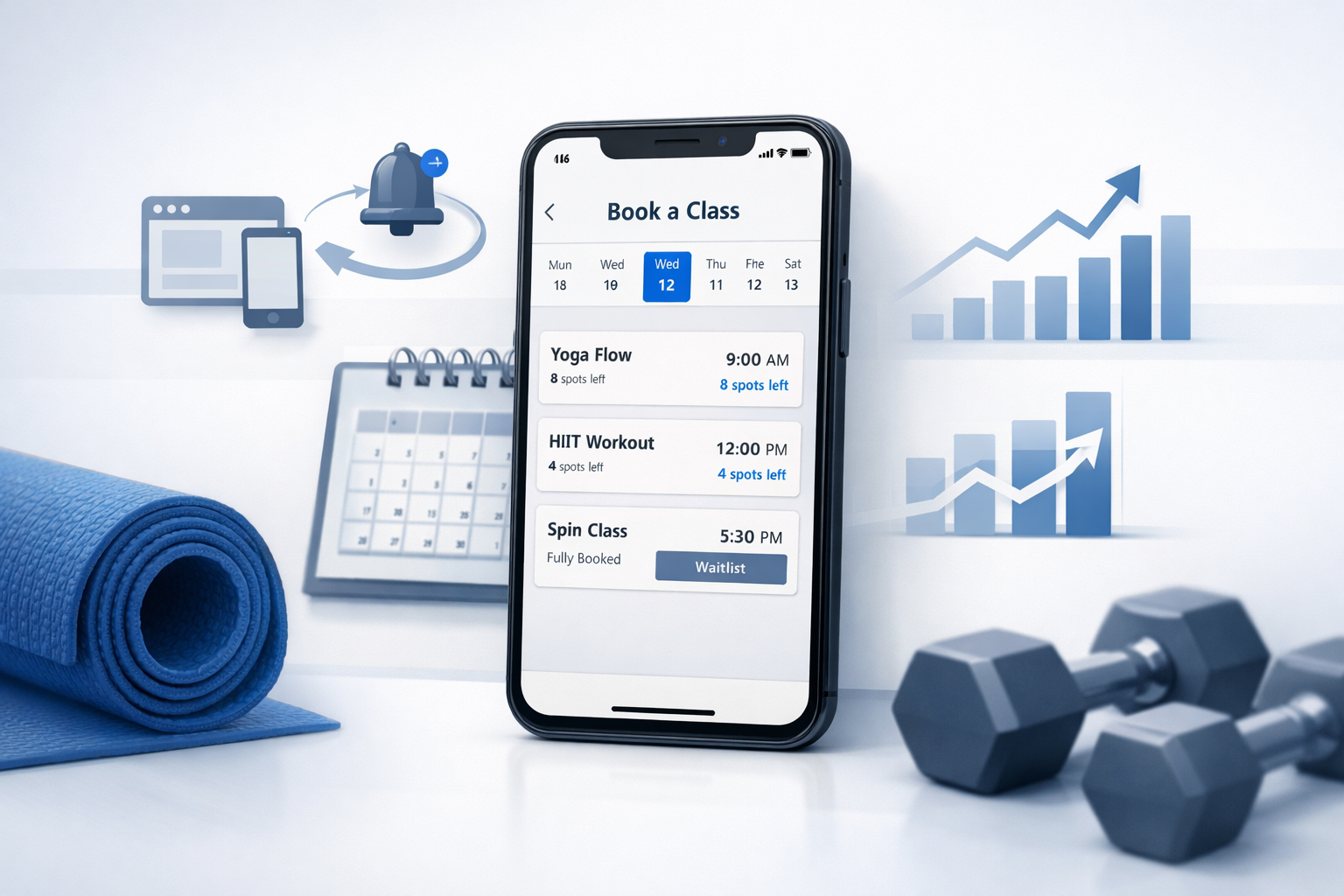
Learn how fitness studios can increase class bookings, improve retention, and reduce booking friction by turning their website into a mobile app.
Inside this article
- The short answer
- Who this is for
- Why fitness studios lose bookings on mobile web
- What a mobile app changes for a fitness business
- The business benefits are bigger than they look
- Mobile website vs mobile app for fitness studios
- Where apps help the most in the member journey
- Why speed of launch matters
- What to look for in a launch partner
- A practical checklist before you decide
- FAQ
- Final takeaway
The short answer
If you run a gym, yoga studio, pilates studio, or boutique fitness brand, a mobile app can help you fill more classes and keep more members coming back.
Why? Because most fitness businesses do not lose bookings because people are not interested.
They lose bookings because the mobile journey is too easy to ignore.
A person sees your studio on Instagram, opens your booking page, gets distracted, and says, “I’ll do it later.” Later often never comes.
A mobile app changes that pattern. It puts your brand on the home screen, makes booking faster, and gives you a direct way to bring members back with reminders and updates.
Who this is for
This article is especially relevant if:
- you run a fitness studio, gym, yoga brand, pilates business, or personal training business
- most of your traffic comes from mobile users
- you currently rely on Instagram, WhatsApp, or a mobile website for bookings
- you want more repeat bookings without depending only on paid ads
- you want a simpler way to keep members engaged between visits
If that sounds familiar, the real problem may not be lead generation.
It may be mobile friction.
Why fitness studios lose bookings on mobile web
A mobile website is useful for discovery.
But discovery and conversion are not the same thing.
For many fitness businesses, the website helps people learn about classes, trainers, and pricing. The problem starts when the customer tries to take action.
Too many steps between interest and booking
A very common journey looks like this:
- someone sees your brand on social media
- they tap the link in bio
- they wait for the page to load
- they open the schedule
- they choose a class
- they enter details or log in
- they finally complete the booking
That may not seem extreme.
But on a phone, every extra step reduces completion rate.
A website does not create routine
People build habits around things they see often and open quickly.
That is why home screen presence matters.
A website lives inside the browser. An app lives in the customer’s daily environment.
That difference has a direct effect on repeat attendance.
Your follow-up options stay limited
When you rely only on a website, your re-engagement tools are weaker.
Usually that means:
- email reminders that get missed
- manual WhatsApp messages that take time
- social media posts that only reach part of your audience
An app gives you a more direct path.
What a mobile app changes for a fitness business
A mobile app is not just a branding upgrade.
It changes how easily members can act.
Booking becomes faster
Instead of reopening a browser and searching again, the member taps your app and sees the class schedule immediately.
That speed matters most for:
- last-minute class bookings
- repeat weekly sessions
- returning members who already know what they want
Repeat behavior feels natural
Strong retention usually comes from simple routines.
An app supports a loop like this:
- open app
- check classes
- book in seconds
- return next week
That is much easier to repeat than “search for the studio again, open the site again, and log in again.”
Reminders drive action at the right time
Push notifications can help with practical moments such as:
- “Your 7 PM class starts in 2 hours”
- “Only 4 spots left in Saturday pilates”
- “New beginner yoga class is now open for booking”
Used well, these are not annoying.
They are useful nudges that recover demand you already have.
The business benefits are bigger than they look
Fitness brands often focus only on download numbers.
That is the wrong metric to start with.
The more useful questions are:
- Does booking get easier?
- Do more members come back?
- Do empty spots get filled faster?
- Does the brand feel more professional and easier to trust?
In many cases, the answer is yes.
More filled classes
When members can book in one or two taps, drop-off falls. That alone can improve class occupancy.
Better retention
People are more likely to come back when your brand stays visible and the next step feels easy.
Stronger brand trust
A real app often makes a studio feel more established, more organized, and more serious about customer experience.
That matters in a competitive market where many studios offer similar classes.
Less dependence on social algorithms
If your only communication channel is Instagram, your customer relationship is fragile.
An app gives you a direct channel that you control.
Mobile website vs mobile app for fitness studios
| Area | Mobile Website | Mobile App |
|---|---|---|
| Booking speed | More steps | Faster, usually 1–2 taps |
| Repeat visits | Easy to forget | Stronger because the app stays visible |
| Class reminders | Mostly email or manual messages | Direct push notifications |
| Brand presence | Passive | Active on the home screen |
| Member re-engagement | Limited | Easier and more timely |
| Perceived trust | Standard | More premium and established |
This is why many studio owners feel they have enough demand, but still struggle with consistency.
The issue is often not awareness.
It is the gap between interest and action.
Where apps help the most in the member journey
Not every stage matters equally.
For fitness studios, the biggest gains usually happen in these moments.
1. First booking
When a prospect decides to try your class, speed matters.
If the path feels slow, they delay it. If they delay it, they may never book.
2. Second booking
This is where retention starts.
A second booking is often the difference between a one-time visitor and a real member relationship.
3. Weekly rebooking
For yoga, pilates, HIIT, spin, and similar businesses, success comes from routine attendance.
An app supports that routine better than a mobile browser does.
4. Empty-slot recovery
If a class still has open spots, push notifications can help you recover revenue quickly.
Why speed of launch matters
A lot of founders delay the app idea because they assume it means a long and expensive custom build.
That assumption stops many good projects before they start.
In reality, many fitness brands already have the main asset they need: a working website or booking flow.
That creates a simpler path.
Instead of rebuilding everything from scratch, you can often turn your existing website into a mobile app and launch much faster.
That matters because the cost of waiting is real:
- lost repeat bookings
- weaker retention
- more empty class slots
- more dependence on paid acquisition
What to look for in a launch partner
If you decide to move forward, do not choose based only on design promises.
Look for a partner that can help you launch quickly and keep the experience practical.
A good solution should offer
- fast launch without unnecessary rebuilding
- support for your current booking flow
- push notification capability
- App Store and Google Play publishing support
- an experience that feels clean and mobile-friendly
Be careful with solutions that
- want to rebuild your entire business from zero
- create long timelines for simple needs
- add technical complexity without clear business value
For many studios, the smart move is not the most complicated one.
It is the one that gets results sooner.
A practical checklist before you decide
Open your current booking flow on your phone and ask these questions:
- How many taps does it take to book a class?
- How fast can a returning member book again?
- How do you remind members today?
- How do you fill empty spots in the next few hours?
- Are you depending too much on Instagram or WhatsApp?
If the answers feel messy, your mobile experience is probably costing you bookings.
FAQ
Do fitness studios really need a mobile app if they already have a website?
If most members discover and book on mobile, an app can make a real difference. It improves convenience, repeat behavior, and direct communication.
Will members actually download the app?
If the app makes booking easier, reminders more useful, and access faster, many will. Convenience is a strong reason to install.
Does this only work for large gym chains?
No. Boutique fitness brands often benefit more because every repeat booking matters and member relationships are more personal.
Do I need to rebuild my booking system?
Not always. In many cases, the best route is to keep your current web flow and turn it into a better mobile app experience.
What is the fastest way to launch?
Usually, the fastest route is to convert your existing website into an app instead of starting from zero.
Final takeaway
If your studio depends on repeat attendance, then booking convenience is not a small detail.
It is a growth lever.
A mobile app can help you increase class bookings, improve retention, stay visible on the home screen, and communicate with members at the right moment.
If you already have a website and want a faster path to launch, Webvify helps businesses turn their existing web experience into a mobile app without unnecessary complexity.
See how it works at https://webvify.app