

Enterprise Mobile App Development in 2026: Build vs Buy vs Convert
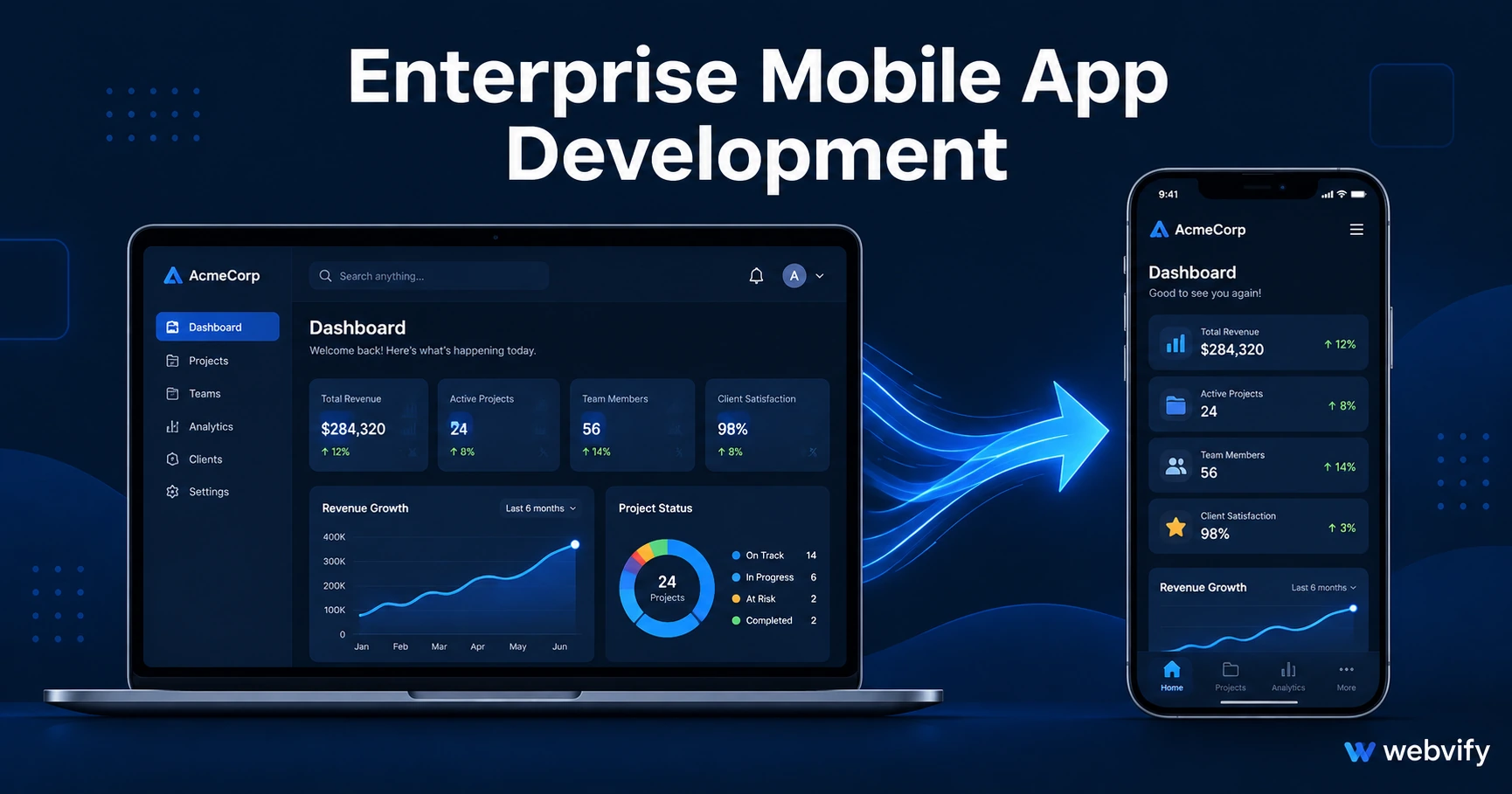
Enterprise mobile app development in 2026 costs $150K–$500K from scratch. Here's the build vs buy vs convert breakdown — and how to cut 90% of the cost.
Inside this article
The average custom enterprise mobile app costs between $150,000 and $500,000 to build — and takes 12 to 18 months before it ships. Most businesses that request a quote never follow through. The cost is real, but so is the pressure to have a mobile presence.
The question in 2026 isn't whether your business needs a mobile app. It's which development path makes sense for what you already have.
What Is Enterprise Mobile App Development?
Enterprise mobile app development means building or deploying a mobile application for a business with existing infrastructure, multiple teams, or a significant web presence. It covers customer-facing apps — portals, loyalty programs, ordering, content — as well as employee tools like field service apps, onboarding, and internal communication.
The complexity varies dramatically depending on your use case. So does the cost.
Build vs Buy vs Convert: The Three Paths in 2026
Build from scratch means hiring mobile developers to write native iOS and Android apps using Swift, Kotlin, or a cross-platform framework like React Native or Flutter. This delivers maximum control but maximum cost, timeline, and maintenance burden.
Buy a platform means licensing a no-code or enterprise app builder — Microsoft Power Apps, OutSystems, or a simpler no-code app builder — and configuring it to your needs. You get a framework, but you still manage setup, App Store submission, and ongoing maintenance.
Convert your existing website means packaging your current web presence as a native app using a WebView wrapper. If your website already works, your app can be ready in days — not months — and it updates automatically whenever your site changes.
Most enterprise decisions default to "build." In 2026, for most businesses, it's rarely the right call.
Enterprise Mobile App Development Cost in 2026
Here is what each path typically costs for a business with an existing website:
Build from scratch:
- Development: $150,000–$500,000+
- Timeline: 12–18 months to first launch
- Ongoing maintenance: $50,000–$100,000/year
- Requires dedicated mobile developers, QA, and DevOps support
No-code or low-code platform:
- Platform license: $200–$2,000/month depending on users and features
- Setup time: 4–8 weeks
- App Store submission: often a separate fee, or left entirely to you
- Risk: platform lock-in if the vendor changes pricing or shuts down
Convert your existing website:
- Additional development cost: none — your website is already built
- Service cost: a fraction of custom development
- Timeline: days to a week, not months
- Maintenance: managed for you if using a done-for-you service
For businesses with an established web presence, the conversion path cuts enterprise mobile app costs by 80–90%. The app inherits your existing content and security model, and updates automatically when your site changes. See how the full mobile app development cost breaks down →
When Building From Scratch Is the Right Choice
Custom native development is the right call in specific situations:
- Your app is the product itself, not just a channel for it
- You need deep hardware integration: real-time sensors, biometric auth, complex offline-first sync, or AR/camera features
- Your use case genuinely doesn't map to a web experience
Field service apps that work without internet, warehouse scanning tools integrated with ERP systems, or healthcare apps with strict offline encryption — these need native development. For everything else, a native build is expensive overengineering.
When a WebView Conversion Is the Right Enterprise Choice
If your enterprise mobile app meets any of these criteria, a WebView conversion delivers equally strong results at a fraction of the cost:
- The app is customer-facing: ordering, booking, content, loyalty, account management
- Your website is already mobile-responsive
- You need push notifications to reach customers on their lock screen
- You want App Store and Google Play presence for organic discovery
- You need the project live in weeks, not quarters
WebView apps pass Apple and Google review every day. The compliance requirements — Apple's Guideline 4.2 Minimum Functionality, Google Play's Data Safety form, and in-app purchase rules for digital goods — are the real barriers, not the technology approach. A managed service handles these compliance steps so your team doesn't have to learn them.
Services like Webvify handle the full conversion end-to-end: building the WebView app, configuring push notifications, submitting to the App Store and Google Play under your own developer accounts, and providing an admin panel for ongoing management after launch. See the full comparison of no-code vs custom development →
What to Look for in an Enterprise Mobile App Solution
Whether you build, buy, or convert, four criteria decide the outcome:
Ownership. Is the app published under your own Apple and Google developer accounts? If a vendor publishes under their own accounts, your app can disappear the moment you stop paying.
Post-launch control. Can your team push content updates and send push notifications without going back to the vendor for every change? An admin panel is essential.
Submission ownership. App Store review requires detailed knowledge of Apple's developer guidelines. A managed service that handles submission removes the biggest source of delay and rejection.
Update cycle. For a website conversion, your app should update automatically when your site does. Requiring a new App Store submission for every content change eliminates most of the efficiency gain.
FAQ
How long does enterprise mobile app development take in 2026?
Custom native development takes 12–18 months. No-code platform setup takes 4–8 weeks. A WebView conversion of an existing website typically goes live within days to a week — faster when a managed service handles App Store submission for you. The right timeline depends on how much of your product already exists on the web.
What is the most cost-effective path to an enterprise mobile app?
If your business already has a mobile-responsive website, converting it to a native app is the most cost-effective route. A done-for-you WebView conversion delivers App Store presence, push notifications, and a native app experience at a fraction of custom development cost. The savings compound: there is no separate mobile codebase to maintain, and content updates to the website automatically reflect in the app.
Do enterprise apps need to be built natively?
Not necessarily. Thousands of enterprise and consumer apps on the App Store and Google Play are WebView apps. The key is that the underlying web experience is polished and mobile-responsive, and that the app meets Apple and Google's compliance guidelines. Native development is required only when the use case demands deep hardware integration or offline-first architecture that a web experience cannot support.
Ready to skip the 12-month build cycle? Webvify converts your existing website into a fully branded mobile app and handles App Store and Google Play submission end-to-end. Get started at webvify.app →