

How Mobile Apps Reduce Customer Support Load for E-commerce Brands in 2026
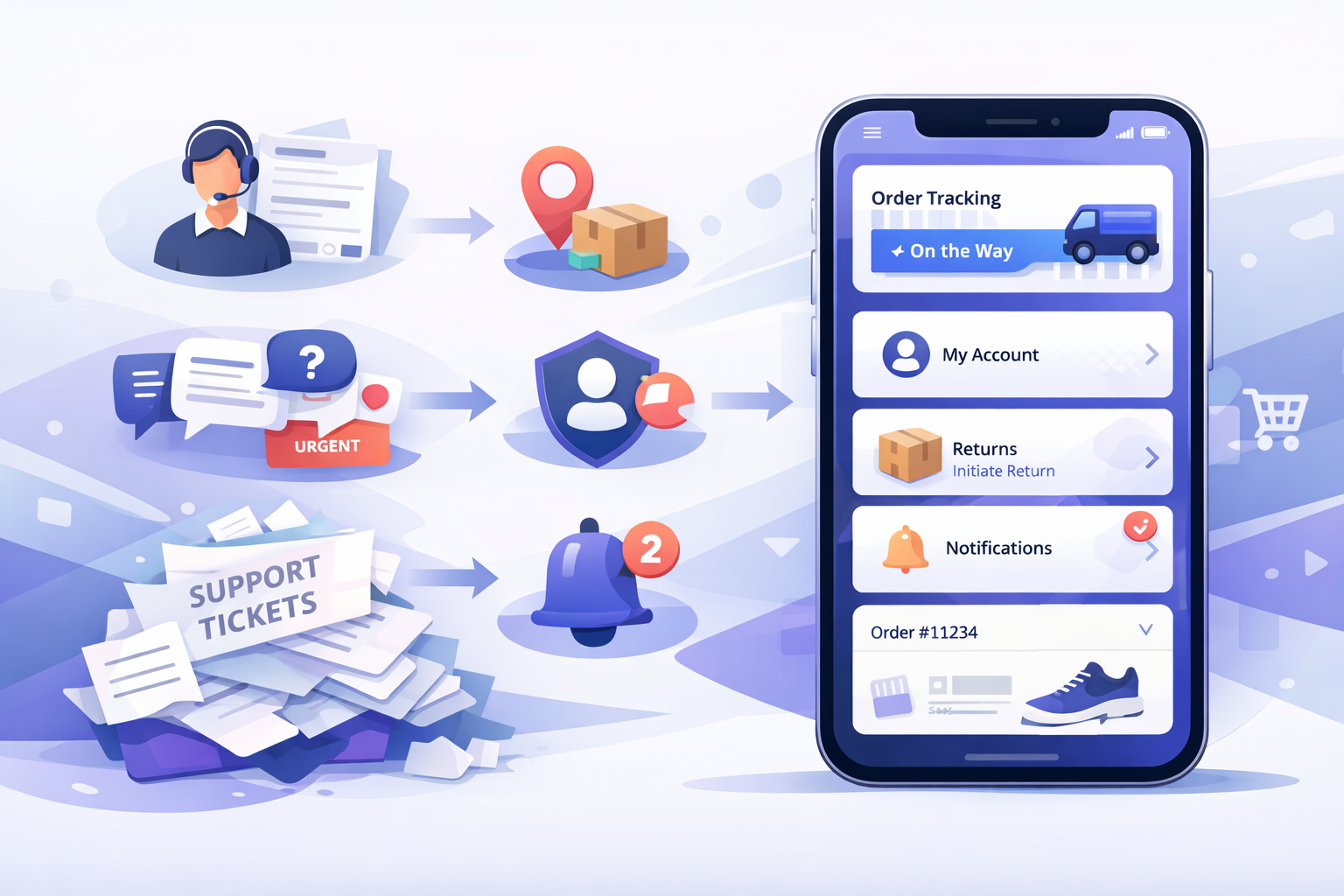
See how a mobile app helps e-commerce brands cut support tickets, simplify order issues, and create a smoother customer experience in 2026.
Inside this article
- Why support teams get overloaded in e-commerce
- The real cost of too many support tickets
- Why websites often create repeat support friction
- Why a mobile app reduces support pressure
- The benefit is not just fewer tickets
- Which e-commerce brands benefit most from this
- A simple way to think about the ROI
- Why this matters even more in 2026
- Final takeaway
- Need a simpler mobile experience for your customers?
Why support teams get overloaded in e-commerce
A lot of e-commerce brands think support volume grows only because sales grow. That is only partly true.
In many cases, support tickets increase because customers cannot solve basic problems on their own. They cannot quickly find their order status. They cannot start a return easily. They cannot check delivery updates without opening emails, logging in again, or visiting multiple pages.
That friction creates avoidable support work.
When customers do not get answers fast enough, they open a live chat, send an email, or call support. The result is a growing queue filled with issues that should have been self-service.
The real cost of too many support tickets
High support volume is not just an operations problem.
It affects margin, team speed, and customer trust.
Here is what usually happens when support load becomes too heavy:
- response times get slower
- customer satisfaction drops
- repeat purchases become less likely
- support teams spend less time on real edge cases
- management starts solving a UX problem with extra headcount
That last point matters.
Many brands hire more support staff before fixing the experience that created the tickets in the first place.
Why websites often create repeat support friction
Most e-commerce websites are built to sell, not to reduce post-purchase confusion.
A customer places an order, then the support cycle begins:
- Where is my order?
- Can I change my address?
- How do I start a return?
- Did my refund go through?
- Is this item back in stock?
On a website, these answers are often spread across several places:
- account pages
- emails
- FAQ pages
- chat widgets
- shipping links
- return portals
Even if all of these tools exist, the experience can still feel fragmented.
Customers do not think in systems. They think in outcomes.
They want one simple place that helps them act quickly.
Why a mobile app reduces support pressure
A mobile app gives customers a faster and more direct way to solve common issues.
Instead of hunting for answers, they open the app and get what they need.
That changes support behavior in a practical way.
1. Order tracking becomes easier
Customers check order status more often than brands realize.
When tracking is buried inside emails or external courier links, customers ask support for updates. In an app, tracking can be available in one tap.
That removes a large category of repetitive support tickets.
2. Returns feel less confusing
Returns are one of the biggest support drivers in e-commerce.
An app can make return requests easier to start, easier to follow, and easier to understand. If customers can clearly see:
- return eligibility
- return steps
- refund status
- replacement progress
then they are much less likely to contact support just to ask what happens next.
3. Notifications reduce inbound questions
Push notifications can remove the need for many support interactions before they even happen.
Examples:
- order shipped
- out for delivery
- return approved
- refund issued
- item back in stock
Instead of waiting and wondering, the customer gets updates proactively.
That lowers anxiety and lowers ticket volume.
4. Login and account access are simpler
A lot of support requests start with account friction.
People forget passwords. They cannot find the right email. They abandon the login process. Then they contact support.
Apps reduce that friction with more persistent access, saved sessions, and smoother account flows.
5. Repeat actions become self-service
Support teams often spend time helping customers do things they should be able to do themselves.
Examples:
- reordering a past purchase
- checking saved addresses
- updating profile details
- viewing loyalty status
- managing subscriptions
An app makes these repeat actions faster, which reduces dependency on support.
The benefit is not just fewer tickets
Reducing support load is valuable by itself, but the bigger advantage is what happens next.
When support friction drops:
- customers trust the brand more
- post-purchase experience feels smoother
- repeat purchase behavior improves
- operations become easier to scale
- support teams can focus on higher-value cases
In other words, the same app that reduces support costs can also improve retention.
That is where the business case becomes much stronger.
Which e-commerce brands benefit most from this
Almost any e-commerce business can benefit, but the gains are usually bigger for brands with:
- repeat purchase behavior
- active return/refund volume
- shipping complexity
- loyalty programs
- subscription flows
- large SKU catalogs
- support teams dealing with repetitive account and order questions
This is especially relevant for:
- DTC brands
- subscription commerce brands
- beauty and skincare stores
- fashion retailers
- electronics stores
- pet brands
- grocery and pharmacy businesses
If customer activity continues after checkout, an app can reduce support pressure in a meaningful way.
A simple way to think about the ROI
If a support team handles thousands of repeated questions every month, the problem is usually not only staffing.
It is access.
When customers can solve routine issues faster inside an app, brands often gain value in three places at once:
| Area | Result |
|---|---|
| Support operations | fewer repetitive tickets |
| Customer experience | faster answers and less frustration |
| Revenue | stronger retention and repeat purchases |
That is why this is not just a support optimization project.
It is a customer experience and growth project.
Why this matters even more in 2026
Customer expectations keep rising.
People expect brands to be easy to reach, easy to buy from, and easy to deal with after checkout. If support becomes the only bridge between the customer and basic account actions, the experience feels slower than it should.
Brands that make self-service easier will have an advantage.
And in many cases, the easiest way to do that is not adding more widgets to a website. It is giving customers a better mobile product.
Final takeaway
If your support team is overwhelmed, the problem may not be your team at all.
It may be that your customers still have to work too hard to manage simple tasks.
A mobile app can reduce support tickets by making common actions faster, clearer, and more self-service.
That lowers operational pressure and improves the experience at the same time.
Need a simpler mobile experience for your customers?
If you already have an e-commerce website, Webvify can help turn it into a mobile app that improves customer experience, reduces friction, and supports repeat growth.
Learn more at https://webvify.app