

Why Distributor Portals Work Better as Mobile Apps in 2026
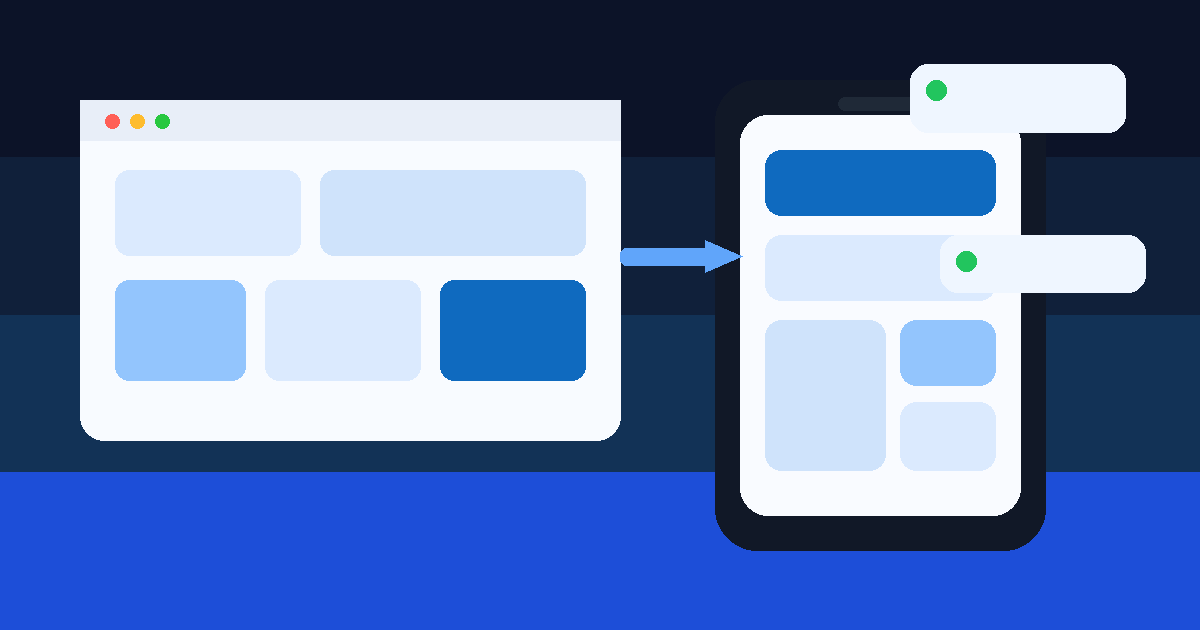
See why manufacturers and suppliers are turning distributor portals into mobile apps to improve ordering speed, communication, and partner retention.
Inside this article
- The short answer
- Why browser-based distributor portals create avoidable friction
- What improves when the distributor portal becomes a mobile app
- Mobile app vs browser portal for distributors
- Which businesses benefit most
- This is not just a convenience feature
- Do you need to rebuild everything from scratch?
- What to improve before launch
- Questions B2B teams often ask
- The practical takeaway
- CTA
The short answer
Distributor portals work better as mobile apps in 2026 because partners expect faster access, easier ordering, and a simpler way to stay connected while they are on the move.
For many manufacturers, wholesalers, and suppliers, the distributor portal is not just a support tool.
It is a revenue tool.
That portal often controls important actions such as:
- placing repeat orders
- checking stock
- reviewing prices
- downloading product documents
- tracking shipments
- seeing promotions
- managing account updates
- contacting the supplier team
When those tasks stay locked inside a browser workflow, friction grows.
And in B2B, friction usually turns into slower orders, weaker engagement, and lower partner loyalty.
Why browser-based distributor portals create avoidable friction
Most distributor portals already work on desktop.
Some are also technically usable on mobile.
But usable is not the same as convenient.
That difference matters in real day-to-day partner behavior.
Distributors are rarely sitting at one desk all day
A lot of distributor activity happens while people are:
- visiting customers
- moving between branches
- working in showrooms
- checking warehouse details
- reviewing inventory on the floor
- making quick ordering decisions
In those moments, opening a browser, logging in again, and navigating a desktop-shaped portal often feels slower than it should.
Small delays reduce usage more than many teams expect.
Repeat orders should feel easy, not heavy
In many B2B businesses, growth depends on repeat ordering behavior.
If your distributors need to reorder often, speed matters.
The easier it is to check products, confirm quantities, and place the next order, the more likely that order happens quickly.
If the process feels clumsy on mobile, reorders get delayed.
Communication gets lost in email chains
Many supplier-distributor relationships still depend too heavily on email.
That creates problems when partners need fast answers about:
- pricing
- stock changes
- promotions
- shipment status
- account issues
- new product launches
Email still has a role.
But it should not carry the entire relationship.
What improves when the distributor portal becomes a mobile app
A mobile app can turn the portal from something partners “use when necessary” into something they can access quickly throughout the working day.
Faster access to the portal
This is one of the simplest improvements, but it matters a lot.
With a mobile app, partners get:
- home screen access
- easier repeat login habits
- faster return visits
- better visibility for your brand
That alone can increase portal usage frequency.
Better reorder flow
Mobile apps are especially strong when the goal is to help users complete repeated actions with less friction.
For distributor portals, that can mean:
- quicker product lookup
- smoother reorder flows
- easier cart review
- better visibility into past purchases
- faster confirmation of new orders
These improvements directly support revenue.
Stronger partner communication
Push notifications can help suppliers communicate more effectively when something matters.
Examples include:
- order status changes
- stock updates
- new pricing
- limited-time promotions
- back-in-stock products
- account reminders
- new product availability
These are not generic marketing messages.
They are commercial workflow messages.
When used well, they reduce delays and improve action speed.
More consistent partner engagement
A portal hidden behind browser habits is easy to forget.
An app on the home screen stays visible.
That visibility helps with:
- stronger brand recall
- more frequent check-ins
- faster responses to updates
- better awareness of campaigns and promotions
Mobile app vs browser portal for distributors
| Area | Browser Portal | Mobile App |
|---|---|---|
| Access | Link and login dependent | One tap from home screen |
| Reorders | Often slower on mobile | Easier and faster |
| Communication | Mostly email based | Push notifications available |
| Brand visibility | Passive | Persistent |
| On-the-go usage | Weaker | Stronger |
| Partner engagement | Easier to lose | Easier to maintain |
Which businesses benefit most
This model is especially useful for businesses that already work through partner, distributor, or dealer relationships.
Examples include:
- manufacturers
- wholesalers
- suppliers
- importers
- B2B product brands
- industrial distributors
- regional sales networks
- companies with self-service ordering portals
If your partners already log in, place repeat orders, or check account information regularly, a mobile app can create real operational value.
This is not just a convenience feature
For many businesses, a distributor app improves commercial performance.
It can help you:
- reduce order friction
- increase reorder speed
- support partner loyalty
- improve promotion visibility
- make account communication easier
- create a stronger digital relationship with distributors
That means the app is not only a UX improvement.
It is a sales support layer.
Do you need to rebuild everything from scratch?
Usually, no.
If your distributor portal already works on the web, you may not need a full rebuild to create value.
That is why web-to-app approaches are practical.
They let businesses move faster while keeping the existing portal logic, catalog, and workflows in place.
With the right structure, a portal can become a mobile app that adds:
- home screen access
- app store presence
- better mobile navigation
- push notifications
- stronger daily usability
For many B2B teams, that is the most efficient move.
What to improve before launch
1. Focus on repeat actions first
Start with the actions distributors do most often.
That usually means:
- searching products
- placing reorders
- checking status
- viewing pricing
- reading updates
2. Simplify mobile navigation
Partners should reach the important areas quickly without too many taps.
3. Use notifications carefully
Send alerts that help partners act faster, not noise that trains them to ignore the app.
4. Design for working teams, not just buyers
In many distributor businesses, multiple people interact with the portal.
The app should support that reality.
Questions B2B teams often ask
Will distributors really install the app?
If they already return often for orders, updates, or account management, many of them will use an app that makes those tasks easier.
Is this only for very large manufacturers?
No.
Mid-sized suppliers and wholesalers can benefit a lot when partner ordering speed matters.
Does the app replace the portal?
Not always.
In many cases, the web portal remains useful on desktop while the app becomes the better mobile layer.
Is this worth it if the portal is already mobile responsive?
Often, yes.
Responsive design helps access.
It does not automatically improve visibility, reorder speed, or re-engagement.
The practical takeaway
If your distributor portal already supports real business activity, you may already have the base for a stronger mobile experience.
The opportunity is not just to modernize the interface.
It is to make ordering, communication, and partner engagement easier to maintain every day.
That can support both retention and revenue.
CTA
If your business already has a distributor or partner portal and you want to turn it into a practical mobile app, Webvify can help you launch faster with a web-to-app approach built for real B2B usage: https://webvify.app