

The Biometric Trust Bridge: How FaceID/TouchID Integration Inside Your Mobile App Boosts E-commerce Conversion by 25%+
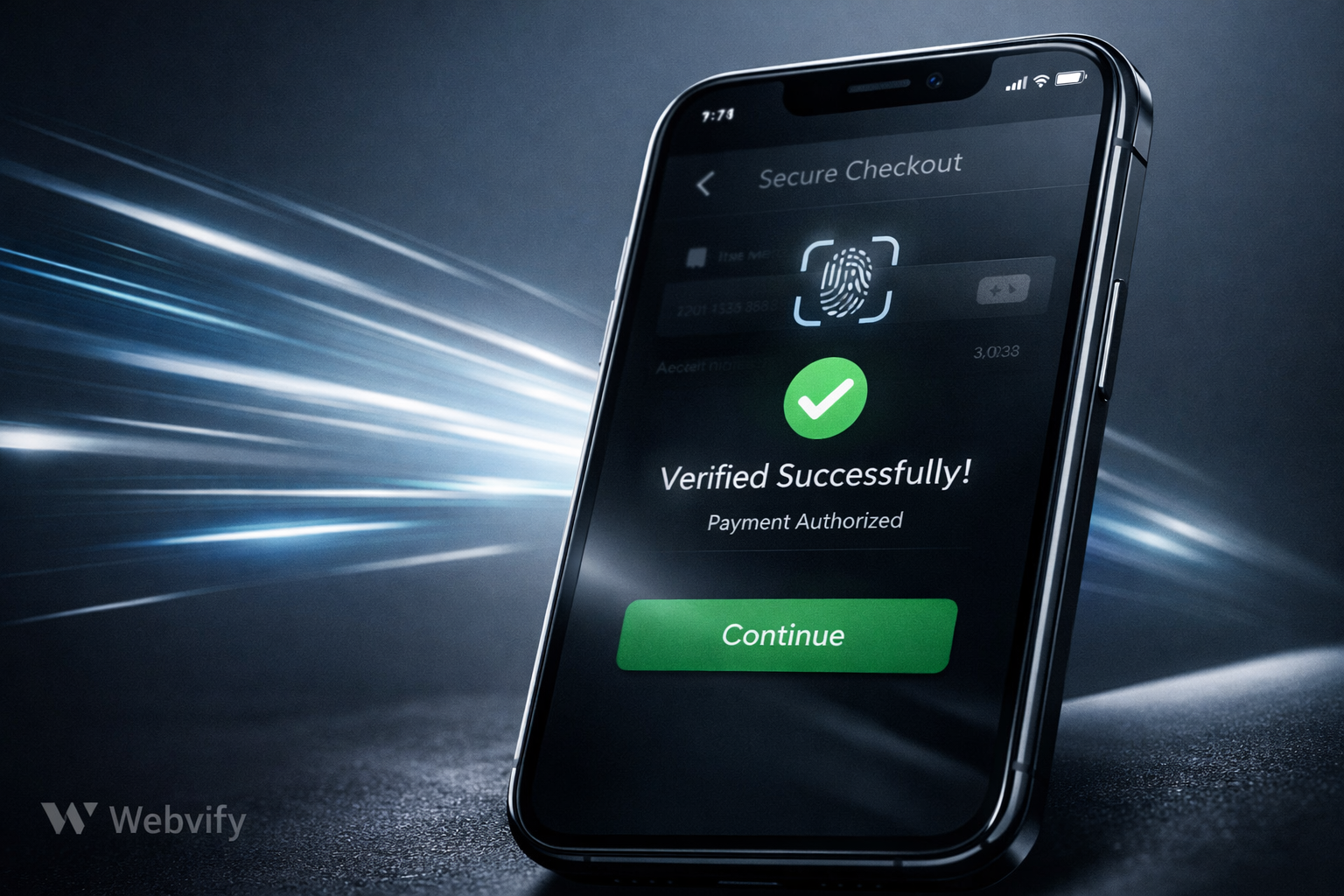
Discover how biometric authentication removes checkout friction, increases trust, and lifts mobile conversions with FaceID and TouchID.
Inside this article
- The Hidden Conversion Killer: Authentication Friction
- The Friction Gap in Mobile Checkout
- Why Biometrics Feel Different Than Login
- The Security Psychology Behind Biometrics
- Password-Based Checkout vs Biometric-Powered Checkout
- The App Advantage: Why Websites Can’t Fully Replicate This
- How Webvify Bridges Your Website to Native Biometrics
- Real Friction Points Biometrics Eliminate
- When Biometrics Drive the Biggest Conversion Gains
- Implementation Checklist for Store Owners
- FAQ
- The Future of Checkout Is Permission-Based
- Turn Your Store Into a Biometric-Powered Mobile App
The Hidden Conversion Killer: Authentication Friction
Every mobile commerce funnel has a moment where momentum dies.
Not because the customer changed their mind.
Not because the product lost appeal.
But because the checkout asked them to stop and remember a password.
Picture a real user moment:
- A customer is on the train.
- They add a product to cart.
- Checkout opens.
- The login screen appears.
Now the friction begins:
- “What password did I use?”
- Try one → wrong.
- Try another → wrong.
- Tap Forgot Password.
- Wait for the email.
- Open email app.
- Reset password.
- Return to store.
Most users simply abandon the purchase.
This is the Friction Gap.
The gap between purchase intent and authentication effort.
And in mobile commerce, that gap destroys conversion rates.
The Friction Gap in Mobile Checkout
Mobile users are not sitting at desks. They are:
- Walking
- Commuting
- Multitasking
- Shopping impulsively
Every extra step increases cognitive load.
The most painful frictions are predictable:
- Manual password entry on a tiny keyboard
- Forgotten passwords
- Email verification loops
- Credit card re-entry fatigue
- OTP interruptions
Each step asks the user to prove identity manually.
But mobile devices already solved this problem years ago.
With biometrics.
Why Biometrics Feel Different Than Login
Biometric authentication changes the psychology of checkout.
Instead of asking:
“Prove who you are.”
It asks:
“Do you approve this?”
That distinction matters.
Password authentication feels like a transaction.
Biometrics feel like a permission gesture.
Examples users recognize instantly:
- Double-click + FaceID to confirm a purchase
- Fingerprint to unlock a banking app
- Face scan to authorize a payment
The user experience becomes:
- Tap Buy
- FaceID appears
- Done.
No typing. No thinking. No interruption.
The checkout feels native to the device.
That psychological shift is why biometric-powered apps often see 20–30% conversion improvements compared to password-based mobile flows.
The Security Psychology Behind Biometrics
Another hidden advantage is perceived security.
Customers feel safer when:
- Their face or fingerprint is required
- Payments resemble device-level authentication
- No passwords are stored or typed
Passwords feel vulnerable.
Biometrics feel hardware-secured.
This matters especially for:
- Subscription services
- High-value carts
- Repeat purchases
- Stored payment methods
Users trust systems that behave like:
- mobile banking apps
- device unlock flows
- digital wallet confirmations
Your app inherits that trust instantly.
Password-Based Checkout vs Biometric-Powered Checkout
| Checkout Element | Password-Based Checkout | Biometric-Powered Checkout |
|---|---|---|
| Login Method | Email + password typing | FaceID / TouchID |
| Password Recovery | Frequent | Almost never needed |
| Mobile Typing Effort | High | None |
| Checkout Speed | 30–90 seconds | 3–5 seconds |
| Abandonment Risk | High | Low |
| Perceived Security | Moderate | High |
| User Emotion | Frustration | Effortless approval |
| Repeat Purchases | Slower | Instant |
When checkout becomes a single biometric confirmation, purchase behavior changes dramatically.
The App Advantage: Why Websites Can’t Fully Replicate This
Websites can use:
- autofill
- password managers
- saved payment methods
But native biometrics are still fundamentally app-native.
Browsers cannot fully replicate:
- FaceID purchase confirmations
- device-level authentication prompts
- fingerprint-based login persistence
- secure hardware keychains
Native apps can.
That’s why brands like:
- Amazon
- Shopify-powered mobile apps
- major subscription platforms
invest heavily in app-based checkout flows.
Apps unlock device trust.
How Webvify Bridges Your Website to Native Biometrics
Most store owners hesitate to build apps because development is expensive.
This is where Webvify changes the equation.
Webvify converts your existing website into a native mobile app with biometric authentication hooks.
Instead of rebuilding your store, Webvify layers native capabilities on top of your website experience.
What Webvify Enables
Inside your mobile app, you can activate:
- FaceID login
- TouchID authentication
- secure biometric session persistence
- native checkout confirmation
Your checkout flow becomes:
- User opens your mobile app
- FaceID unlocks the session
- Product added to cart
- Purchase confirmed with biometric approval
No passwords.
No login loops.
No friction gap.
Real Friction Points Biometrics Eliminate
Here are the moments where biometric authentication dramatically improves conversion.
Login Friction
Before:
- User forgets password
- Reset flow required
After:
- FaceID login in less than 1 second
Checkout Fatigue
Before:
- Re-enter password
- Confirm identity
After:
- Biometric confirmation
Subscription Renewals
Before:
- Payment authorization interruptions
After:
- Fingerprint confirmation
Repeat Purchases
Before:
- Re-authentication required
After:
- Instant biometric approval
These improvements compound across the entire customer lifecycle.
When Biometrics Drive the Biggest Conversion Gains
Biometric authentication has the highest ROI for:
- Shopify stores with repeat buyers
- WooCommerce subscription services
- DTC brands with frequent purchases
- digital membership platforms
- mobile-heavy traffic (70%+ mobile)
If your analytics show:
- high mobile cart abandonment
- login friction
- repeat purchase delays
biometrics can directly impact revenue.
Implementation Checklist for Store Owners
If you're planning to enable biometric authentication in your mobile app, ensure the following:
Mobile App Layer
- Native iOS & Android apps
- Secure authentication storage
- biometric session management
Authentication Flow
- FaceID / TouchID login
- fallback authentication methods
- persistent sessions
Checkout Optimization
- biometric purchase confirmation
- saved payment integration
- one-tap checkout flows
Security Compliance
- encrypted token storage
- hardware-backed biometric APIs
- secure payment gateways
Platforms like Webvify handle these integrations automatically.
FAQ
Do customers trust biometric checkout?
Yes. Biometrics are widely trusted because they are associated with:
- banking apps
- phone unlocking
- digital wallets
This familiarity increases purchase confidence.
Does biometric login replace passwords completely?
Not entirely.
Passwords remain as fallback authentication, but most returning users will never need them again.
Is biometric authentication secure?
Yes. Modern biometric systems use hardware-secured enclaves where biometric data never leaves the device.
Apps receive only an authentication confirmation, not the biometric data itself.
Can Shopify and WooCommerce stores use biometric authentication?
Yes—through native mobile apps.
Solutions like Webvify connect your existing store with native biometric authentication without requiring a full rebuild.
The Future of Checkout Is Permission-Based
The best checkout experiences remove effort entirely.
Customers should never need to:
- remember passwords
- type long credentials
- repeat identity verification
Instead, the checkout should feel like a natural device gesture.
Face scan.
Fingerprint.
Purchase complete.
Biometric authentication turns checkout from a task into a confirmation.
And that shift closes the Friction Gap that kills conversions.
Turn Your Store Into a Biometric-Powered Mobile App
If you want to unlock:
- faster mobile checkout
- higher repeat purchase rates
- biometric authentication
- native app performance
Webvify can transform your existing website into a biometric-ready mobile app.
Start here:
Bridge the gap between mobile browsing and device-level trust.